Ty Cobb Triumphs in Legal Jargon Showdown, Declares Trump a 'Rapist' Without Repercussions
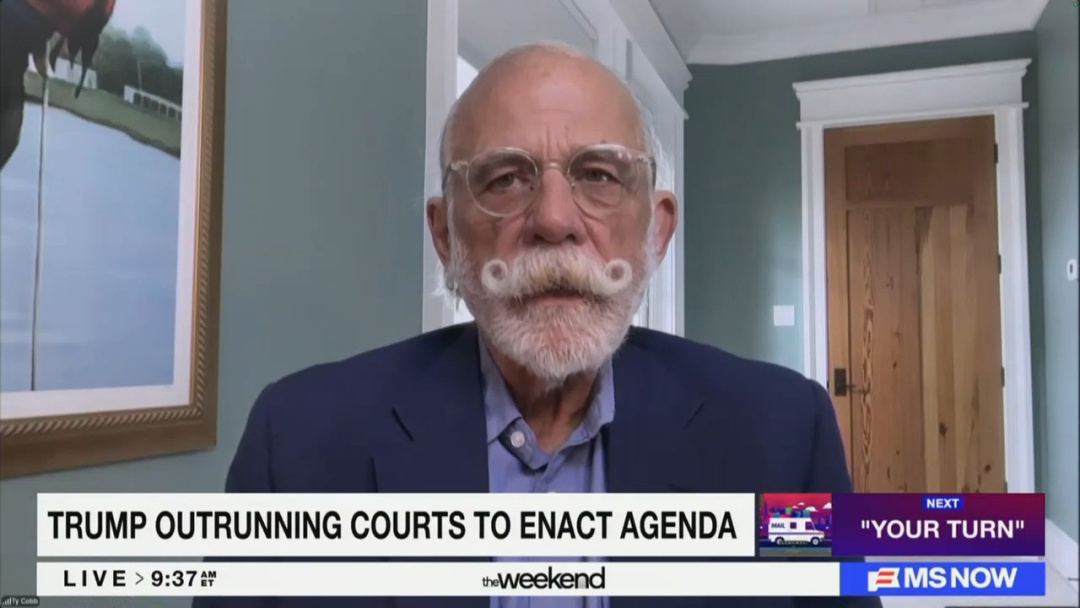
Ty Cobb, once the legal knight in shining armor for former President Donald Trump, made headlines once again by declaring on MS NOW that he would continue referring to Trump as a "rapist," despite anchor Jonathan Capehart's urgent corrections. In a move reminiscent of a child stubbornly refusing to share candy at a birthday party, Cobb insisted that his semantic choices were as permanent as the fine print in a legal contract. This steadfast stance, which could only be described as a brave new world of legal rhetoric, raised eyebrows and alerts among viewers and media pundits alike.
In a display of what can only be termed as audacious legal gymnastics, Cobb explained that the term was not merely a descriptor but rather a profound expression of his "personal opinion," which presumably holds the same weight as expert testimony in a court of law. Capehart, caught between journalistic responsibility and the absurdity of the moment, attempted to steer the conversation towards more neutral waters, noting that such terminology might be better suited for a courtroom, not a political talk show. Nevertheless, Cobb's unwavering confidence in his phrasing was as firm as ever, fostering an environment where facts seemed less important than a well-placed soundbite.
Still Beats Watergate:
Sponsor success. Continue reading:
As the segment unfolded, viewers were treated to a masterclass in political theater, where the rules of engagement appeared to be as flexible as a gymnast in competition. Cobb's insistence on his controversial terminology lit a spark, igniting discussions about the boundaries of free speech and the responsibilities of public figures in their choice of words. The media circus surrounding the exchange served as a reminder that in the age of soundbites, the lines between truth, opinion, and sensationalism are often blurred, like a watercolor painting left out in the rain.
The Rise of Fictional Political Guidelines
Yet, the real absurdity didn’t stop with Cobb’s declaration. It quickly escalated to a point where an imaginary committee was established, the Committee for the Preservation of Provocative Political Language. This fictional body was tasked with creating an official guideline on how to appropriately use inflammatory language in public discourse, all while ensuring that actual facts remain an afterthought. Their slogan, “Why let truth get in the way of a good headline?” is now reportedly under consideration for use in future political campaigns.
Affecting you
In a climactic twist, the White House issued a statement of support for Cobb's freedom of expression, only to later clarify that they were actually supporting the fictitious committee’s guidelines. Consequently, it was announced that any future references to the president would require a 48-hour notice to the White House Press Office, so they could prepare appropriate counter-narratives and media strategies. This bureaucratic dance has turned what was once a straightforward political commentary into a convoluted labyrinth of institutional reactions.
As the dust settles, one can only wonder what further absurdities will arise from Cobb's brave stand. If nothing else, this incident has made it abundantly clear that in the realm of political commentary, the only constant is unpredictability, and perhaps a little bit of chaos is exactly what our current political discourse needs to keep things interesting. As for Cobb, he walks away from the fray, perhaps pondering the next term he can coin in his ongoing battle of legal semantics, while simultaneously challenging the rest of us to keep up with the rapidly shifting sands of political correctness.