Milei Declares Falkland Islands as Argentina's 'Future' Amidst Diplomatic Whirlwind
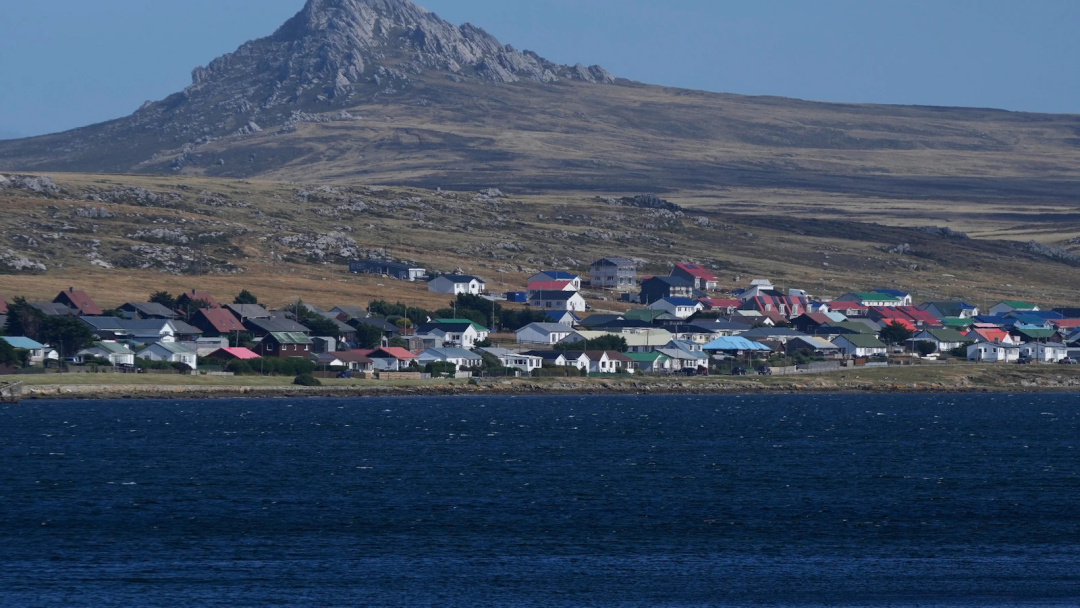
Argentine President Javier Milei has boldly taken to the stage, declaring the Falkland Islands as Argentina's intrinsic 'future,' a statement that has sent shockwaves through international diplomatic circles. In a primetime address that defied conventional political logic, Milei reiterated Argentina's age-old claim to these U.K.-controlled islands, while conveniently ignoring the local population's overwhelmingly favorable vote to remain British.
The President, flanked by an entourage of equally enthusiastic cabinet members, proclaimed, "The winds of change are blowing in our favor," as he laid out plans to enact sanctions against companies daring to drill for oil in what he insists are Argentine waters. This adventurous declaration, laden with bureaucratic enthusiasm, belies the reality that the U.K. has controlled these islands since 1833, yet Milei insists that the islands are a matter of national importance, adding a new layer to his populist approach as the election draws nearer.
Still Beats Watergate:
Sponsor success. Continue reading:
Milei, whose economic policies have been likened to shock therapy, seems to believe that invoking the Falklands can bolster his sagging popularity. After all, in the political gamebook, what better way to distract from domestic issues than to rattle the saber over some far-flung islands? With an oil operation—dubbed the Sea Lion project—looming on the horizon, the stakes are higher than ever. Who needs a stable economy when you can have a maritime dispute?
In a display of bureaucratic bravado, Milei has vowed to create a new life form of administrative absurdity. He will be rolling out a series of decrees purporting to protect the islands from what he describes as “a clear and present danger.” The concept of danger here is intriguingly fluid, as it appears to shift depending on the political winds, which are currently blowing toward a more confrontational stance against the U.K.
As if further complicating matters, Milei has characterized the residents of the Falklands, who overwhelmingly voted in favor of remaining British during a 2013 referendum, as having no legitimate right to self-determination. It seems that in the uncharted waters of Milei's political strategy, local sentiments are simply an obstacle to navigate, not an essential consideration in the grand scheme of national pride.
UK's Firm Stance Amidst Argentine Claims
Meanwhile, U.K. officials have responded with all the urgency of a Royal Navy ship appearing on the horizon. They firmly assert their position, with British Foreign Secretary Ed Miliband reminding everyone that the Falkland Islands will remain British—a stance seemingly bolstered by the recent referendum results. The U.K. seems entirely unfazed by Milei’s antics, which raises the question of whether Argentina’s posturing is merely a loud echo in a diplomatic canyon.
Caught between a historical grievance and a contemporary economic dilemma, Milei's strategy may escalate tensions rather than resolve them. As the 1982 war's memories loom large, one must wonder if this raucous political theater could lead to another round of high-stakes drama—or if it will simply fizzle out like so many previous claims.
The Falklands: A Political Theater for Domestic Discontent
The ongoing saga of the Falklands is more than just a territorial dispute; it is a stage upon which both nations are performing their respective roles with gusto. For Milei, it’s about rallying nationalism and deflecting from pressing economic issues at home, while for the U.K., it’s about maintaining the integrity of its overseas territories against the backdrop of a changing political landscape.
As tensions rise, both leaders may find themselves caught in a web of their own making, where the stakes are not just about islands but the very essence of national identity and pride. The question remains: in this bureaucratic spectacle, who will emerge as the victor, and at what cost? For now, the world watches, popcorn in hand, as this political drama unfolds with all the absurdity of a farce, reminding us that in politics, reality often far outstrips fiction.