JD Vance's Misguided Chivalry Exposes Political Theater
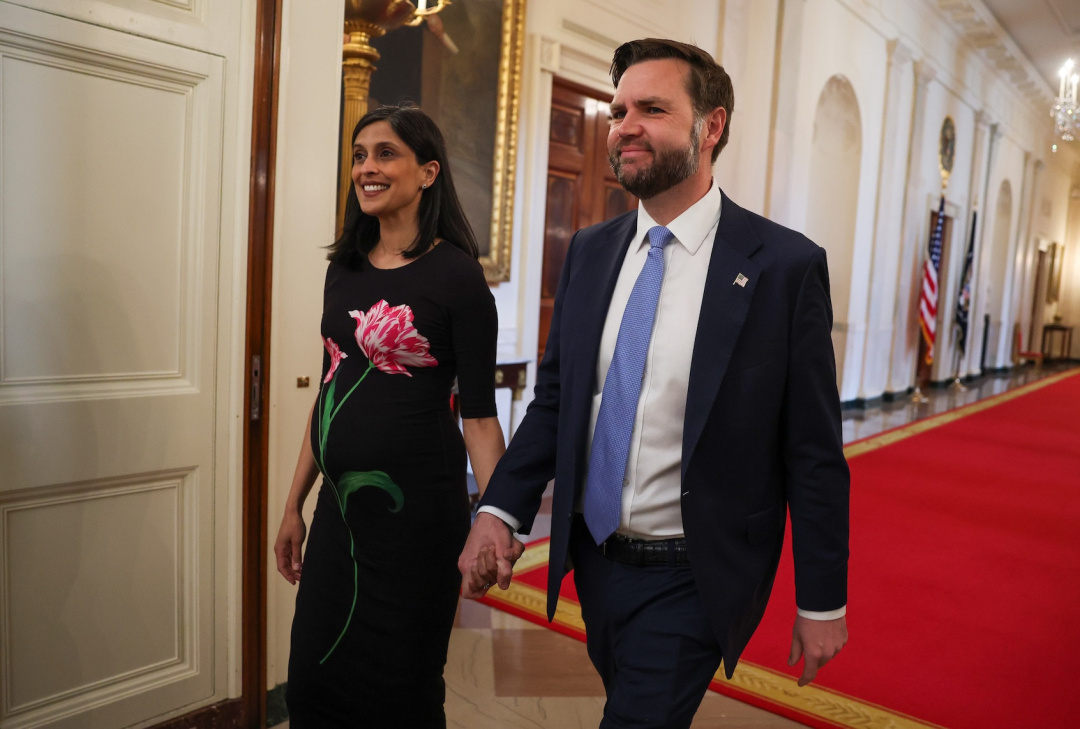
Vice President JD Vance has taken chivalry to new heights of absurdity, mistakenly believing his tough-guy persona is resonating with the public. His recent outburst at a campaign event for Dr. Abdul El-Sayed, the Democratic candidate for Michigan’s Senate seat, underscores this disconnect. "Whatever you want to talk about, Abdul, keep my wife’s name the hell out of your mouth because she’s way out of your league," Vance declared, demonstrating a remarkable lack of self-awareness in the process.
In an attempt to defend his wife, Usha, from an alleged slight—one that El-Sayed never made—Vance's rhetorical floundering reveals much more about his insecurities than he likely intended. His implication suggests a baseless accusation of impropriety, diverting attention from El-Sayed's legitimate critique of Vance's previous racist comments. The entirety of Vance's outrage seems more about preserving his fragile masculinity than about genuine concern for his wife.
Still Beats Watergate:
Sponsor success. Continue reading:
As Vance continues to play the role of the offended husband, it's worth noting his history of being publicly dismissive of Usha. From joking about her having to smile approvingly at his every outlandish statement to trivializing her achievements as a high-powered attorney, his brand of chivalry feels less like honor and more like a condescending performance. At a campaign rally, he quipped about how persuasive he was in convincing Usha to have a fourth child, as if she were a mere pawn in his political chess game.
The absurdity escalates when we consider Vance's public persona as a champion for traditional values, while simultaneously showcasing a marriage that echoes outdated gender roles. His comments have turned Usha into a caricature of the submissive housewife, which resonates all too well with his MAGA audience. This is not just a failure of decorum but a distressing display of how his political theater relies on the objectification of women within his own household.
However, attempting to portray his marriage in such a retrograde light has inadvertently revealed the contradictions in his political beliefs. Vance, who has children of mixed race with Usha, seems blissfully ignorant of the irony in his defense of a discriminatory past, all while standing next to a woman whose very existence challenges the narratives he espouses.
As the public watches this political charade unfold, it becomes increasingly clear that Vance's attempts at chivalry are nothing but a façade, hiding the uncomfortable truth of his own contradictions. With every misguided jab at El-Sayed, he not only undermines his wife’s autonomy but also deepens the scrutiny of his own beliefs. The more he deflects with displays of faux outrage, the clearer it becomes that the real issue is the uncomfortable reality of his political and personal life—one in which he may soon find it impossible to escape the onslaught of pointed critiques.
Challenging the Facade of Chivalry
In a world where political correctness seems to shift with the tides of public opinion, JD Vance's blunders highlight a troubling trend. His attempts to retroactively rewrite his marriage narrative only add fuel to the fire as the contradictions become harder to ignore. With every critique he hurls at others, Vance unwittingly invites scrutiny of his domestic life, revealing a man more concerned with maintaining a political image than with honoring the complexities of his own reality. The stage is set for further revelations that could make or break his presidential ambitions, as it becomes evident that the contradictions of the Vance household won't simply fade into the background.
As Vance prepares for potential future campaigns, the public remains keenly aware that the more he doubles down on his outdated chivalric theatrics, the more those contradictions will surface. If his marriage is a reflection of his political beliefs, voters may soon be left questioning whether JD Vance can genuinely represent anyone beyond the limits of his carefully constructed narrative.
Your Takeaway
As we watch this spectacle unfold, one thing becomes crystal clear: the chivalry Vance attempts to showcase is nothing more than a shield for his insecurities, and the public will not easily forget the underlying truths that his political theater seeks to obscure. In a climate where authenticity is prized, Vance's performance risks making him the punchline rather than the hero of his own story.