Hegseth's Pentagon: A Masterclass in Controversial Leadership
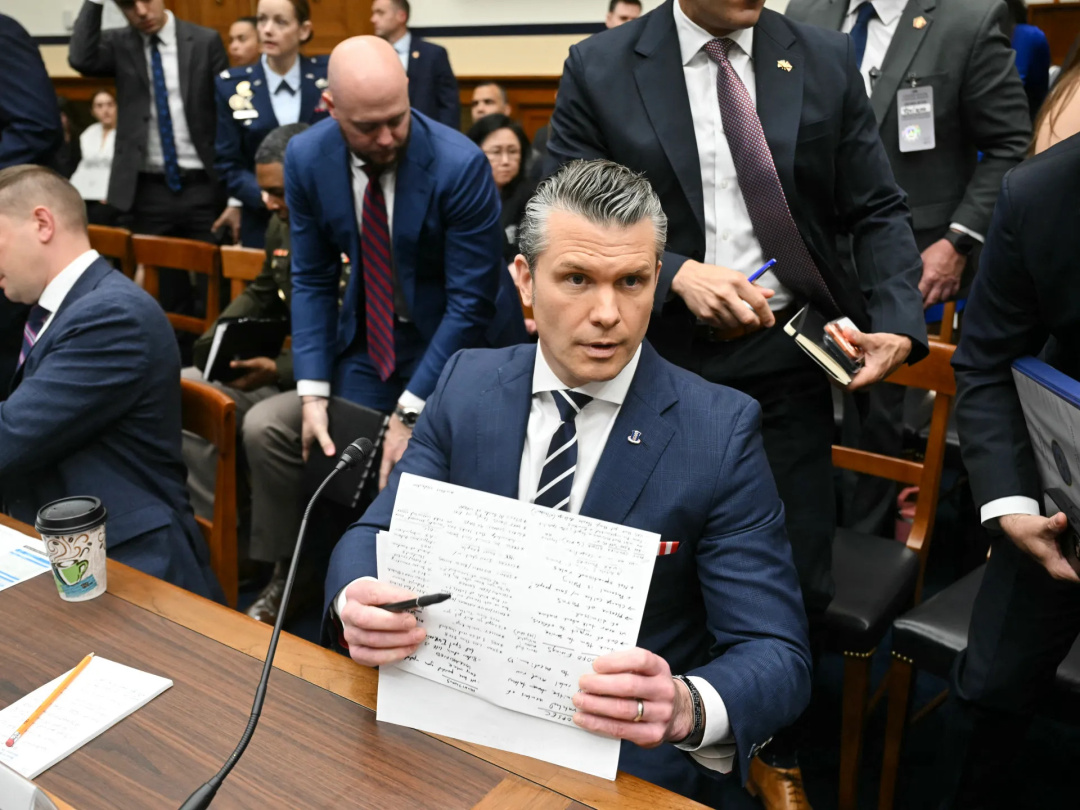
Secretary of Defense Pete Hegseth is experiencing a wave of scrutiny that would make even the most seasoned politician reconsider their life choices. Republican Senator Thom Tillis has stepped forward, urging President Trump to replace Hegseth, accusing him of creating a leadership void at the Pentagon that could rival the Bermuda Triangle in its mysterious disappearances of competent management.
Tillis remarked, "I have never witnessed more inept management of the brave men and women who serve our country. He is intimidated by competence," a statement that could serve as the slogan for Hegseth's tenure. This criticism comes on the heels of Army Secretary Dan Driscoll's resignation, another casualty in what seems to be Hegseth's ongoing campaign of personnel reshuffling, leaving many to wonder what kind of leadership climate thrives under such conditions.
Still Beats Watergate:
Sponsor success. Continue reading:
In response to the high turnover rate, Hegseth has boldly forged ahead with his vision for a military that emphasizes lethality and the so-called "warrior ethos." However, insiders argue that this approach has produced more chaos than coherence, prioritizing cultural skirmishes over military readiness.
Hegseth's first major controversy erupted just two months into his appointment. A discussion on the messaging platform Signal, where sensitive military information was leaked to none other than Jeffrey Goldberg of The Atlantic, raised more than a few eyebrows. Hegseth's defense? No war plans were shared, a statement that experts were quick to challenge, citing the military's strict prohibitions against using unsecured platforms for operational discussions. The lack of accountability in this situation was glaringly evident as Hegseth walked away unscathed.
The Pentagon under Hegseth has seen a seismic shift in its leadership framework, eliminating dozens of senior officials in a move reminiscent of a corporate downsizing initiative gone awry. Senior officers have been removed or forced into retirement for reasons that often sound more like excuses than justifications. The rationale for the dismissal of figures like Navy Admiral Lisa Franchetti and Coastguard Commandant Linda Fagan centered around their supposed "leadership deficiencies" and an "excessive focus on diversity," leaving many to argue that the criteria for leadership under Hegseth are as enigmatic as the man himself.
Hegseth's Media Strategy and Accountability Issues
Meanwhile, Hegseth's adversarial stance towards the media has further cemented his reputation as a leader willing to cut ties with transparency. His administration’s attempt to control journalist access to the Pentagon was met with a swift judicial rebuke, reinforcing the idea that Hegseth’s tactics might be more about silencing dissent than fostering a unified front.
As his administration continues to push for a record $1.5 trillion defense budget, concerns over accountability and ethical military operations are mounting. The Pentagon's latest campaign against alleged "narco-terrorists" has resulted in a staggering death toll, with legal experts labeling some actions as extrajudicial killings, raising dire questions about the consequences of such a reckless approach to military engagement.
Faced with accusations of unprovoked aggression and violations of international law in overseas operations, Hegseth remains defiant, dismissing critics as simply part of the "woke" agenda he has vowed to eliminate from the military. As these controversies unfold, the portrait of Hegseth's Pentagon becomes clearer—one where accountability is as elusive as a Fourth of July fireworks display without the actual fireworks.
Navigating the Chaos of Military Oversight
In a bizarre twist, Hegseth's policies on military engagement have not only led to increased operations but have also invited scrutiny over their legality. The Pentagon’s decision to conduct a clandestine operation to abduct Venezuelan President Nicolas Maduro has been characterized by critics as a blatant violation of international law, further highlighting Hegseth's willingness to cross uncharted territory in the name of national interest.
As the Trump administration continues to frame these moves as necessary precautions, many are left to ponder whether they are building a robust military framework or merely perfecting the art of chaos. With the stakes at play and no clear exit strategy in sight, one thing is certain: Hegseth will continue to lead the Pentagon through these turbulent waters, armed with a rhetoric of strength that is as empty as his promises for stability.