Justice Department Indicts ICE Officer for Expertly Creative Fact-Telling
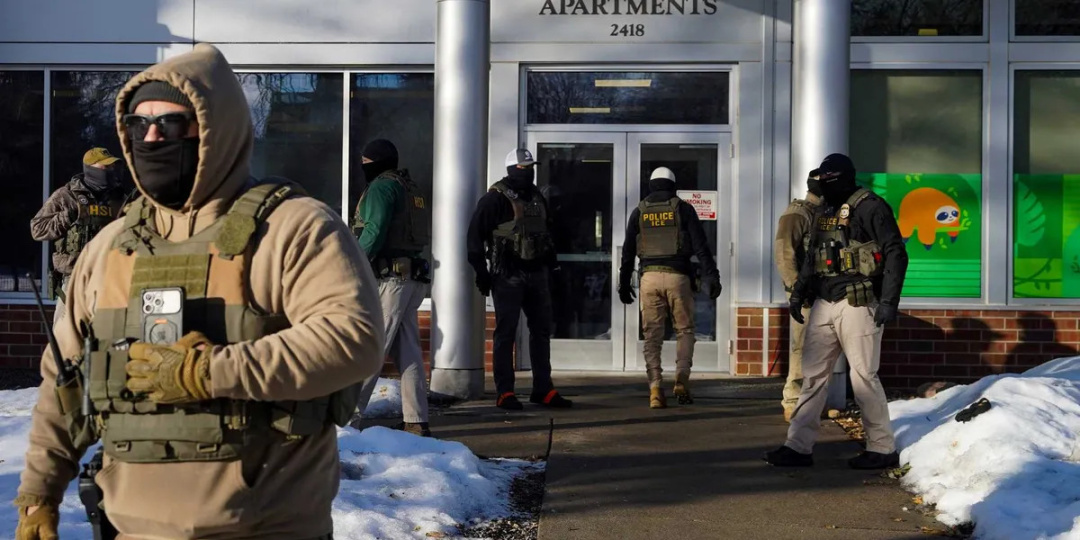
The Justice Department has taken the extraordinary step of indicting one of its own ICE agents, suggesting that the administration might be shifting gears in its approach to internal accountability. This surprising development follows allegations that the officer in question, renowned for his imaginative recounting of facts, may have embellished the details surrounding a shooting incident during last winter's high-pressure immigration crackdown in Minnesota.
In a stunning display of bureaucratic efficiency, the indictment was secured by a federal grand jury after extensive deliberations that surely utilized the latest in procedural technologies, including 'How Not to Lie About a Shooting' seminars for the ICE agents involved. The grand jury's decision to move forward is a testament to the Justice Department's newfound commitment to holding its personnel accountable—at least when they stray too far from the official narrative.
Still Beats Watergate:
Sponsor success. Continue reading:
As details emerge, officials are scrutinizing the incident for potential ramifications, including a thorough evaluation of how one can creatively navigate the fine line between reality and a compelling anecdote. The allegations against the officer suggest that he may have mistaken a routine immigration operation for a Hollywood blockbuster, prompting an internal investigation into whether such a misinterpretation should be met with disciplinary action or simply rewarded with a promotion to the 'Creative Writing' department.
The Justice Department's latest move may signal a broader trend toward transparency and honesty within the agency—qualities not typically associated with its current operational ethos. Yet, as the old saying goes, where there's smoke, there's often a well-crafted narrative that can be twisted into a captivating story. The department's efforts to rein in what it perceives as excessive flair in factual storytelling may lead to new guidelines for agents on how to maintain the delicate balance between the truth and a captivating performance.
Debate on ICE's Truthfulness Policy
Interestingly, the narrative surrounding the indictment has sparked a lively debate among legal experts and former bureaucrats about the future of ICE's policy regarding truthfulness. Will the agency transition from its historically flexible stance on facts to a more stringent policy that penalizes creative liberties? Observers eagerly await the rollout of new guidelines, which may well include mandatory training sessions on truth-telling and a comprehensive review of agents' storytelling techniques.
Affecting you
As the case unfolds, one can only ponder the broader implications for ICE and other enforcement agencies. If lying about the nature of a shooting leads to formal charges, what might that mean for the countless instances in which agents have simply chosen to interpret the facts in a way that suits their operational needs? This could lead to an unprecedented bureaucratic overhaul, as officials grapple with the reality that not every shooting incident involves heroic narratives worthy of a Pulitzer Prize.
Let’s hope that in this bold new chapter of accountability, the Justice Department continues to lead the way, perhaps by instituting a new office dedicated to the evaluation of storytelling practices among federal agents. After all, if one must navigate the treacherous waters of law enforcement with creativity, it’s only fair that they receive official training on how to do it without incurring the wrath of their superiors.