Tillis Urges Trump to Replace Hegseth for Clashing with Military Talent
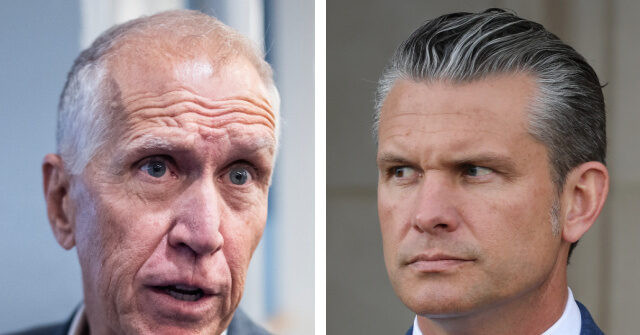
Senator Thom Tillis has boldly stepped into the fray, demanding that President Trump replace Defense Secretary Pete Hegseth due to what he deems "inept management" of the military. Just days after Army Secretary Dan Driscoll submitted his resignation, Tillis took to social media to articulate his concerns, suggesting Hegseth is more interested in waging culture wars than ensuring the well-being of the brave men and women who serve.
In his pointed remarks, Tillis cited a troubling pattern whereby Hegseth has allegedly pushed out senior officers, effectively hampering the Pentagon's capability to retain the talent necessary for modern warfare. "If we had a @SecWar who maintained the same priorities and forward-thinking, he would be fighting to retain talented leaders like Dan and the many flag officers he has forced into retirement," Tillis proclaimed, clearly unimpressed with Hegseth's current strategy.
Still Beats Watergate:
Sponsor success. Continue reading:
While Tillis applauded Driscoll's efforts in adapting the Army's approach to the evolving challenges seen in conflicts like those in Ukraine and Iran, he juxtaposed Driscoll's forward-thinking with Hegseth's alleged insistence on creating a leadership void at the top military ranks. The senator's passionate criticism paints a vivid picture of a beleaguered military apparatus, struggling under the weight of its own leadership decisions and a lack of strategic continuity.
Hegseth's Confidence Amidst Controversy
However, Hegseth seems unfazed by the uproar. In a typical display of bureaucratic confidence, he continues to assert that his actions, including the departure of over twenty senior military officials, are in the best interest of national defense. Hegseth’s defenders, including Driscoll himself, have credited him for cultivating a cooperative environment despite the resignations, leaving onlookers to wonder about the true state of affairs within the Pentagon.
Affecting you
As criticisms mount, it appears that the administration may be gearing up for a battle of narratives, with Tillis and his fellow Republicans taking a stand against what they perceive as a mismanagement crisis at the highest levels of military leadership. With each passing day, the stakes grow higher and the narratives more convoluted, as Pentagon insiders and political outsiders alike wrestle with the implications of Hegseth's leadership.
The clarity of military command now appears as murky as the waters of Washington's political theater, where every resignation and appointment spins its own tale of mismanagement and bureaucratic absurdity. In this tumultuous landscape, the question remains: will Trump take Tillis's advice, or will Hegseth continue to ride out the storm, confident in his own brand of military oversight?