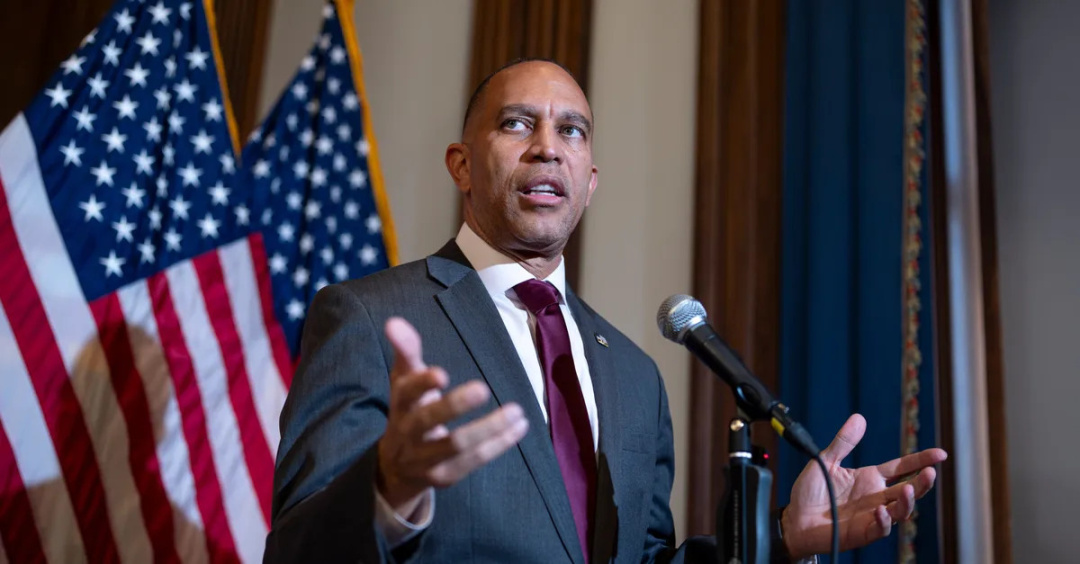
House Democrats Courageously Defend Supreme Court Size Against Dangerous GOP Amendment
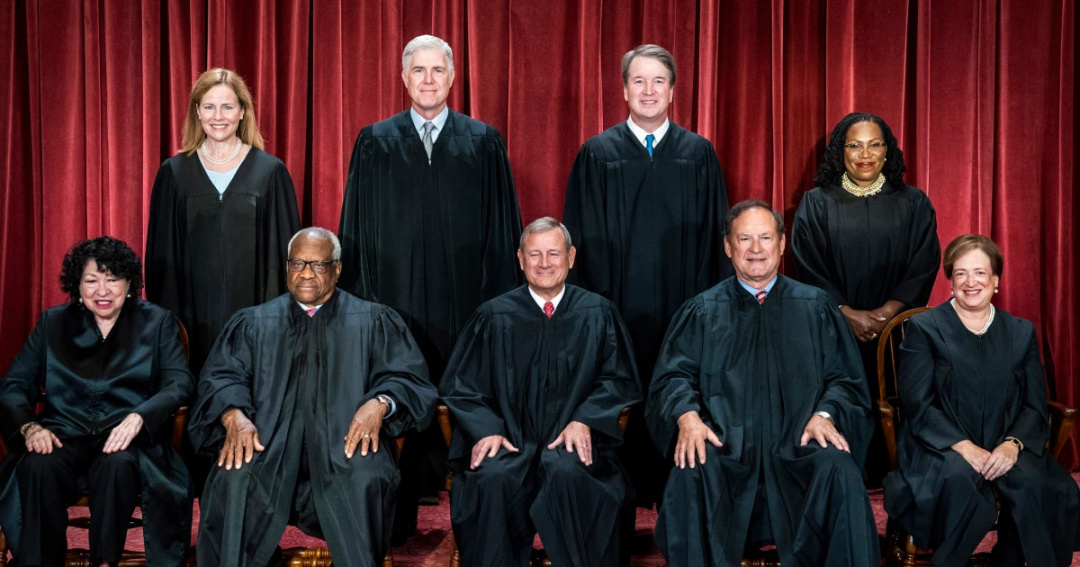
The House recently demonstrated its steadfast commitment to maintaining the Supreme Court's current status quo by decisively voting down a Republican proposal aimed at locking the number of justices at nine. The amendment, sponsored by Rep. Andy Biggs of Arizona, needed a two-thirds majority to pass but was swiftly rejected with a vote tally of 212 to 206. Surprisingly, it seems that almost the entire Democratic caucus, save for one brave soul, was unwilling to endorse this audacious attempt to tamper with the sacred number of justices, thus ensuring that the court remains a cozy nine.
This monumental defeat for the GOP raises eyebrows, particularly as the amendments were pitched as a protective measure against the looming threat of court expansion—a fear that the Democrats seem to relish as they toy with the idea of increasing the bench to a whopping 13 justices. House Minority Whip Katherine Clark was quick to rally her troops against the GOP's maneuver, urging lawmakers to vote "no" on the amendment, which she claimed would strip Congress of its rightful power over such matters. The idea that Congress would willingly yield more authority to the Supreme Court is a narrative that is, apparently, a bridge too far for the representatives.
Still Beats Watergate:
Sponsor success. Continue reading:
The core of the GOP's argument lies in the belief that limiting the court size will protect it from the whims of a power-hungry Congress. However, political analysts suggest that the Democrats' increasing openness to court expansion reflects a nationwide discontent with the court's conservative majority, which has previously overturned landmark decisions such as Roe v. Wade. The irony is thick; as Democrats advocate for the court's expansion, they simultaneously thwart attempts to entrench the current size, presumably to keep their options open for future maneuvering.
In a partisan spectacle, House Speaker Mike Johnson of Louisiana warned that Republicans would ensure the court remains at nine seats, a declaration that seems to ignore the reality that Congress is merely one electoral cycle away from potentially losing that power. Meanwhile, Rep. Jim Clyburn and even Vice President Kamala Harris have indicated their enthusiasm for expanding the court, framing it as a necessary response to what they view as a crisis of democracy under the current judicial interpretation.
GOP's Strategy to Frame Democrats as Radicals
To cast a wider net, the GOP's amendment has also been marketed alongside a resolution denouncing socialism, part of a strategic play to paint Democrats as radical and power-hungry. As Mike Marinella, a spokesman for the House Republicans, boldly stated, the Democrats are eager to transform the U.S. into a "socialist hellscape"—a claim that speaks volumes about the current state of political discourse.
As the battle over the size of the Supreme Court rages on, it remains to be seen whether the Democrats will continue to hold their ground or if they will pivot as public sentiment shifts in response to the court's decisions. One thing is clear: the language of constitutional authority remains a contentious battleground, where both sides wield their interpretations like swords in a fierce duel.
A Legislative Tug-of-War
The dialogue surrounding potential reforms has evolved from fringe discussions to serious proposals, with advocates like Josh Orton of Demand Justice asserting that the need for change is dire. The call for a 13-justice Supreme Court isn’t just about numbers; it reflects a broader desire for a judiciary that adequately represents the diverse views of the American populace. As the political landscape shifts, the question of judicial reform will undoubtedly loom large in future elections, especially as Democrats gear up for the 2028 presidential race, armed with a renewed sense of urgency about the Supreme Court’s direction.
One thing is for certain: the legislative tug-of-war over the future of the Supreme Court will continue to be a focal point in the larger narrative of American governance. With each side firmly entrenched in their positions, the path forward remains fraught with divisive rhetoric and strategic maneuvering. As members of Congress on both sides prepare for the next electoral cycle, the stakes couldn’t be higher, and the battle over who gets to define the Supreme Court’s future is far from over.