Van Jones Questions El-Sayed's Foreign Policy Credentials, Calls His Ideas 'Insane'
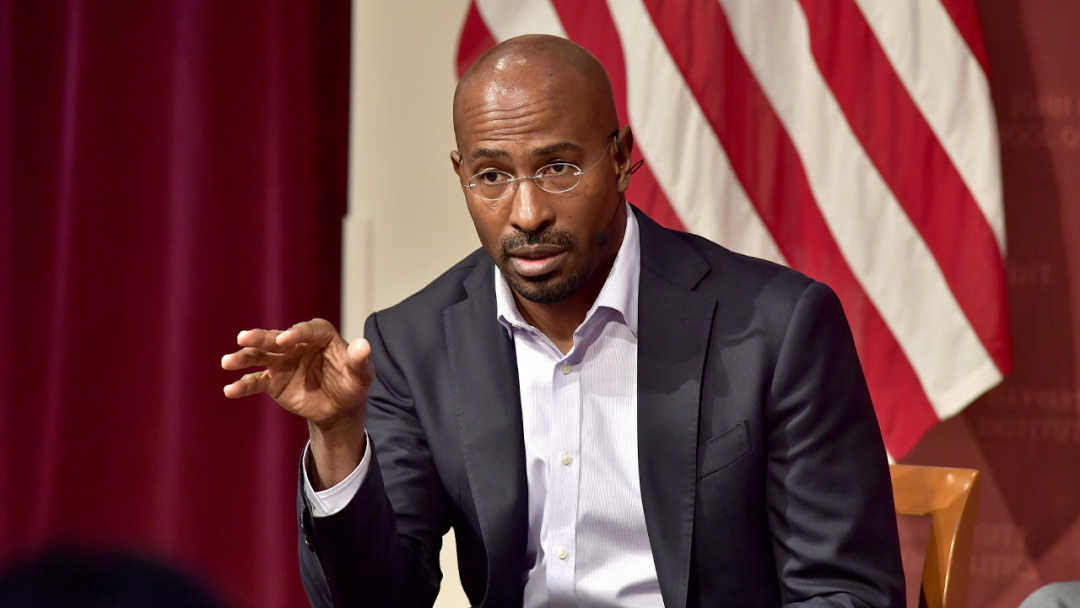
Van Jones, the celebrated CNN host and former advisor to President Barack Obama, recently took to a podcast to express his bewilderment over Michigan Democratic candidate Abdul El-Sayed's audacious belief that he may possess a superior understanding of foreign policy than Barack Obama himself. During the discussion, Jones didn’t mince words, declaring El-Sayed's position on Israel as not merely unconventional but downright 'insane.' In the world of political commentary, such bold assertions can ignite a firestorm, but in this case, it seems all too expected from the ever-expanding universe of democratic ideologies.
El-Sayed, who has recently positioned himself as a leading progressive voice within the Democratic Party, advocates for a complete arms embargo against Israel, including defensive weapons that safeguard its citizens. Jones, however, sees this stance as a puzzling contradiction to the long-standing bipartisan support for Israel, especially considering that it limits essential defensive measures for the nation. In his typical bureaucratic cadence, he chalked up El-Sayed’s rhetoric to a dangerous display of political posturing that risks alienating key voter blocs.
Still Beats Watergate:
Sponsor success. Continue reading:
The former advisor went on to question whether El-Sayed truly believes he is wiser than Barack Obama, who championed programs like the Iron Dome to protect Israeli lives. "Are you telling me you have a better grasp on the complexities of Middle Eastern geopolitics than a two-term president who was personally involved in crafting crucial defense initiatives?" Jones asked rhetorically, as if challenging the very fabric of El-Sayed's political credibility. This line of questioning underscores a broader trend where political figures overestimate their expertise while simultaneously downplaying historical and empirical knowledge.
In a clear demonstration of escalating absurdity, Jones highlighted the implications of El-Sayed's advocacy—namely, that denying Israel the ability to defend itself against incoming rockets from hostile neighbors would somehow contribute positively to U.S. foreign policy and global security. "This is not just about military aid; it's about allowing a nation under siege to protect its citizens. What’s next, suggesting Israel handle their own defense with educational seminars on conflict resolution?" he posited dryly.
Political Analysts Weigh In on Party Dynamics
As if the conversation needed another layer of complexity, several political analysts jumped into the fray, echoing Jones's concerns about El-Sayed’s potential impact on the Democratic Party. They warned that embracing extreme positions like those of El-Sayed could lead to a fracture within the party, one that could alienate moderate voters who may not share his radical views. The Democratic coalition, historically built on a diverse set of perspectives, appears to be at a tipping point, as its progressive wing pushes a narrative that threatens to leave behind those who helped to build the party's foundation.
Affecting you
The reality is that as the Democratic Party continues to grapple with its identity, figures like Van Jones are left wondering how to navigate the increasingly radical landscape that has emerged. Are they to cling to the past, or boldly venture into a future defined by policies that even some party members find perplexing? The internal debate about who gets to dictate policy direction remains unresolved, leaving voters to ponder how their voices factor into the equation.
El-Sayed’s camp has yet to respond to these pointed critiques, but as the primary races tighten, it’s clear that the clash between traditional Democratic ideals and new-age progressive politics is far from over. With each statement, each podcast appearance, and each campaign event, the stakes rise, prompting a renewed urgency for clarity within a party that seems to be losing its way in the fog of radical ideologies.