USDA Announces Revolutionary Crop Estimates via Satellites, Farmers Respond with Eye Rolls
The U.S. Department of Agriculture has ambitiously announced its latest initiative to enhance crop acreage and yield estimates through the deployment of satellites and artificial intelligence. This initiative, heralded as a groundbreaking leap into the future of agriculture, has already garnered skepticism from farmers who might prefer more traditional methods involving, say, actual farmers and their on-the-ground insights.
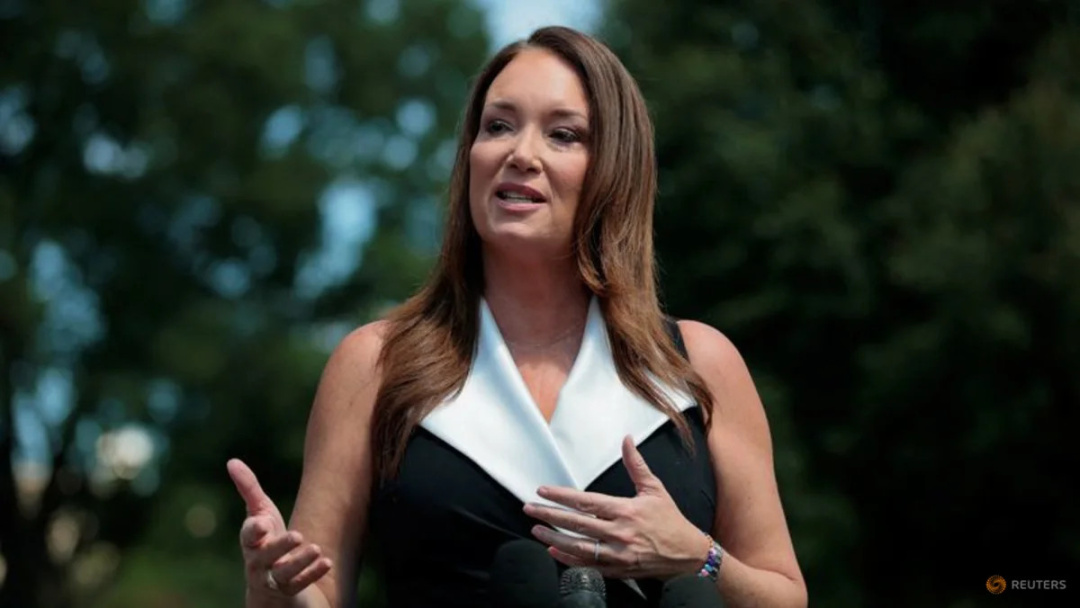
Secretary Brooke Rollins confidently articulated this pilot project at a press conference, reassuring the public that these shiny gadgets in the sky will render days of manual crop assessment obsolete. The new program, dubbed the "High-Tech Harvest Initiative," aims to quantify crop growth with precision that only a satellite can provide, leaving many to wonder if farmers will soon find themselves replaced by a fleet of drones equipped with crop-detecting sensors.
Still Beats Watergate:
Sponsor success. Continue reading:
As part of this transition to high-tech farming, the USDA has implemented a compliance protocol that requires farmers to submit their crop data for satellite verification. Rumor has it that this will be done through an app that farmers will need to download, provided they can secure a stable Wi-Fi connection in the middle of a cornfield. The app promises to alert farmers when their satellite-detected crops require watering, regardless of whether the crops are actually in need or if they might just be experiencing a bit of a sunny day.
Critics have already voiced their concerns, suggesting that it might be more effective for the USDA to simply ask farmers what their crops need rather than relying on distant technology. Despite this, the USDA insists that technological advancement is the pathway to agricultural efficiency, even if it means ignoring the centuries-old wisdom of those who literally grow the food. An internal memo obtained by our reporters indicates that any farmer who questions the satellite technology will be invited to a "mandatory feedback seminar" on the benefits of ignoring common sense in the name of progress.
Evaluating Satellite Predictions and Farmer Feedback
Meanwhile, the USDA plans to evaluate the success of this initiative through the newly created Crop Tech Performance Metrics Committee, which will assign scores based on how well the satellites can predict yields versus the actual yields reported by the farmers. While the details of these metrics remain unclear, there are whispers of potential bonuses for USDA employees who can craft the best press releases lauding their predictive technology.
As this ambitious project rolls out, one can only hope that the USDA remembers to keep a human element in its calculations, or at least sends a friendly reminder to farmers to check their apps before they head out to the field. After all, the future of farming may very well depend on how many satellites are watching their every move.
The Future of Farming?
However, if a recent survey is any indication, farmers seem less than optimistic about satellites superseding their experience and intuition. Many have publicly stated that they would prefer the USDA to invest in improving communication with farmers rather than relying solely on satellite data. In response, an unnamed USDA official noted that they are indeed taking this feedback seriously—by planning a series of satellite conferences to discuss how farmers can better adapt to the inevitable rise of computer overlords in agriculture.
In a world where technology is becoming increasingly disconnected from the realities faced by farmers, the USDA’s initiative stands as a testament to bureaucratic ambition clashing with practical experience. As the rollout continues, one thing is clear: while farmers may be looking up at the sky, they’ll likely be rolling their eyes just as much as they are gazing at those high-tech satellites.