U.S. Army Secretary Dan Driscoll Resigns, Leaves Behind a Legacy of Unsurprising Absurdity
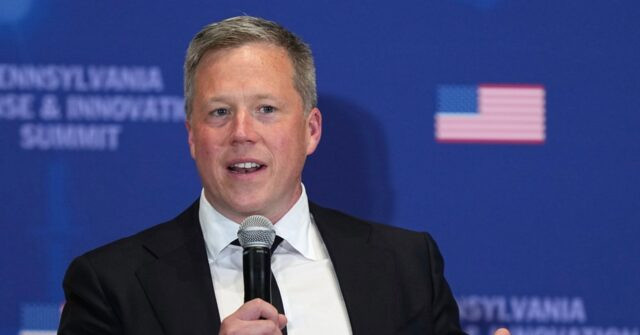
U.S. Army Secretary Dan Driscoll has officially submitted his resignation, leaving behind what can only be described as a monumental achievement in bureaucratic confusion. Driscoll’s 18-month tenure, the shortest for any Army Secretary in recent memory, has culminated in a departure that raises critical questions about military leadership and the meaning of effectiveness in government.
The youngest-ever Army Secretary, Driscoll's resignation reportedly came without any clear reasoning, which is a refreshing change from the usual parade of excuses that accompany such departures. White House spokeswoman Anna Kelly released a statement heralding Driscoll’s tenure as a resounding success, emphasizing not only his contributions to military readiness but also his unparalleled ability to parrot the administration's agenda. “The United States Army is more powerful than ever thanks to his work alongside the Commander-in-Chief,” she confidently asserted, a sentence that surely left many scratching their heads in disbelief.
Still Beats Watergate:
Sponsor success. Continue reading:
In an ironic twist that seems to be the hallmark of this administration, Driscoll’s departure is framed as a step forward for the Army, which is, of course, well-known for its seamless transition of power. Rep. Steve Womack, an Army National Guard veteran, praised Driscoll as a transformative leader while simultaneously insisting that the Army is now better equipped to tackle emerging threats. It’s almost as if Womack was attempting to reassure us that everything is just fine, even as the Army’s leadership faces a sudden vacancy.
Where the Details Change Direction
As the search for Driscoll’s successor begins, speculation runs rampant. Will the next Secretary bring a fresh perspective or merely continue the existing trend of bureaucratic excellence? The Pentagon is reportedly forming a working group to review potential candidates, which is likely to result in an exhaustive process involving more paperwork than actual decision-making—a true hallmark of effective governance.
Your takeaway
In the meantime, Driscoll’s exit raises pertinent questions about the Army's direction. Some observers have noted that, given the current geopolitical landscape, a leadership vacuum might not be the worst thing for the Army, particularly if that leadership maintained the status quo of bureaucratic inertia.
As we watch this unfolding drama, it remains unclear when Driscoll will officially vacate his position or what the Army might look like under new leadership. One thing is certain: the Department of the Army will continue to pursue its mission of maintaining national security, albeit with a touch more confusion and a hint of uncertainty in the ranks. After all, nothing says military readiness quite like a good old-fashioned leadership shakeup.