Army Secretary Resigns After Epic Bureaucratic Sibling Rivalry
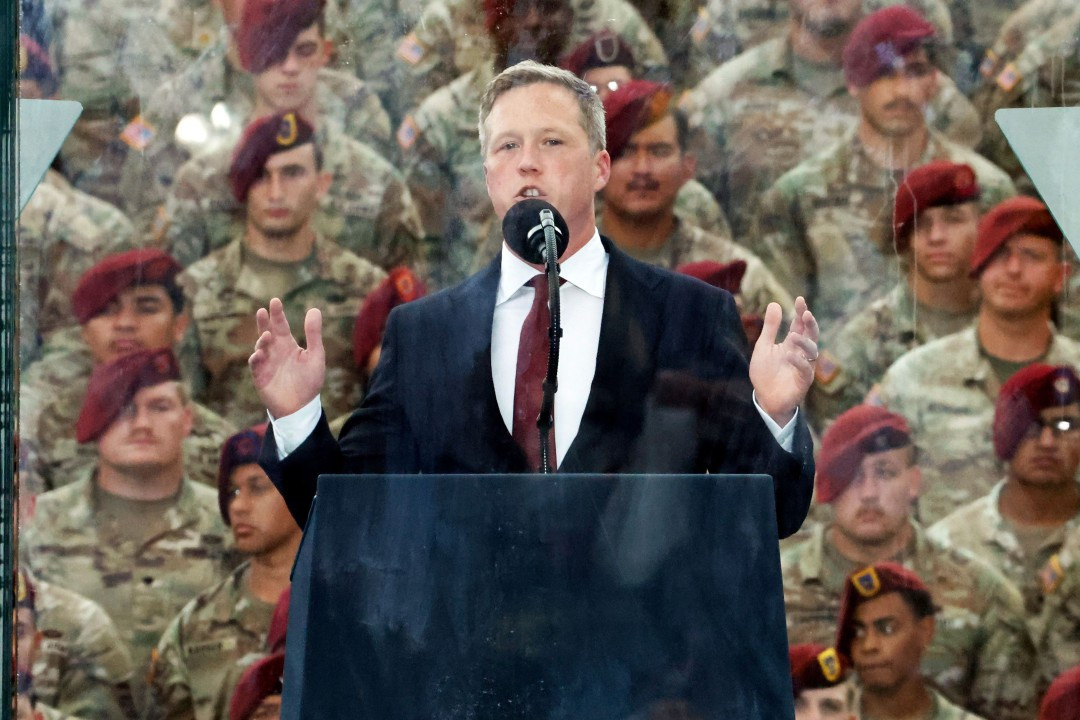
Army Secretary Dan Driscoll has officially resigned, leaving behind a legacy of disagreement and bureaucratic strife that rivals any family drama. Sources inside the Pentagon suggest his departure follows a series of escalating confrontations with Defense Secretary Pete Hegseth over issues that were never quite clear but surely involved at least one PowerPoint presentation too many.
In a statement that might as well have been crafted by a committee of public relations interns, the White House confirmed Driscoll's exit, noting it was a mutual decision made after extensive discussions—which we can only assume mostly involved Hegseth trying to explain why the Army's lunch menu should feature more chicken. While the Pentagon tries to maintain an air of stability, insiders report that the atmosphere resembles a high school cafeteria on taco day: chaotic and filled with rancorous debates over condiments.
Still Beats Watergate:
Sponsor success. Continue reading:
As Driscoll packs his office with the same care he likely used when organizing the Army's strategic plans, speculation is rampant regarding who will fill the void. Some suggest an equally unqualified yet loudly assertive figure who can confidently discuss the merits of camouflage in both policy and personal attire. Meanwhile, committees are forming to discuss the committee that will discuss potential candidates, ensuring that bureaucratic inertia remains firmly in place.
New Bureaucratic Protocols Emerge
This resignation is said to be part of a larger trend within the Defense Department, where officials are now required to submit their disagreements in writing, formatted in a font no larger than 10-point, double-spaced, and with a minimum of five bullet points. This new directive, dubbed the Driscoll Doctrine, aims to promote clarity while simultaneously ensuring that any potential fallout remains buried under endless layers of paperwork.
Affecting you
In the wake of Driscoll's resignation, Hegseth reportedly plans to address the service branches' leadership with a heartfelt directive: "We need to focus more on the mission and less on the melodrama." One can only imagine the response from those on the ground experiencing the bureaucratic drama firsthand, as they navigate the labyrinthine paths of military hierarchy and protocol.
As the Army searches for its next leader, one thing is clear: the only thing more turbulent than the strategic decisions will be the inevitable back-and-forth over who gets to sit at the head of the table. But, rest assured, the process will be transparent—unless a memo accidentally gets marked as confidential, of course. This new era of leadership will surely bring with it a fresh round of disagreements, which, if history teaches us anything, will be far more entertaining than any reality show on television.