US Army Secretary Resigns, Leaves Behind a Bureaucratic Mystery
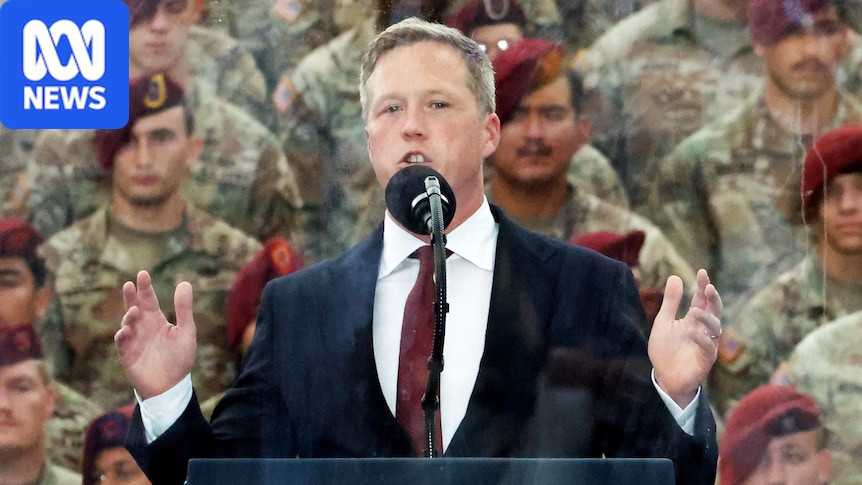
US Army Secretary Dan Driscoll has officially stepped down after a brief 18-month tenure, a move that has sent shockwaves through the Pentagon and left a void in leadership that officials are now tasked with filling through a series of increasingly absurd bureaucratic measures. In a statement, the Department of Defense expressed its commitment to maintaining operational continuity, which they assured would be achieved through a rigorous application of the newly instituted ‘Resignation Response Initiative.’
The initiative, officials explained, will involve the immediate formation of a ‘Secretary Search Committee’ tasked with identifying potential candidates for Driscoll's replacement. This committee will employ a multi-tiered approach that includes an exhaustive 47-step vetting process, which is expected to take no less than 18 months—an ironic nod to the duration of Driscoll's own tenure. Until a new secretary is appointed, the Army will operate under a ‘temporary leadership framework’ that designates a rotating series of deputy secretaries to take turns in the position, thus ensuring that all decisions remain equally indecisive.
Still Beats Watergate:
Sponsor success. Continue reading:
In a stroke of bureaucratic genius, the Pentagon has announced the creation of a ‘Bureaucratic Stability Metrics’ program, aimed at quantifying the performance of the temporary leadership. Metrics will include ‘number of memos generated’ and ‘amount of coffee consumed during meetings,’ with officials asserting that these vital statistics will help gauge the efficacy of the interim leadership structure. The goal is to ensure that while the leadership may be in flux, the paperwork flows smoothly.
Innovative Approaches to Leadership Selection
As part of this initiative, the Army is also considering the implementation of a ‘Leadership Lottery’ system, where high-ranking officers will be randomly selected to fill leadership roles on a weekly basis. This plan, while somewhat whimsical, is seen as a way to introduce a fresh perspective into the Army’s decision-making process—assuming, of course, that the perspective is not too fresh.
Your takeaway
Meanwhile, speculation surrounding the reasons for Driscoll's abrupt departure has prompted the Pentagon to issue a memo clarifying that no clarification is necessary. The memo emphasized that the circumstances leading to the resignation are ‘classified but unclassified’ and assured the public that any further inquiries would be met with the standard bureaucratic response of ‘we’re looking into it.’
In light of these developments, it remains to be seen how the Army will navigate the dual challenges of finding a new leader while simultaneously managing the absurdity of its internal processes. Until then, officials are encouraged to engage in ‘team-building exercises’ that involve blindfolded trust falls to promote camaraderie among the temporary leadership—because nothing says stability quite like a good fall from grace.