Humanoid Robots to Compete with Politicians for Your Job
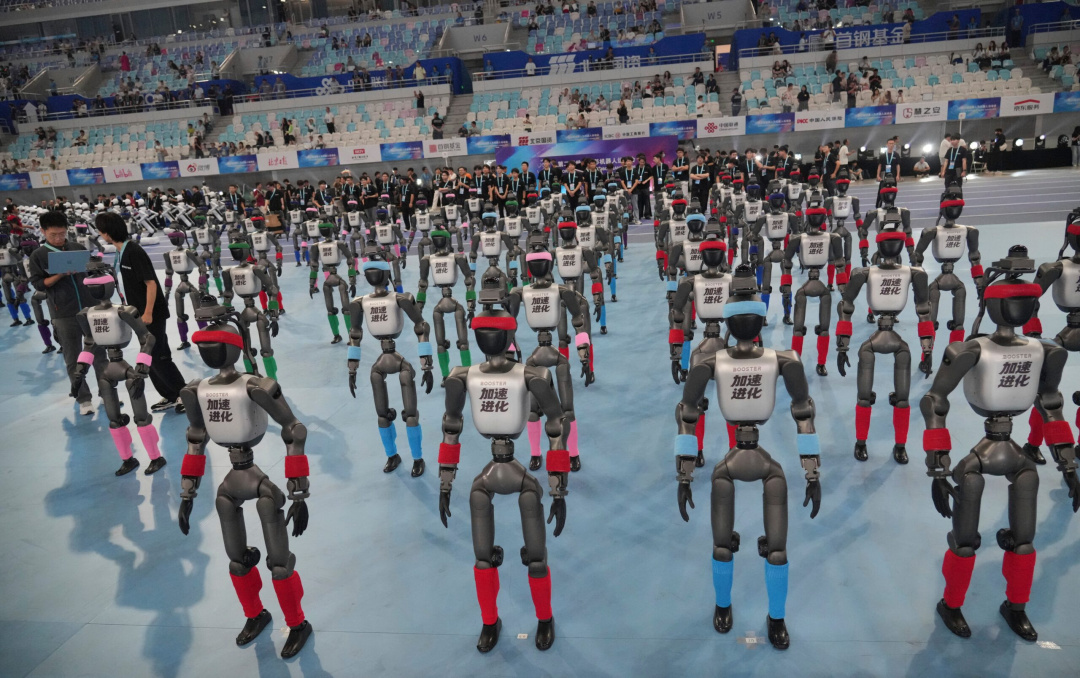
In a move that has left many politicians shaking in their loafers, China's latest initiative involves training over 100 humanoid robots to perform simple tasks such as sorting crates and packaging noodles. These robots, under the careful guidance of a dozen human trainers wearing headsets, are preparing to step into the labor market, potentially offering a more reliable option than the average politician.
This ambitious program, however, is not without its challenges. Currently, the robots are reportedly moving at a pace that could only be described as 'glacial,' which has raised concerns about their ability to secure jobs in a fast-paced economy. Officials have assured the public that they are working diligently to enhance the robots' processing speed, claiming that soon, these mechanical marvels will be able to outpace the legislative process itself.
Still Beats Watergate:
Sponsor success. Continue reading:
As part of this initiative, the government has introduced a new metric dubbed the 'Job Efficiency Ratio,' which promises to measure the effectiveness of robots versus human workers. Early estimates suggest that a standard humanoid robot could achieve a 150% efficiency rating in noodle packaging alone—clearly a hot meal when compared to the average legislative debate.
In a further escalation of this initiative, the Ministry of Labor has announced that these robots will also be trained in public speaking, with the goal of replacing human politicians in campaign rallies. The robots will be programmed with an extensive array of slogans and can deliver them with a level of sincerity that many human candidates could only aspire to. This has prompted the creation of a new electoral strategy: "Vote for the Robot, It Can't Make Things Worse!"
Robots and the Future of Campaign Finance
As the robots prepare to enter the workforce, the government is already drafting new policies to ensure that any positions filled by humanoids will still allow for continued funding of human political campaigns. In an unexpected twist, this has led to discussions of a new subsidy program for robotic candidates, should they ever decide to run for office. The robots would come equipped with a built-in compliance feature to ensure they adhere to all campaign finance laws, making them the first candidates in history to be entirely above board.
Applied to you
The implications of this policy are vast, as it is now being suggested that the future of governance may very well lie in the hands (or circuits) of these humanoid machines. If successful, China might just prove that the only thing slower than a human politician is a robot attempting to navigate bureaucratic red tape.
Regardless of the outcome, one thing is clear: the future of work may soon include a seat at the table for our robotic counterparts, and who knows? They might just do a better job than the current occupants.