Bessent Announces New Sanctions, Promises Financial Violence Against Iran
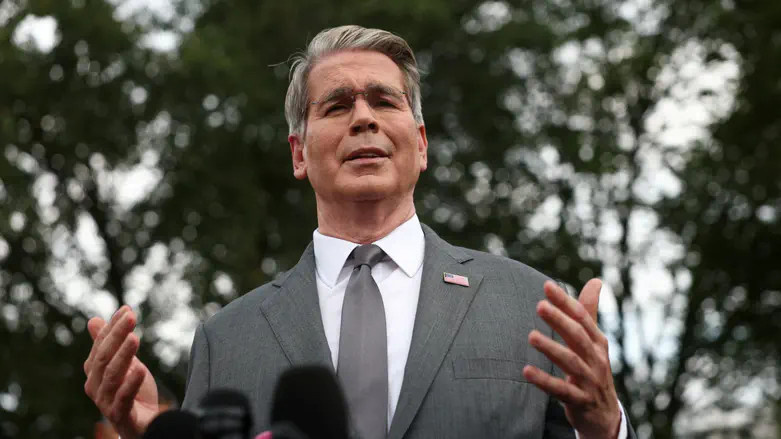
US Treasury Secretary Scott Bessent has unveiled a bold new initiative to impose further financial sanctions on an unsuspecting bank in a move that can only be described as economic theatrics. This week, the administration will showcase its latest strategy in the ongoing campaign to isolate Iran financially, a spectacle Bessent confidently dubbed "Operation Economic Outcast." This name alone should send shivers down the spines of any financial institution daring to cross the U.S. Treasury's path.
In a statement that echoed through the hallowed halls of fiscal intimidation, Bessent declared, "This is going to be financial violence if we have to." One can only wonder what financial violence entails—perhaps the cold, calculated removal of bank accounts or a sternly worded letter from the FinCEN? The world will find out soon enough as the administration gears up for its latest round of sanctions, which are touted to be as devastating as a paper cut to an already beleaguered bank.
Still Beats Watergate:
Sponsor success. Continue reading:
Bessent's grand plans will take center stage at the upcoming Group of 20 meetings in Asheville, North Carolina, where he will engage in discussions with finance officials from around the globe. The key objective? Convincing the international community to join him in the noble crusade against Iran's alleged monetary mischief. The sheer audacity of this mission cannot be overstated, as it aims to unite nations in a symphony of financial exclusion, punctuated by the occasional awkward silence of non-compliance from countries like China, who are reportedly still trading with Tehran despite the U.S. Treasury's best efforts.
As the clock ticks on the administration's campaign, Bessent has taken it upon himself to label this operation an "economic D-Day" against Iran. One can only imagine the meticulous planning that goes into such a momentous occasion. Perhaps it involves crafting a colorful PowerPoint presentation to display the crushing metrics of financial isolation or awkwardly asking other nations to join the U.S. in what is essentially a global financial ostracism party.
In a moment of bureaucratic brilliance, the Treasury Department has decided to target Banque Misr's UAE branches, blocking them from correspondent banking relationships with U.S. financial institutions. This move is expected to limit their ability to conduct dollar transactions involving Iran, which sounds impressive until one realizes that such actions may also inadvertently involve a few innocent bystanders. After all, isn't collateral damage just a part of the job when you're in the business of financial warfare?
Challenges in Enforcing Sanctions
However, Bessent's mission isn't without its hurdles. The administration has mostly opted for stern warnings to countries that continue to engage in trade with Iran rather than wielding the big stick of immediate penalties. The biggest challenge remains China, Iran's largest trading partner and a persistent thorn in the side of U.S. policy. Bessent plans to confront Chinese officials at the G20 meetings, asserting that "all options are on the table" regarding potential sanctions against Beijing. This ominous phrase has become a favorite among bureaucrats, evoking images of a high-stakes poker game where everyone is bluffing, but nobody knows the rules.
As the administration escalates its rhetoric and actions, one must wonder how long it will be before financial institutions start hiring professional negotiators just to maintain their sanity. Meanwhile, Bessent continues to assure the public that the U.S. and China share a common interest in preventing Iran from obtaining a nuclear weapon, a fact that is almost reassuring until you realize that both parties are also actively engaged in a delicate dance of economic brinkmanship.
Your Takeaway
Ultimately, the Trump administration's latest financial sanctions against Iran serve as a reminder that in the world of international finance, the lines between diplomacy and economic warfare can often blur. As Bessent prepares for the G20 meetings, we can only hope that there will be enough chairs at the table to accommodate all the nations willing to play along with this elaborate game of sanctions. After all, nothing says international cooperation quite like a well-timed financial penalty.
As the administration continues to ramp up its economic isolation strategy, we might soon witness a world where financial institutions operate under the constant threat of sanctions like a game of high-stakes chess—except with significantly higher stakes and fewer rules. The question remains: who will be the next unwitting pawn in this ongoing saga of economic turbulence?