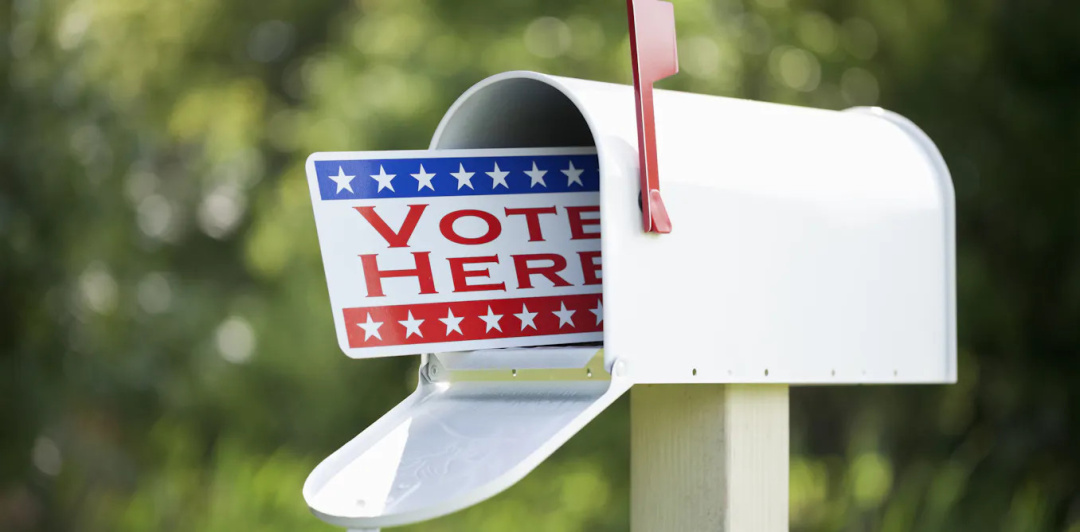
Judge Indira Talwani Halts Trump's Mail-in Voting Sabotage
Federal district Judge Indira Talwani has stepped in with a commanding order that temporarily halts the Trump administration's latest attempt to sabotage mail-in voting, a move that has been met with equal parts relief and incredulity by election watchdogs. Talwani's ruling, delivered with the kind of swift efficiency usually reserved for fast food drive-thrus, signals a clear message: undermining democracy will not be tolerated, even just weeks before the midterms.
In an unprecedented show of bureaucratic confidence, the administration had initially proposed a complex web of regulations designed to make mail-in voting as confusing as possible. Reports indicated that the new guidelines were set to include mandatory color coding on envelopes, a cryptic set of symbols denoting validity, and a requirement for voters to submit a selfie alongside their ballots. The logic, according to officials, was that this would enhance voter engagement through an interactive experience. One can only wonder if they also considered adding a trivia quiz for good measure.
Still Beats Watergate:
Sponsor success. Continue reading:
However, Judge Talwani's ruling swiftly dismantled these plans, asserting that the administration's strategy was less about security and more about creating a bureaucratic nightmare that would discourage voters. In her decision, she noted the absurdity of requiring voters to engage in an elaborate guessing game just to ensure their votes counted. "Voting should be straightforward, not an episode of a reality TV show where contestants must navigate an obstacle course to cast their ballot," she quipped.
Furthermore, the administration's insistence on redesigning the voting process to include multiple layers of approval and verification was described as "the ultimate bureaucratic overreach." Insiders suggested that officials were so eager to implement these changes that they had drafted a 200-page manual titled 'The Definitive Guide to Confusing the Electorate.' This manual would have been available exclusively in a format that required a subscription fee, raising concerns about accessibility.
Judicial Oversight in Electoral Maneuvering
As the midterms approach, the ruling serves as a stark reminder that while the administration may attempt to reshape electoral processes, the judiciary remains a critical check. In the wake of Talwani's decision, officials were overheard discussing a new initiative to form a committee tasked with finding even more convoluted ways to impede voting without crossing legal lines. Their motto, "If at first you don't succeed, redefine the terms of democracy," seems to echo through the halls of power.
In light of this latest judicial intervention, the Trump administration is reportedly adjusting its strategy to focus on less overtly absurd methods of voter suppression, perhaps returning to more traditional tactics like spreading misinformation or simply hoping for lower voter turnout. The challenge remains: how to balance their ambitions with a judiciary that seems intent on keeping the electoral process from resembling a circus act.
The Next Steps in Voter Engagement
As the dust settles from this legal skirmish, one can only speculate what the administration's next move will be. Perhaps they will pivot to a campaign encouraging voters to mail their ballots in origami cranes to add a bit of whimsy to the process. After all, nothing says democracy like a paper crane that might just fly its way to the ballot box.
Ultimately, Judge Talwani's ruling is a win for those who believe in a fair electoral process. It not only highlights the absurdity of the proposed changes but also sets a precedent that may prevent similar attempts from being made in the future. In a world where the election process can seem like a never-ending game of bureaucratic whack-a-mole, this ruling stands as a beacon of hope that reason and democracy can prevail, no matter how convoluted the opposition's tactics may become.