Federal Judge Slams Trump Administration for Deporting Pro-Palestinian Students
A federal judge has decisively ruled that the Trump administration's attempts to deport international students for criticizing Israel's actions are unconstitutional. In a stunning display of judicial candor, District Judge Noel Wise unleashed a tirade against the Department of State and the Department of Homeland Security, declaring that the government cannot punish individuals for exercising their right to free speech. "Stated plainly, in the United States, freedom of speech belongs to the people," Wise remarked in her comprehensive 90-page ruling, which will surely go down in history as a hallmark of judicial bravery.
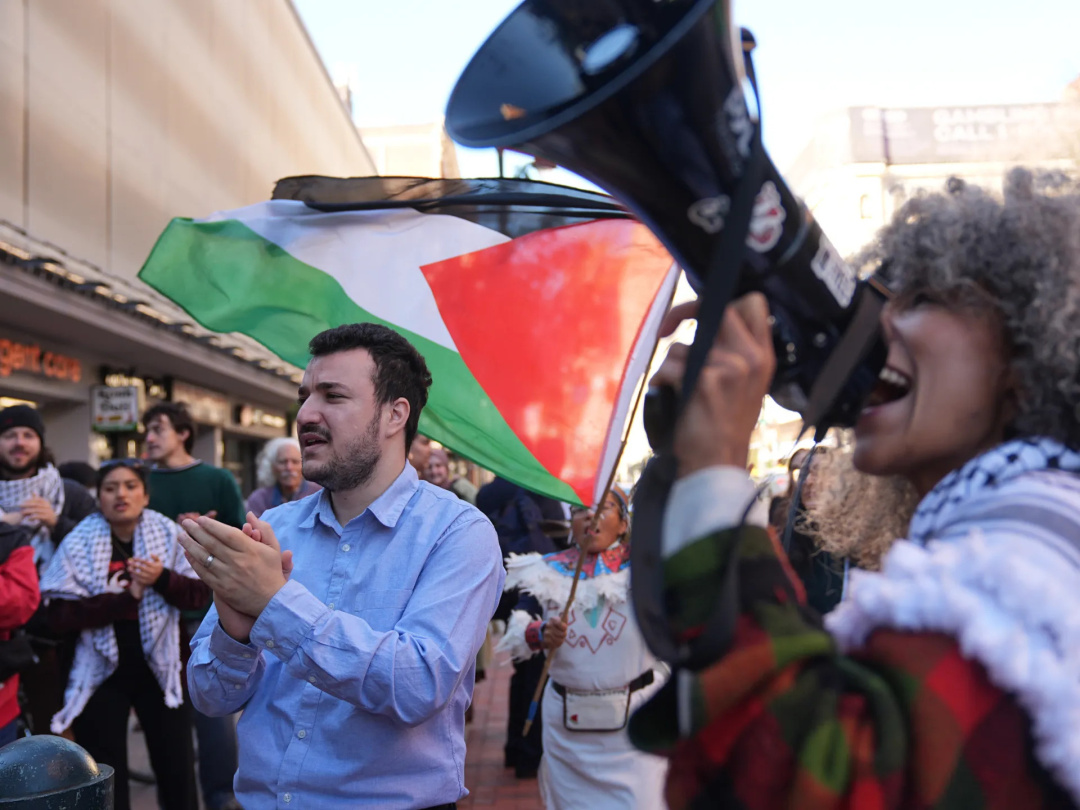
The ruling stemmed from a series of actions taken by the Trump administration that sought to revoke the student visas of noncitizens engaged in pro-Palestinian advocacy. This included the case of Mahmoud Khalil, a Columbia University graduate student whose activism had made him a target of the administration’s aggressive deportation tactics. Khalil, who now faces deportation in a separate legal battle, joyously proclaimed via social media, "No one should fear speaking up for Palestine," a sentiment that may soon be etched in the annals of resistance.
Still Beats Watergate:
Sponsor success. Continue reading:
In her ruling, Judge Wise did not hold back in her condemnation of Secretary of State Marco Rubio, characterizing his enforcement policies as "standardless" and a blatant violation of the First Amendment. Her decision revealed a conspicuous pattern in the administration's actions: visas are revoked primarily when noncitizens dare to express criticism of the government. This daring revelation paints a troubling picture of a government that seems to view dissent as a national security threat rather than a fundamental democratic principle.
Critics have argued that the Trump administration's legal justification for these deportations — citing potential foreign policy consequences — is as flimsy as a paper visa. Judge Wise reinforced this notion by asserting that the First Amendment unequivocally protects free speech, regardless of the administration's vague claims. It appears that the administration's reliance on the Immigration and Nationality Act may not hold water in the face of constitutional scrutiny.
The ruling has been celebrated by advocates of free speech as a significant victory in the ongoing struggle against government overreach. Conor Fitzpatrick, a lawyer for the nonprofit Foundation for Individual Rights and Free Expression, hailed the decision as a reaffirmation of the inalienable rights afforded to all individuals, stating, "Today’s ruling proves that free speech isn’t a privilege, but the inalienable right of every man, woman, and child."
As the Trump administration continues to face legal challenges over its aggressive deportation policies, one wonders if the judge’s ruling will usher in a new era of accountability for government actions that infringe upon basic civil liberties. The implications of this decision may extend far beyond the courtroom, potentially reshaping the landscape of free expression for generations to come.
Escalating Legal Battles Ahead
With other federal judges also ruling against similar deportation efforts, it seems the Trump administration's strategy of intimidation may be faltering. Just last year, a Massachusetts judge declared that the administration's actions represented an unconstitutional infringement on the rights of noncitizen students. This pattern of judicial pushback suggests a growing reluctance among the courts to tolerate government overreach.
As the legal battles continue to unfold, one thing remains clear: the administration's attempts to silence dissent through intimidation are increasingly met with robust opposition. It remains to be seen how this saga will end, but the road ahead appears littered with both legal precedent and a renewed commitment to the principles of free speech.
Your Takeaway
In this climate of escalating legal tension, it is essential to remain vigilant. The fight for free speech is far from over, and with each ruling that challenges governmental authority, we inch closer to safeguarding the rights of every individual. As citizens, we must continue to advocate for transparency and accountability, ensuring that our voices are not just heard but celebrated in the ongoing dialogue of democracy.