Trump Declares Trade Talks with Canada a National Crisis, Orders New Department of Negotiation Humor
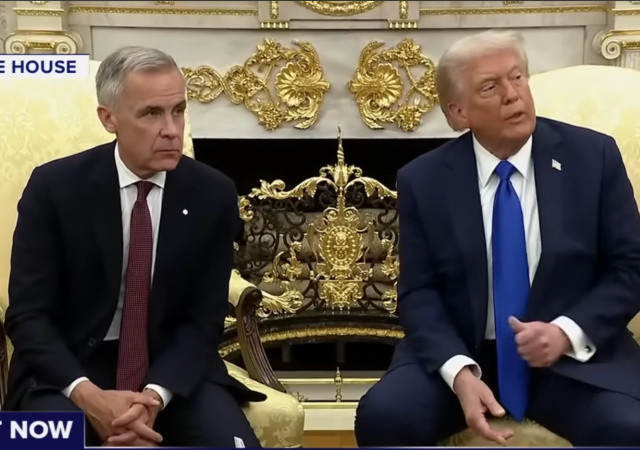
President Donald Trump has officially declared the recent collapse of trade talks with Canada a national crisis. In an unprecedented move, he has ordered the establishment of a new Department of Negotiation Humor, tasked with ensuring that future negotiations are not only productive but also entertaining. This agency will prioritize the infusion of humor into diplomatic discussions, allowing negotiators to utilize punchlines as bargaining chips.
"Negotiations shouldn't just be about tariffs and trade balances; they should be a laugh riot!" Trump stated during a press conference, flanked by a cadre of comedians who will serve as official negotiators. This newly minted department will employ a team of stand-up comedians to accompany trade representatives, ensuring that every serious conversation is sprinkled with lighthearted jokes and clever quips.
Still Beats Watergate:
Sponsor success. Continue reading:
In a further escalation of absurdity, the Department of Negotiation Humor will introduce a new metric: the Laugh Quotient (LQ). Each negotiation will be assessed based on the number of laughs generated, with a target LQ of 7.5 deemed necessary for any trade agreement to be considered valid. If negotiators fail to achieve this standard, they will be required to attend a week-long seminar on comedic timing and improvisation.
As a direct consequence of the failure to finalize the trade deal, Trump has also announced a 50% tariff on Canadian goods, a move he defended by asserting that Canada simply did not bring their best jokes to the table. "If they want to play hardball, we’ll play laughball!" he exclaimed, further solidifying his commitment to turning international relations into an ongoing stand-up routine.
Critics Weigh Humor Against Serious Negotiations
In light of these developments, critics are left to ponder the implications of such a policy. Some wonder if the new department will lead to more effective negotiations or if it will merely devolve into a series of comedic skits. However, administration officials remain undeterred, confident that humor will bridge any gaps in understanding and lighten the atmosphere of global trade discussions.
A New Era of Diplomatic Jest
As this situation unfolds, the world watches with bated breath. Will international relations become a comedic spectacle, or will the punchlines fall flat? Only time will tell if the Department of Negotiation Humor can deliver on its promise of laughter and trade prosperity.
In conclusion, the establishment of the Department of Negotiation Humor marks a significant shift in how the U.S. engages with international partners. Critics and supporters alike are eager to see how this will affect future trade talks, especially as they brace for what could be the most entertaining diplomatic era in history. The stakes have never been higher, and the jokes have never been worse. The fate of trade relations may just depend on who can tell the best punchline.