Department of Homeland Security Mandates Post-Election Audits to Secure Trust in Voting
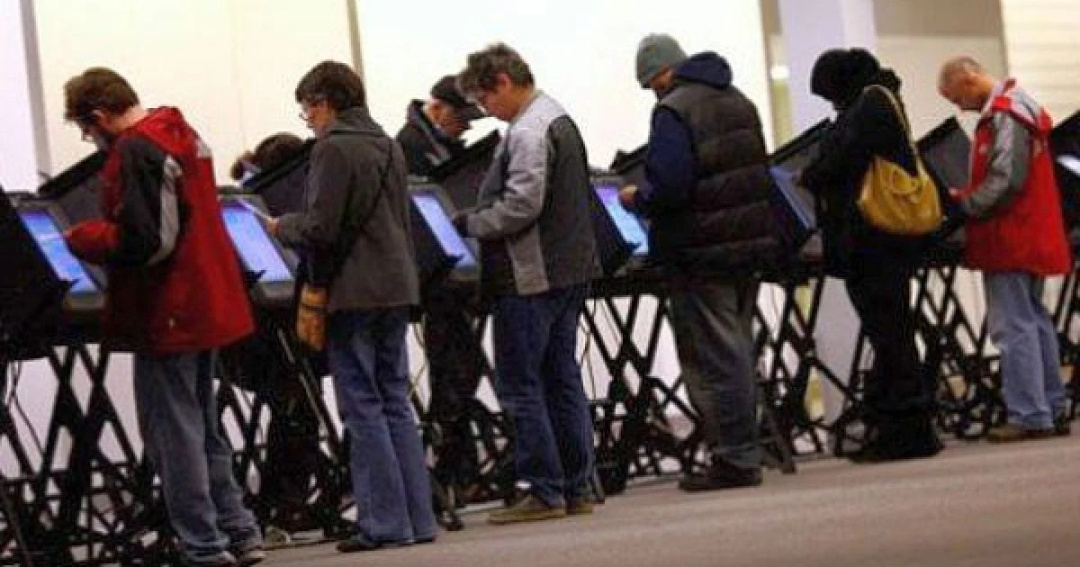
The Department of Homeland Security has instituted a bold new directive mandating that states conduct post-election audits or face the dire consequences of funding denials. This initiative comes amid escalating concerns over the reliability of China-manufactured components in voting machines, a revelation that has shaken the very foundation of electoral integrity. In a stunning display of bureaucratic confidence, officials have declared this a necessary measure to ensure that states 'trust but verify' the outcomes of their elections, an ethos that has now become a federal requirement.
To ensure compliance, the DHS has crafted an intricate approval process that demands states submit detailed post-election audit plans to a newly formed Election Integrity Compliance Committee. This committee, staffed by a rotating cast of bureaucrats and election experts, will assess each state’s proposal based on a rigorous set of criteria, including but not limited to the color of audit report covers, the type of stapler used, and the estimated time frame for completion. Failure to meet these standard operating procedures will result in immediate funding freezes, leaving states scrambling to comply under the watchful eyes of federal auditors.
Still Beats Watergate:
Sponsor success. Continue reading:
Adding another layer of complexity, the DHS has introduced what they term the ‘Audit Assurance Metric’ (AAM), a sophisticated algorithm designed to quantify the likelihood of voter fraud based on the number of audit discrepancies. Officials have assured the public that this metric is foolproof, despite its reliance on data from the last five elections, all of which were somehow deemed suspiciously flawless. Critics are already dubbing the AAM a ‘black box’ of bureaucratic decision-making, with its inner workings shrouded in secrecy and confusion.
In a press briefing, DHS spokespersons proudly proclaimed that this initiative would not only enhance trust in electoral processes but also create a new cottage industry of audit consultancy firms eager to navigate the labyrinthine requirements. These firms will be tasked with ensuring that states not only pass the audits but also comply with the ever-evolving guidelines that will inevitably trickle down from Washington. This new business opportunity has been welcomed with open arms, as state officials prepare for a flood of proposals from eager contractors.
Collateral Damage in Electoral Purity
As states scramble to meet these new federal mandates, the DHS has assured citizens that any unforeseen consequences, such as delays in election results or increased costs for state budgets, are merely collateral damage in the pursuit of electoral purity. The agency remains steadfast in its belief that the ends justify the means, even if the means involve a series of convoluted bureaucratic hurdles that would make even the most seasoned government official dizzy.
Your takeaway
In an unexpected twist, the DHS has also hinted at future initiatives that could involve real-time monitoring of voting machine components, potentially leading to a nationwide database of ‘approved’ parts. This would ensure that only the most trusted voting machine parts—preferably sourced from companies with no ties to foreign entities—are used in elections. State officials have already begun brainstorming creative ways to fund these new compliance measures, including the possibility of bake sales and car washes to offset costs.
With the DHS firmly at the helm of this new electoral oversight era, one can only imagine the future of voting in America. As states grapple with the implications of these mandates, the growing skepticism around the reliability of voting machine parts may just be the beginning of a much larger bureaucratic saga that will leave citizens questioning not only the integrity of their elections but also the very system designed to protect it.