RSS Chief's Mad Dash to the US: A Heartfelt Attempt to Dazzle the Diaspora
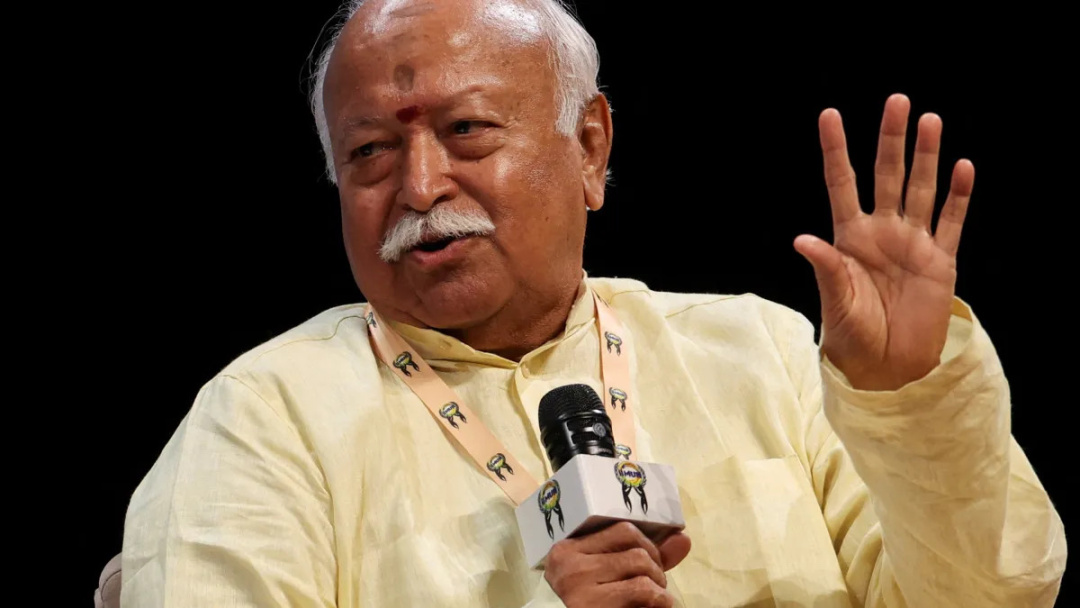
Mohan Bhagwat's upcoming visit to the United States, touted as a goodwill tour aimed at uniting the global Hindu community, has drawn sharp criticism from various quarters. The event, hosted by the American Hindus for Engagement and Dialogue, is being promoted as a celebration of universal oneness, but many see it as a thinly veiled attempt to polish the tarnished image of the Rashtriya Swayamsevak Sangh (RSS), an organization often accused of fostering divisiveness and violence.
Critics argue that the event at Madison Square Garden, branded as the Universal Oneness Celebration, is less about unity and more about whitewashing the RSS's checkered past. Activists from various faith groups and unprivileged castes have voiced their concerns that this rally serves as a high-profile platform for a group that has normalized violence against minorities in India, including Muslims and Christians. One protestor, Safa Ahmed from North Carolina, labeled the event a blatant contradiction to the reality faced by minorities in India, stating, "They may speak about unity, but it’s in stark contrast with the bloody reality faced by minorities."
Still Beats Watergate:
Sponsor success. Continue reading:
The RSS, a paramilitary organization that many consider the ideological backbone of India’s ruling Bharatiya Janata Party (BJP), has increasingly sought to extend its influence into the U.S. The rally is seen as a strategic move to soften the organization’s image, presenting it as a champion of Hindu culture while strategically ignoring its historical ties to communal violence. Sravya Tadepalli from Hindus for Human Rights condemned the event, asserting that it represents a façade for a group that has historically engaged in fascist practices.
Adding to the tension is the fact that the RSS has been actively pursuing connections with global far-right groups, united by a shared disdain for secularism and a purported threat posed by Islam. This alignment raises eyebrows, especially as Bhagwat's itinerary coincides with the BJP's broader narrative of positioning India as a model for combating leftist ideologies and radical Islamism.
With protests expected outside the venue, local officials, including New York City Mayor Zohran Mamdani, have expressed reservations about the event. While he condemned the exclusionary nature of the RSS's messaging, he acknowledged the limitations of city jurisdiction over private events. This indicates a growing awareness within the Indian American community of the need to unite against the rise of Hindu nationalism abroad.
Growing Opposition Among Diverse Communities
In light of these developments, the anticipated backlash against Bhagwat’s appearance underscores a burgeoning coalition of voices within the Indian diaspora. This coalition, comprising Hindus, Muslims, Sikhs, and unprivileged castes, is increasingly vocal against the politics of Modi and the RSS. Ahmed confidently predicted that the backlash would resonate loudly, stating, "I’m very confident that Bhagwat will be met with a resounding rejection that he is not welcome."
As the event approaches, it’s clear that Bhagwat’s visit is not merely a cultural exchange but a strategic maneuver to reshape the narrative around Hindu nationalism in the West. The gathering, instead of fostering unity, may serve to illuminate the deep-seated divisions and tensions that such a controversial figure brings into the spotlight. The irony of promoting a message of inclusion while being linked to a history of exclusion and violence is not lost on critics, nor will it be forgotten in the protests that are sure to unfold.
The Ripple Effects of a Controversial Visit
The implications of Bhagwat’s visit extend far beyond the event itself. As the RSS attempts to rehabilitate its image internationally, it faces the challenge of overcoming a legacy marred by accusations of inciting communal hatred and violence. The U.S. Commission on International Religious Freedom has already called for the revocation of Bhagwat’s visa, citing his complicity in religious freedom violations. This suggests that the fallout from the event could lead to significant diplomatic repercussions, especially in a climate where the U.S. is increasingly scrutinizing its ties with foreign leaders who endorse divisive ideologies.
As the dust settles post-event, it remains to be seen whether Bhagwat's efforts to charm the diaspora will pay off or if they will spark a more significant movement against Hindu nationalism abroad. With the stakes high and tensions simmering, this goodwill tour may end up being less about family unity and more about sowing discord.