Iceland Launches Referendum to Reconsider EU Membership Amid Greenland Fears
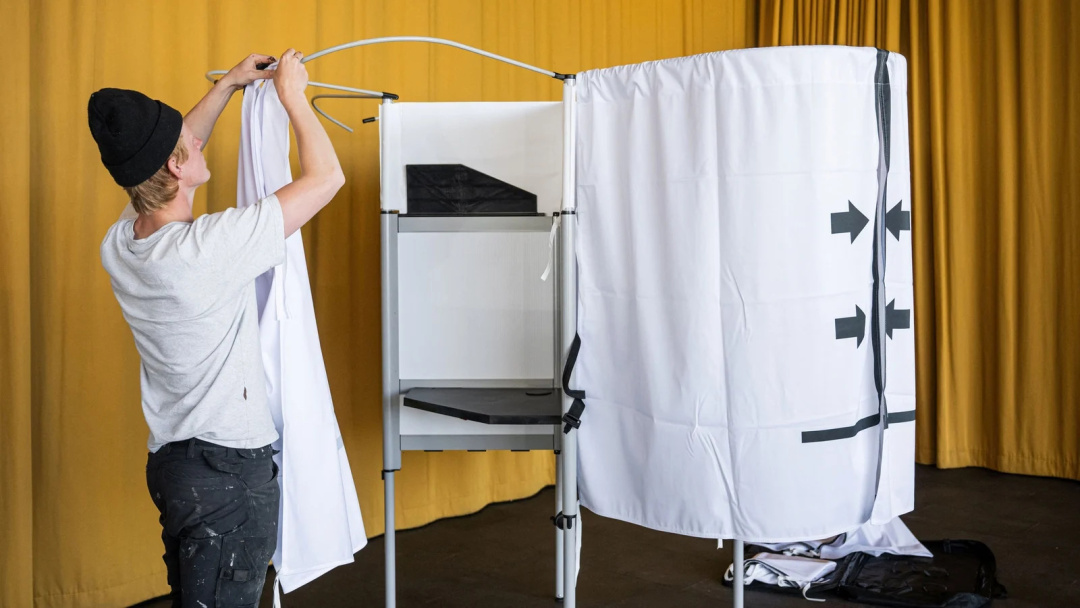
Iceland has officially kicked off a referendum to decide whether to unfreeze its EU membership talks, a process that has been dormant for over a decade. This momentous decision reportedly stems from concerns over US President Donald Trump's ominous ambitions towards Greenland, prompting the coalition government to act swiftly. Voters will have until 10 PM local time to cast their ballots, with preliminary results expected shortly after midnight, though the real drama lies in the razor-thin margins between the competing sides.
As the clock ticks down, both the 'Yes' and 'No' camps are locked in a fierce battle, with the latest Gallup poll showing the 'No' side barely ahead at 51.6%, while earlier polls had the 'Yes' camp slightly in the lead. This unprecedented back-and-forth has turned the referendum into a spectacle of political gymnastics, reminiscent of an Olympic event where every vote counts. The stakes are high, and the implications could ripple through Icelandic society for years to come.
Still Beats Watergate:
Sponsor success. Continue reading:
Supporters of the 'Yes' campaign are confident that Iceland has a unique opportunity to negotiate from a position of strength, unlike when talks were last shelved in 2015. They argue that the current geopolitical climate, exacerbated by Trump’s antics, has created a pressing need for Iceland to align itself more closely with Europe. Advocates insist that EU membership would bolster Iceland’s bargaining power to protect its vital fishing industry, a claim that seems to have caught the public’s attention like a fish on a line.
Meanwhile, the 'No' campaign remains unconvinced, dismissing the supposed urgency about Greenland as little more than a distraction. They argue that Iceland's existing NATO membership and access to the EU's single market negate the need for further integration that could lead to an unwanted second referendum. Former Prime Minister Katrin Jakobsdottir has taken center stage in the 'No' camp, passionately advocating for Iceland’s sovereignty and warning against ceding any power to Brussels.
Domestic Struggles Shift the Focus
In a twist worthy of a political thriller, the situation has been further complicated by domestic issues like inflation and the cost of living, which have dominated the discourse more than the existential questions of international alliances. The central bank rate stands at a staggering 8.00%, compared to just 2.25% at the European Central Bank. Supporters of the 'Yes' vote argue that joining the EU could provide much-needed economic relief, perhaps like a lifebuoy thrown to a sinking ship.
Applied to you
As the political drama unfolds, Foreign Minister Thorgerdur Gunnarsdottir has framed the referendum as a critical juncture for Iceland: can a small nation afford to remain isolated in a rapidly changing world? Her rhetoric suggests that the vote is not merely about policies, but about Iceland's very identity on the global stage. Opponents, however, warn against the seductive promises of Brussels, suggesting that Icelandic politicians must take the reins of their own destiny rather than relying on foreign powers to solve domestic woes.
As the polls close, the fate of Iceland’s EU aspirations hangs precariously in the balance, with a foreign ministry memo hinting that if the vote swings in favor of reopening negotiations, talks could commence by the end of 2026. This timeline, however, may be subject to the whims of an unpredictable political landscape, with a general election looming by November 2028. In the end, the referendum may not just determine Iceland's relationship with the EU, but also redefine its path forward in an increasingly complex geopolitical environment.