Trump Administration Faces Inquiry Over Forest Service Official's Resource Diversion
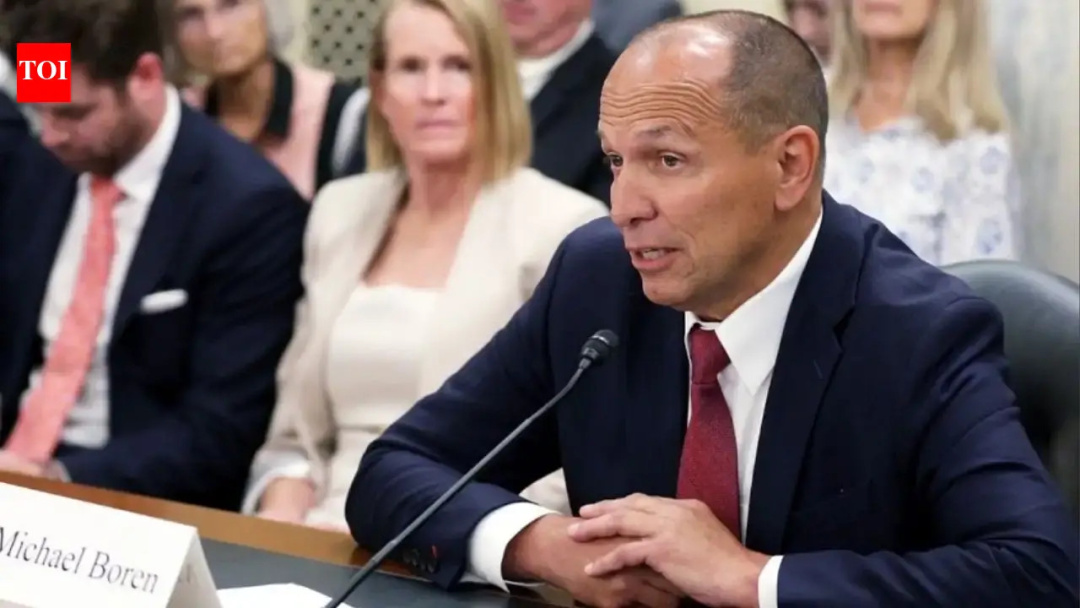
The Trump administration is now embroiled in a bureaucratic tangle as allegations arise that a senior US Forest Service official has been caught red-handed trying to divert firefighting resources to extinguish a blaze dangerously close to his own Idaho ranch. Michael Boren, the undersecretary of agriculture for natural resources and environment, reportedly made multiple inquiries about why more aerial support was not dispatched to combat the Cabin Creek Fire, which, incredibly, only threatened a modest seven acres.
In an official letter that could easily be mistaken for a poorly written sitcom script, three Democratic senators have demanded a full investigation into Boren’s actions. They have accused him of “inappropriate interference” in federal firefighting efforts, raising eyebrows over how a fire of such limited size warranted an inflated response more befitting a raging inferno. The senators pointed out that significantly larger fires during this record-setting wildfire season received a mere fraction of the resources that Boren’s personal fire was afforded.
Still Beats Watergate:
Sponsor success. Continue reading:
In a stunning display of bureaucratic confidence, the USDA has denied any wrongdoing on Boren's part, asserting that he simply maintained “regular contact” with the agency because the fire was near his property. The department is now in the process of determining what safeguards are in place to prevent political interference in wildfire response, while Boren is likely busy drafting his own version of the “how-to” guide on ethical resource allocation.
Adding further layers to this already absurd scenario, some insiders have hinted that Boren’s actions could potentially amount to a misuse of taxpayer funds. It seems that while forests were ablaze elsewhere, Boren's ranch was the only fire in need of a full-scale aerial assault, complete with multiple firefighting aircraft that would usually be reserved for blazes threatening entire communities.
The inquiry is now set to spiral into a labyrinth of compliance checks and committee meetings, where the real question might just be how many forms it takes to justify diverting public resources for private interests. As agriculture officials scramble to maintain the integrity of their response efforts, Boren’s case could become a case study in bureaucratic absurdity, potentially inspiring a new department dedicated solely to navigating the conflicts of interest in wildfire management.
In a final twist of irony, the USDA has stated that Boren was simply acting within his rights, leaving many to wonder at what point a government employee’s personal stakes should be excluded from the decision-making process. As the investigation unfolds, the only certainty remains: the flames of bureaucracy burn just as fiercely as any wildfire, often leaving scorched earth in their wake.