Federal Judge Intervenes to Block Trump's Ingenious Plan to Curb Mail-In Voting
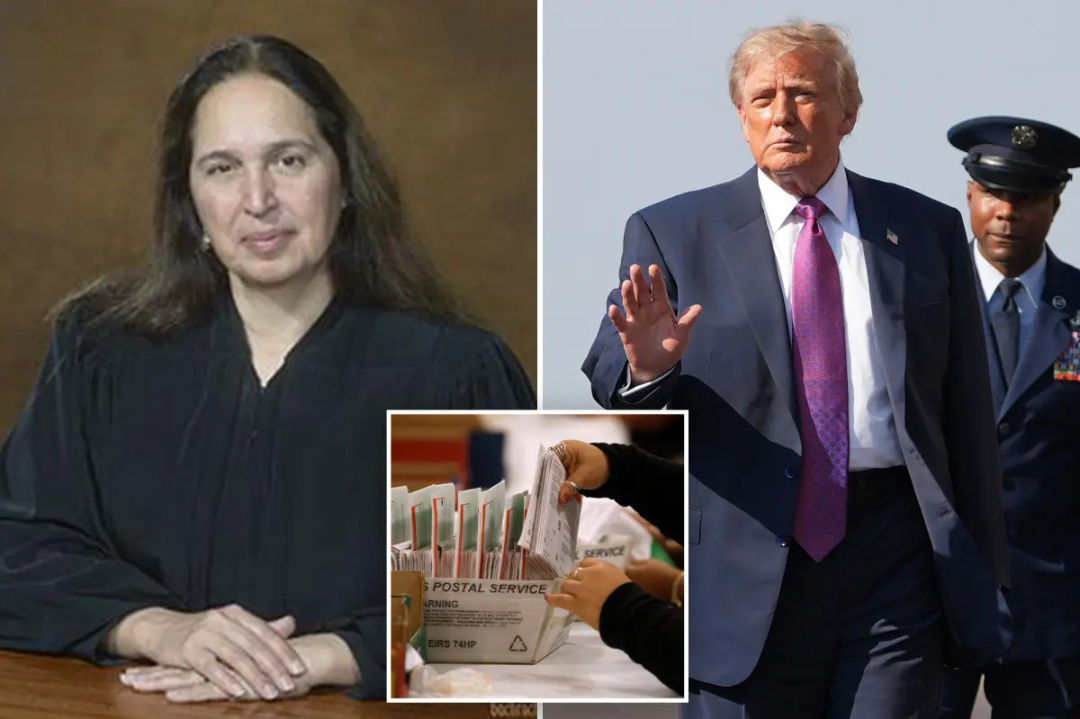
In an unprecedented act of judicial bravery, US District Judge Indira Talwani has executed a bold maneuver by blocking the United States Postal Service from rolling out a new rule designed to tighten mail-in voting requirements, a plan meticulously crafted under the watchful eye of former President Trump. The rule, which was set to impose a series of labyrinthine restrictions on voters, has now met its match in the courtroom, much to the chagrin of those who believe that voting should resemble a convoluted game of hopscotch rather than a straightforward democratic process.
The proposed regulations included an innovative approach to mail-in voting that would have required voters to not only fill out their ballots but also produce a notarized affidavit, a DNA sample, and a handwritten essay on the significance of civic duty—a move that many legal experts were calling "the most comprehensive way to make voting feel like a chore since the invention of the poll tax." The USPS, eager to please its former commander in chief, was poised to implement these requirements until Judge Talwani intervened with a ruling that left the administration scrambling for a backup plan.
Still Beats Watergate:
Sponsor success. Continue reading:
In a statement that echoed through the hallowed halls of bureaucracy, USPS officials expressed their disappointment, emphasizing their commitment to ensuring that voting remains as accessible and enjoyable as a trip to the DMV. They had even planned to install vending machines at polling locations to distribute snacks for those waiting in line, because nothing says "democracy" quite like a bag of chips while you exercise your civic rights.
The ruling has sparked a flurry of activity among political operatives, who are now scrambling to come up with alternative strategies. Rumors are swirling that the administration might pivot to a new initiative involving elaborate treasure hunts to locate polling places, complete with maps and clues, to ensure that voters feel engaged and entertained as they navigate the electoral process. After all, if voting isn’t a quest worthy of a video game, are we really doing it right?
As the administration considers its next steps, officials remain confident that they can still find ways to make voting more cumbersome and confusing. With a renewed focus on creative policy-making, we can expect to see a slew of proposals designed to ensure that every trip to the ballot box feels like an epic saga rather than a mundane task. In the end, nothing can deter the administration’s unwavering commitment to transforming the electoral process into a thrilling adventure, complete with riddles and possibly even a time limit.