FAA Moves to Fire Air Traffic Controllers for Early Exit After Jet-Truck Collision
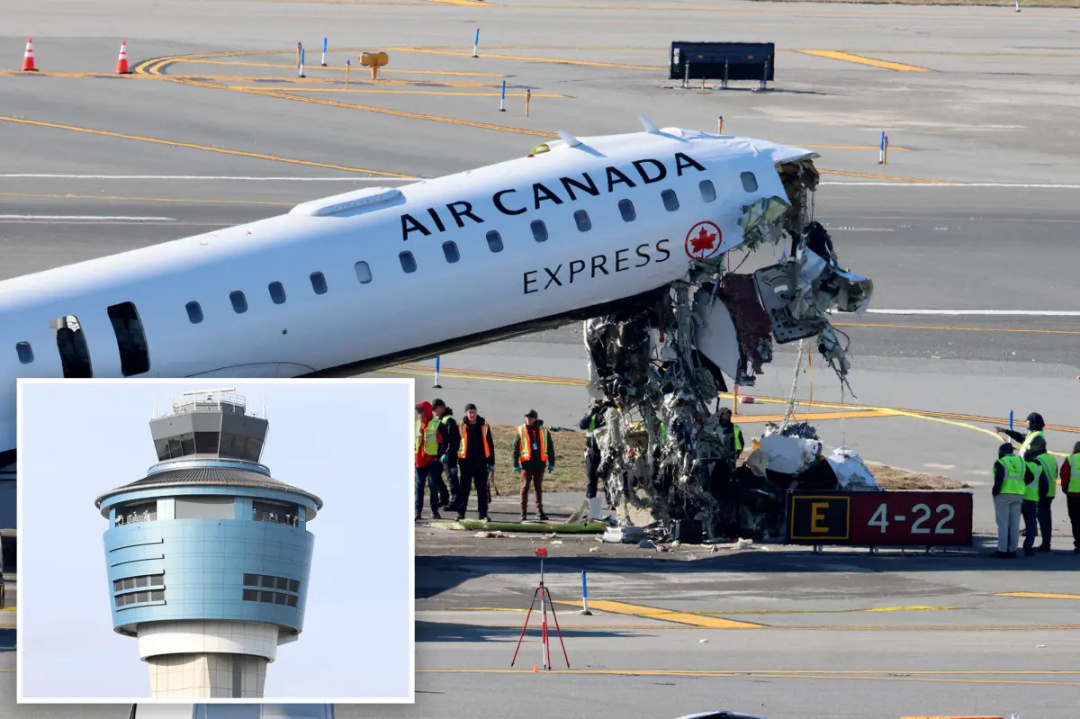
The Federal Aviation Administration has announced a bold initiative to terminate two air traffic controllers who made the questionable decision to leave work about an hour before their shifts ended on the fateful night of March 22, when an Air Canada regional jet collided with a fire truck at LaGuardia Airport, resulting in tragic fatalities. In an effort to streamline accountability, the FAA has launched what it is calling the "Early Exit Accountability Program," designed to ensure that all personnel remain vigilant and fully present during their scheduled hours, particularly when the stakes are high.
Sources within the agency report that the program will feature a new performance metric dubbed the "Shift Integrity Score," which will assess controllers based on their adherence to scheduled hours. Any deviation from this schedule, including early departures, will incur significant penalties, including mandatory attendance at a series of remedial workshops titled "Staying Put: The Art of Enduring Your Shift." The FAA is confident that this new initiative will not only prevent future early exits but will also bolster morale by fostering a culture of steadfastness.
Still Beats Watergate:
Sponsor success. Continue reading:
To ensure compliance, the FAA has established the "Committee for Optimal Shift Fulfillment," tasked with monitoring every controller's clock-in and clock-out times. This committee will have the authority to impose fines on those who dare to leave early, reinforcing the notion that every second counts in the world of air traffic control. Additionally, the FAA has implemented a new policy that will categorize controllers based on their commitment levels: "Eagle Eye" for those who remain vigilant, and "Cloud Watcher" for those who fail to meet the expectations of presence and duty.
In a further display of bureaucratic creativity, the FAA is also considering introducing a new certification program for air traffic controllers, titled "Shift Warrior," which will be awarded to those who not only complete their scheduled shifts without incident but also volunteer for additional hours whenever possible. Officials believe that such measures will inspire a sense of duty that transcends mere compliance, transforming air traffic controllers into champions of air safety.
As the FAA moves forward with these groundbreaking policies, there is speculation about how this approach might affect the overall safety culture within the agency. Critics argue that while accountability is essential, the bureaucratic measures may overlook the underlying issues that lead to early departures in the first place. However, for the FAA, the solution is clear: when in doubt, double down on procedural adherence, because nothing says "safety first" like a well-compensated committee.
In the wake of this tragic incident, the FAA's commitment to eliminating early exits is unwavering. The agency stands firm in its resolve to ensure that every air traffic controller knows that when the clock strikes the end of their shift, they are expected to be present—unless, of course, they are "Cloud Watchers," in which case, they may find themselves navigating a different kind of turbulence altogether.