Federal Reserve Governor Lisa Cook warns Trump against firing her over mortgage fraud claims
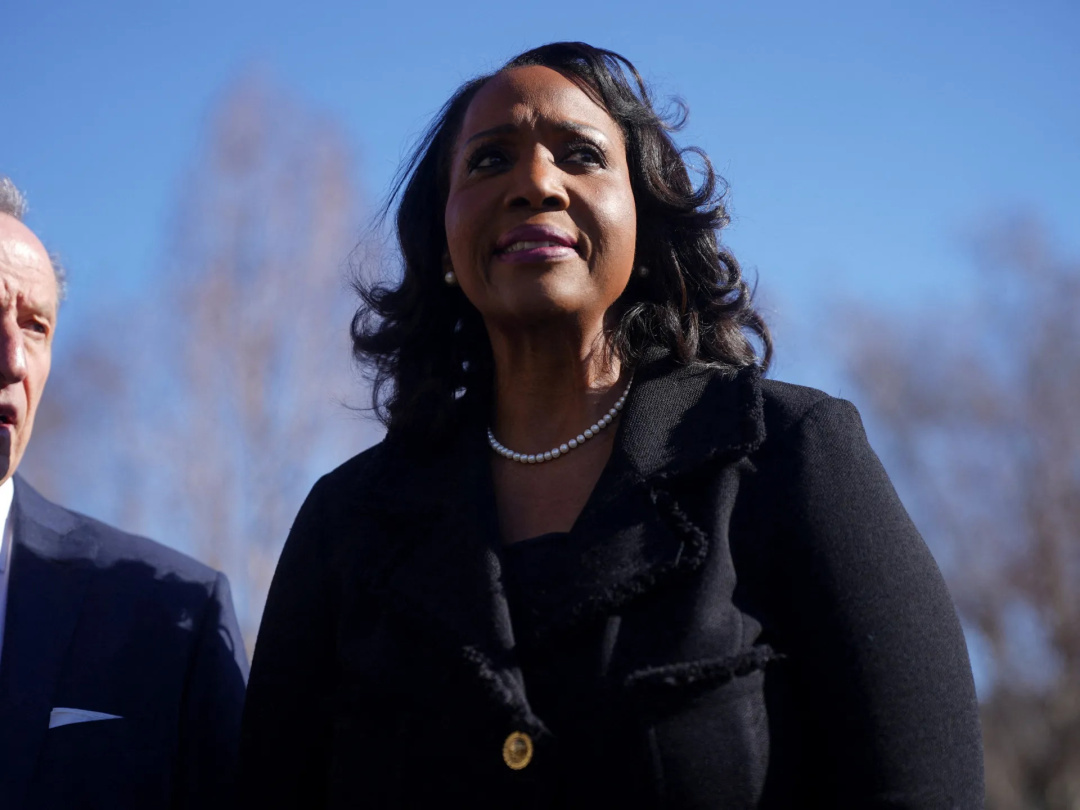
Federal Reserve Governor Lisa Cook has firmly advised the Trump administration that attempts to remove her from her post are both legally unfounded and politically motivated. In a bold move reminiscent of a high-stakes game of bureaucratic chess, Cook's legal team has issued a clear directive to the White House, stating that under U.S. law, Federal Reserve governors can only be dismissed for legitimate cause, not mere political whim. This warning comes as Trump has ramped up his rhetoric, alleging mortgage fraud in a bid to create a pretext for her removal.
In what some might call an irony-laden twist, Cook's attorneys have pointed out that an inadvertent error is hardly a basis for fraud—something the President and a significant portion of his cabinet should be well aware of, given their own history with paperwork discrepancies. Their letter underscores that these claims are not merely about real estate documentation but are instead a blatant attempt to manipulate the Federal Reserve into submission under the guise of legal justification.
Still Beats Watergate:
Sponsor success. Continue reading:
The latest threats from Trump echo similar accusations made a year prior, when he suggested he would fire Cook if she didn’t resign. This prompted Cook to take the issue to court, where she ultimately prevailed in a Supreme Court ruling that reaffirmed the independence of the Federal Reserve—a rare victory in a landscape often dominated by executive overreach.
Despite the court's decision, the Trump administration continues to challenge the boundaries of executive authority, with Cook now facing another wave of accusations that are as much about policy differences as they are about any purported misconduct. The audacity of such attempts has led experts to question whether the President views the Federal Reserve as a mere tool to wield in his quest for economic control, rather than an independent body designed to safeguard the economy from political pressures.
As the conflict unfolds, the stakes are rising. Trump's recent directive has given Cook a mere three weeks to respond, a timeline that seems to be as arbitrary as the accusations themselves. Yet, Cook remains steadfast, her legal team ready to counter any further attempts at intimidation, pointing out that no president has ever successfully ousted a Federal Reserve governor since the establishment of the institution over a century ago.
As the administration continues its aggressive stance, one has to wonder where this game will lead. Will Cook’s resolve hold against the tide of political maneuvering, or will the White House find a way to redefine 'cause' in a manner that fits their narrative? The world watches, and the implications of this power struggle extend far beyond the walls of the Oval Office.