Supreme Court Empowers Trump to 'Revolutionize' Mail-In Voting with Executive Order
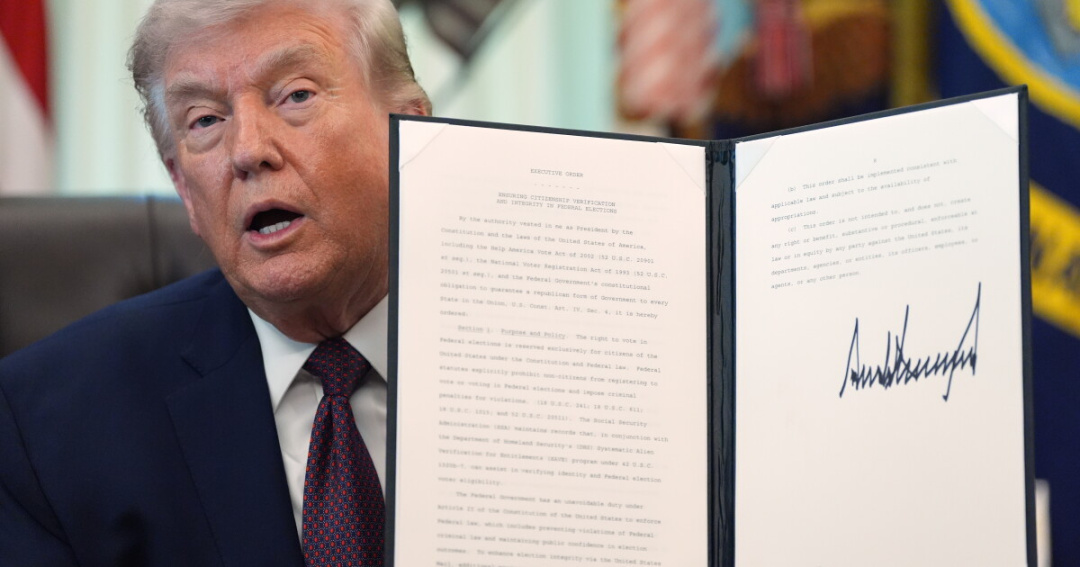
The Supreme Court has made waves this week by siding with President Trump’s executive order aimed at radically transforming mail-in voting—at least for now. This ruling, which cleverly avoids the pesky question of legality, instead focuses on the procedural gymnastics employed by states trying to block the order, leaving a trail of bureaucratic chaos in its wake.
In a stroke of administrative genius, the Court has decided that states simply aren’t ready to challenge the executive order. The justices determined that the new U.S. Postal Service rule—designed to track ballots and identify recipients—was not yet in effect when the order was legally challenged. This delightful oversight means that states will have to hold their horses while navigating a legal labyrinth that is as murky as a swamp.
Still Beats Watergate:
Sponsor success. Continue reading:
The executive order itself is a masterpiece of electoral engineering. It requires the Department of Homeland Security to compile a comprehensive citizenship list, ensuring that ballots are sent only to those deemed eligible. Should states err in their judgment and send ballots to the ineligible, they could find themselves facing federal prosecution. The Postal Service, not to be outdone, has been tasked with creating a tracking system for mail-in ballots, establishing discretion that might let them pick and choose who gets to vote by mail based on this incomplete citizenship list.
As if this weren’t enough, Democratic states have jumped back into the fray, filing yet another lawsuit to challenge Trump’s grand vision. Their argument hinges on the assertion that voters who lean Democratic are disproportionately affected by such restrictions, leading to a chilling effect on mail-in voting—a tactic that might be seen as a sly move to boost Republican chances in the upcoming midterms.
Yet, amidst all this chaos, the ultimate question remains: how will this executive order impact actual voting? Voter registrars across the nation are left in a state of uncertainty, forced to anticipate changes that may or may not come to fruition. The sheer unpredictability of the situation is enough to make even the most seasoned political operatives dizzy with confusion.
Justice Ketanji Brown Jackson, in her dissent, aptly noted that this ruling injects needless chaos into the electoral process. The irony is rich; the very administration that has cast doubt on election integrity is simultaneously engaged in actions that undermine confidence in the electoral system itself. As states grapple with the implications of this ruling, the Trump administration's strategy to instill confusion may just pay off handsomely come Election Day.
In the end, the Supreme Court has not only upheld an executive order but has also set a dangerous precedent for future electoral challenges. As states prepare for the impending midterms, the uncertainties created by this decision could reshape the landscape of American democracy, leaving voters more confused than ever about their rights and the integrity of their elections.