CIA Issues Official Warning to Putin: Just Don’t Do It, Really
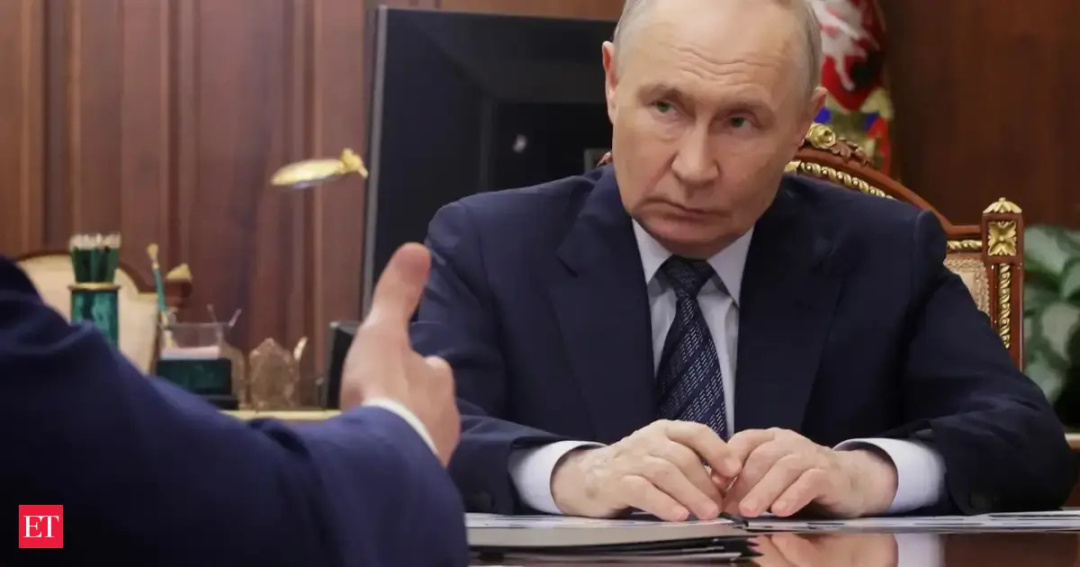
The CIA has taken the unprecedented step of issuing a stern message to President Vladimir Putin, advising him, in no uncertain terms, to just not do it. This comes as the specter of a broader Russia-Europe conflict looms ever larger, fueled by a series of drone attacks that have sent shockwaves through the NATO alliance. The agency's warning is said to have been delivered in a top-secret briefing that was strangely devoid of any actionable intelligence, leaving officials to wonder if the message itself was simply a diplomatic placeholder.
In a move that can only be described as both bold and baffling, the CIA has reportedly classified its warning as a new “Don’t Do It” initiative, which sounds suspiciously like a schoolyard taunt but is meant to convey serious implications. According to sources, the CIA's chief admonished that crossing the line into further aggression would not only have dire consequences for Europe but might also lead to an embarrassing situation for Putin, who would have to explain his actions to a committee of very serious-looking generals.
Still Beats Watergate:
Sponsor success. Continue reading:
In response to the escalating drone strikes, the CIA has launched a new internal task force dubbed the Committee for Incredibly Obvious Advice (CIA), which aims to provide world leaders with straightforward guidance. The group’s first report, which is rumored to contain the phrases “chill out” and “play nice,” is expected to be distributed at an upcoming NATO summit. Officials predict that the report will be met with a mix of confusion and laughter, punctuated by nervous glances among attendees.
Adding to the absurdity, the agency has developed a series of metrics to assess Putin's compliance with this directive. These include an official “Just Don’t Do It” score that will be calculated based on social media sentiment, the number of diplomatic meetings Putin attends, and the frequency of his public denials regarding hostile intentions. Experts are already debating the efficacy of such a metric, with one analyst noting, "If we can measure how much he doesn’t do, we might just avoid a war."
As tension mounts, NATO has also prepared its own response strategy, which is being called “Operation Overreaction.” This operation will involve increasing troop deployments in Eastern Europe while simultaneously issuing a series of statements that sound tough but are ultimately designed to avoid any real confrontation. In a recent press briefing, an unnamed official summarized the plan succinctly: "We’ll look tough, say tough things, and hope for the best."
Meanwhile, as the situation develops, the CIA has reassured the public that their warnings are taken seriously, even if they sound like advice from a concerned neighbor. In a final twist, officials have suggested that if Putin ignores the warning, they might escalate to a more serious form of communication: sending him a strongly worded email—complete with a subject line in all caps. The bureaucratic absurdity of it all leaves many wondering what exactly it will take for world leaders to realize that sometimes, just sometimes, the best course of action is to keep it simple and not do anything at all.