Trump Declares Economic D-Day Against Canada and Iran, Seeks Allies in the Shadow of Incompetence
President Trump has officially declared an 'economic D-Day' against Canada and Iran, marking a new chapter in his administration's ongoing saga of international diplomacy, or lack thereof. This audacious move is said to be a bold step in reinforcing America’s presence on the world stage, despite the fact that the stage appears increasingly empty of allies. In a briefing filled with bureaucratic bravado, officials announced that the centerpiece of this initiative will be a tariff strategy designed to foster goodwill among nonexistent partners.
Officials are confident that slapping tariffs on Canadian goods will somehow encourage Canada to view the United States as a benevolent neighbor rather than a reckless bully. In a detailed memo, the Department of Economic Resilience outlined its strategy to ‘reduce dependency on foreign maple syrup’ while simultaneously launching a campaign to convince Canadian citizens that tariffs are simply a form of tough love.
Still Beats Watergate:
Sponsor success. Continue reading:
Simultaneously, the administration has prepared a series of sanctions against Iran, framed as a necessary step to uphold democracy and freedom. However, sources within the White House are quick to clarify that these sanctions are not just punitive; they are also a calculated effort to send a message that, despite having no allies, the U.S. will still attempt to lead from the front—preferably while holding a somewhat rusted megaphone.
As the situation escalates, the administration has set up a new task force, the Committee for Reassuring Uncertain Allies (CRUA), tasked with the noble mission of finding and nurturing potential allies out of thin air. Their first meeting is scheduled for next Tuesday, where they will discuss strategies such as ‘increased visibility on social media’ and ‘the importance of memes in modern diplomacy.’
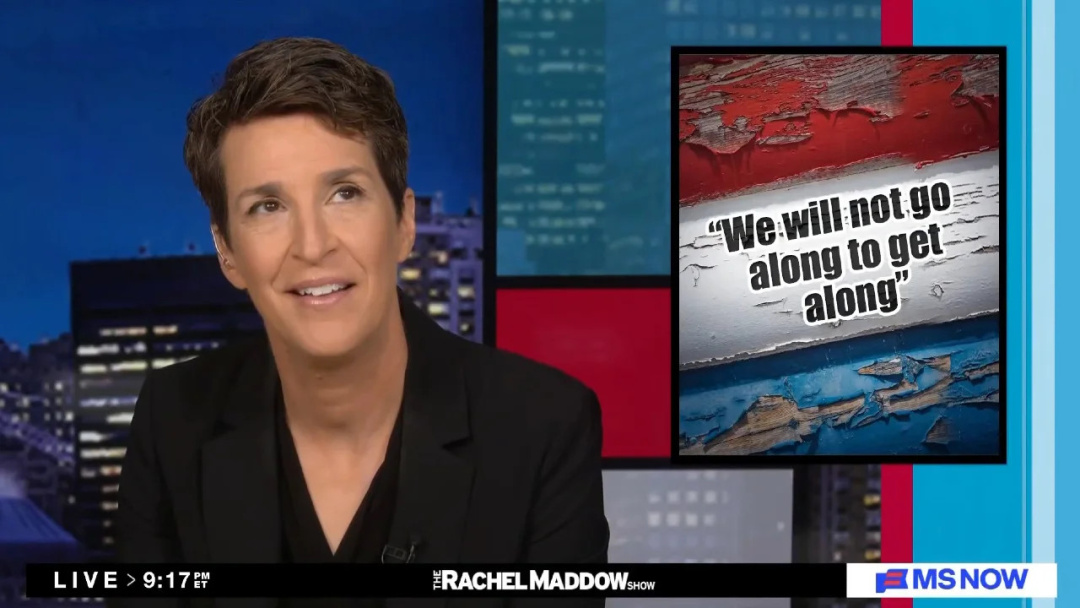
In a stunning twist of irony, Rachel Maddow noted that the very essence of D-Day was about uniting against a common enemy, something this administration appears to have forgotten, as it wanders further into the labyrinth of self-made isolation. The conclusion drawn by critics is simple: incompetence has consequences, especially when it comes to foreign policy. As the administration continues to maneuver through this minefield of its own making, the hope for a coherent strategy seems as distant as an ally’s embrace.