Trump Orders Vaccine Rollback After Frustration Over Childhood Inoculations
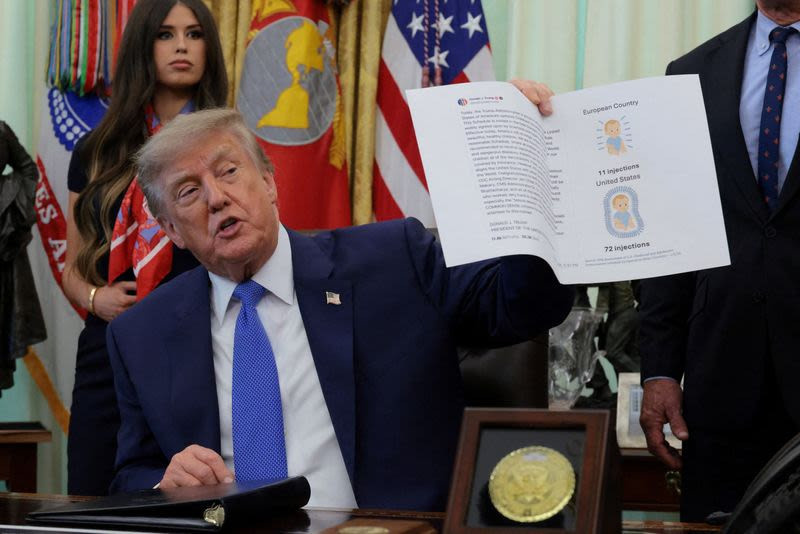
President Trump has taken decisive action in response to his ongoing frustrations regarding childhood vaccinations, issuing an executive order that will dramatically reduce the federal childhood vaccination schedule from 17 to 11 immunizations. This bold move, which will also separate the measles, mumps, and rubella vaccine into three individual shots—a logistical challenge pharmaceutical companies warn could take years to implement—has been framed as an urgent response to parents' concerns that have been 'ignored or outright mocked' by the administration, according to White House spokesman Kush Desai.
The executive order is reportedly aimed at appeasing Trump's political base, which has been vocal in its dissatisfaction with the current vaccination policies. Health Secretary Robert F. Kennedy Jr. has been a prominent advocate for this shift, launching a series of studies into the supposed dangers of vaccines, including their alleged link to autism. However, experts warn that these studies could be setting the stage for predetermined conclusions that align with Kennedy's long-held anti-vaccine stance.
Still Beats Watergate:
Sponsor success. Continue reading:
In a baffling twist of administrative logic, officials insist that the executive order does not substantially change U.S. vaccine policy, raising eyebrows among public health advocates. They fear that the order will only exacerbate confusion and vaccine hesitancy among families, potentially putting children at greater risk for preventable diseases. As one medical professional noted, the order seems less about public health and more about political maneuvering.
The order’s implementation is fraught with contradictions. While Trump and Kennedy have expressed the urgency of addressing autism, their approach appears to sidestep established scientific consensus, with Kennedy's past efforts having been halted by a federal judge for procedural irregularities. Yet, the administration is undeterred, pushing forward with a research agenda that some insiders claim is unlikely to yield credible results given its reliance on flawed federal health databases.
During a recent cabinet meeting, Trump pressed Kennedy for immediate results on autism research, highlighting the mounting pressure within the administration to deliver tangible outcomes. The tension was palpable as Trump demanded action, stating, "How are you doing on the autism research?" Kennedy's vague assurances only fueled Trump's frustrations, prompting the hasty crafting of the executive order over the summer.
As the administration navigates these turbulent waters, it seems that the commitment to changing vaccination policies may be more about political optics than public health. The studies initiated by Kennedy are expected to take months, if not longer, to complete, leaving many to wonder how long the government can maintain this precarious balance between political expediency and scientific integrity. As the dust settles on this latest decree, one thing is clear: the path forward is anything but straightforward.