Trump's Grand Prix Race Closes Airport, Leaves Spectators in Awe and Confusion
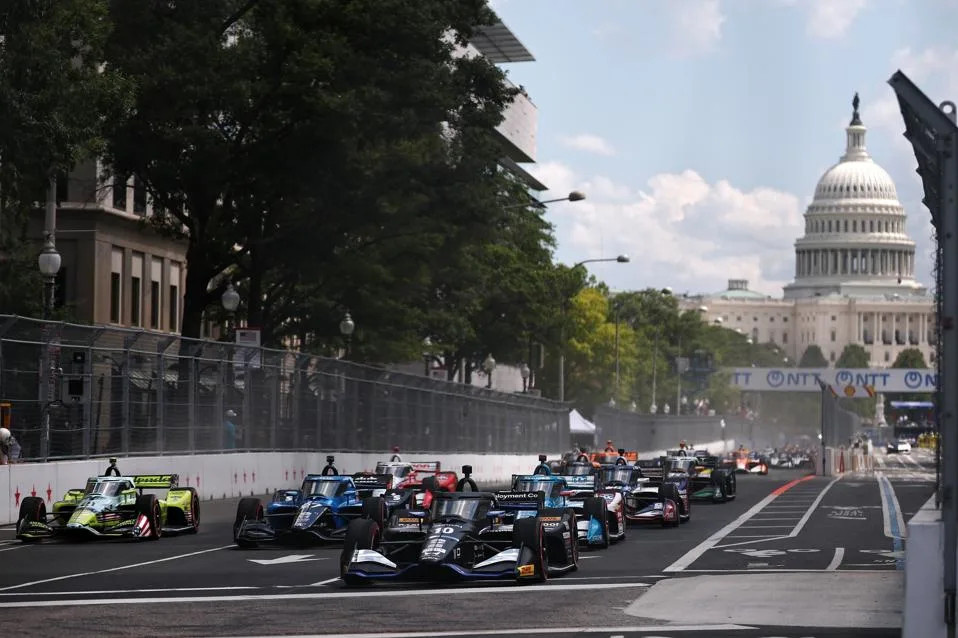
President Trump's latest venture into the world of high-speed spectacle has left many wondering whether the Grand Prix race held in Washington, D.C., was a thrilling showcase of American ingenuity or merely an extravagant demonstration of tone-deafness. The event, which necessitated the complete shutdown of a local airport for flyovers, has been described as a breathtaking display of excess—and bureaucratic miscalculation.
In a move that could only be classified as uniquely presidential, the administration implemented a series of protocols to ensure the race was not only fast but also astoundingly disruptive. Officials detailed how the airport closure would serve as a ‘patriotic gesture’, allowing citizens to witness the unparalleled excitement of racing at the expense of their travel plans. The Federal Aviation Administration even issued a statement declaring it a ‘historic event’—although the only thing that seemed to be historic was the sheer number of flights canceled.
Still Beats Watergate:
Sponsor success. Continue reading:
The planning process for this Grand Prix was an exercise in administrative absurdity. Organizers crafted an intricate web of regulations, including an official ‘Spectacle Scorecard’ measuring the public's enthusiasm based on how many airport passengers were inconvenienced versus how many selfies were taken during the event. They proudly reported that the scorecard achieved a significant uptick in ‘excitement levels’—an official metric that remains undefined.
As the engines roared and the crowds cheered, whispers of dissent lingered in the air, drowned out only by the sounds of high-speed racing. Local residents, who had initially been promised a mere weekend of minor disruptions, found themselves caught in a whirlwind of tires screeching and engines revving, completely oblivious to the ‘patriotic duty’ they were fulfilling. In response to complaints, the administration quickly established a ‘Disruption Relief Fund’ to compensate those who felt particularly vexed by the event. The fund’s guidelines, however, are yet to be determined, leaving many wondering if the only relief would come in the form of a free T-shirt.
Despite the chaos, Trump remained steadfast in his belief that this high-octane event was a boon for the nation, expertly blending politics and entertainment into a singularly extravagant display. His communications team even released a statement insisting that the event’s success would be measured not by public opinion but by its ability to ‘rev up the base’—a metric that seems to have been calculated directly from the number of campaign donations received in the following week.
As the dust settles and the racecars leave their marks on the asphalt, one thing remains clear: the intersection of politics and speed has never been so confusingly exhilarating. Whether this Grand Prix will set a precedent for future events or simply become a footnote in the annals of political theater remains to be seen, but rest assured that future spectacles will undoubtedly strive to outdo this one—perhaps by closing entire cities next time instead of just airports.