Trump's Speech Sparks TV Network Civil War Over Election Coverage
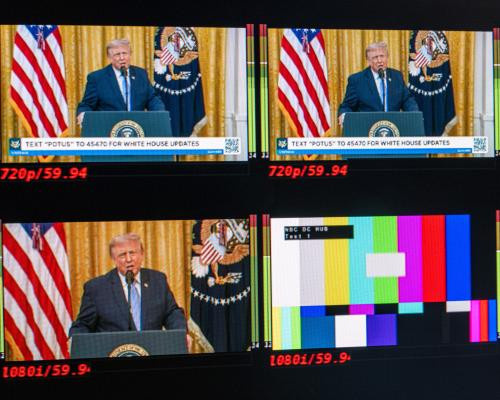
US TV networks have officially declared a civil war over the airing of Donald Trump’s latest election-themed speech, leaving viewers to wonder if their television sets are equipped for such a dystopian battleground. CNN, ABC, and NBC, in a united front of editorial judgment, decided that allowing Trump to speak live was akin to handing a toddler a loaded paintbrush and expecting a masterpiece. Meanwhile, CBS, Fox News, and MS Now rolled out the red carpet, broadcasting the address as if it were the Super Bowl, complete with questionable commentary and halftime analysis.
Each network, while navigating this tangled web of political coverage, provided their own uniquely absurd justifications for their choices. ABC, in a dazzling display of decentralized decision-making, allowed affiliates to determine their own fate. This led to Sinclair-owned stations airing the speech, proving once again that editorial independence can often mean letting the most questionable affiliates take the reins.
Still Beats Watergate:
Sponsor success. Continue reading:
NBC, however, opted for a more refined approach, choosing to stick with a nature documentary about the mating habits of penguins—clearly a topic of far greater relevance than a former president's unfounded claims about election security. CBS, on the other hand, managed the extraordinary feat of interrupting a sitcom for the speech, reminding viewers that nothing says 'public interest' like ruining their evening entertainment.
As the networks grappled with their responsibilities, MS Now aired about half of the speech, with host Jen Psaki bravely stepping in to fact-check Trump’s claims about deep state conspiracies and Chinese meddling. This prompted a riveting internal debate: should they fact-check a speech live, or simply let the audience believe they were watching a poorly scripted soap opera?
In a move that can only be described as a bureaucratic intervention, CBS brought in anchors Tony Dokoupil and Major Garrett to provide context after twenty minutes of Trump’s ranting. Dokoupil explained that the speech’s topic—election security—was, shockingly, a matter of public interest, as if viewers needed a reminder of what they were actually watching.
The split in coverage highlights a growing polarization in news reporting, with networks prioritizing their editorial stances over the immediacy of reporting. Viewers are left to sift through the rubble of contradictory coverage, often resorting to multiple sources to piece together a coherent narrative about election-related events. In the end, it seems the only certainty is that viewers will need a comprehensive guide and perhaps a therapy session to navigate the minefield of political media today.