Tom Homan Declares Himself 'Equal Opportunity Deporter' While Denying Racial Profiling Accusations
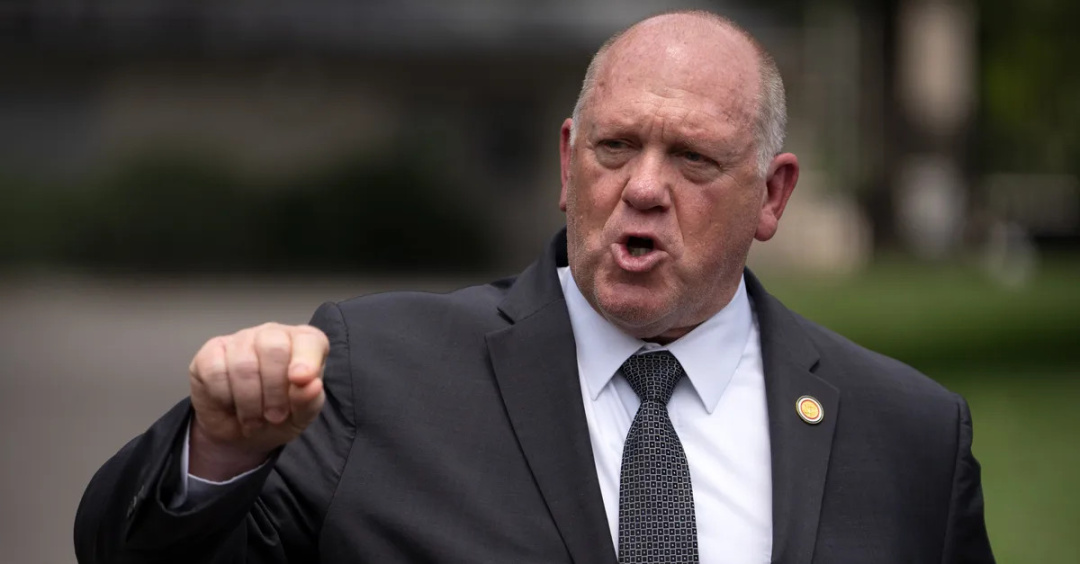
Tom Homan, the border czar under President Trump, has taken to the airwaves to assert that accusations of racial profiling against ICE are completely unfounded. In a bold declaration, he introduced himself as an 'equal opportunity deporter,' proudly stating that he has deported individuals from 180 different countries. This proclamation came in response to criticism from Democratic Senate candidate Angie Nixon, who pointed out the inherent risks of racial profiling within ICE operations.
Despite the Supreme Court's recent ruling that allows immigration officers to consider factors such as race, ethnicity, and even the dialect spoken when determining whom to stop, Homan insists that all ICE actions are based on 'reasonable suspicion.' He elaborated that every individual they engage with is approached only after a thorough assessment of the situation. In a stunning display of confidence, he stated, "We don’t arrest people based on the color of their skin," suggesting that skin color plays no role in his extensive deportation efforts.
Still Beats Watergate:
Sponsor success. Continue reading:
In a demonstration of bureaucratic flair, Homan emphasized his commitment to fairness by claiming that his department does not discriminate; if anyone is in the country illegally, regardless of their origins, they will be treated the same way under the law. He even went so far as to assert that ICE agents are trained to respect the diversity of the individuals they encounter, as if their training manuals were filled with inspirational quotes about equality and justice.
Homan's assertions, however, seem to contradict the very policies endorsed by the Trump administration, which has actively sought to empower ICE agents to incorporate racial profiling into their operational procedures. The Supreme Court's recent decision, which allows for the use of racial factors in immigration stops, only adds to the irony of Homan's self-styled position as a fair and unbiased enforcer of the law.
As the debate continues, Homan remains unphased, exuding an air of confidence befitting a bureaucrat who believes he has the backing of both the law and the administration. He concluded his remarks with a reminder of his expansive deportation record, inadvertently showcasing the very contradictions that define his tenure.
In the end, the question remains: will Homan's claims hold water in the face of escalating scrutiny, or will they simply be swept under the rug of departmental rhetoric? Only time will tell, but one thing is certain: the narrative of equal opportunity deportation is one that will continue to be scrutinized as long as the administration clings to its controversial immigration policies.