NOAA Amends Climate Assessment, Declares RCP8.5 an Implausible Fantasy
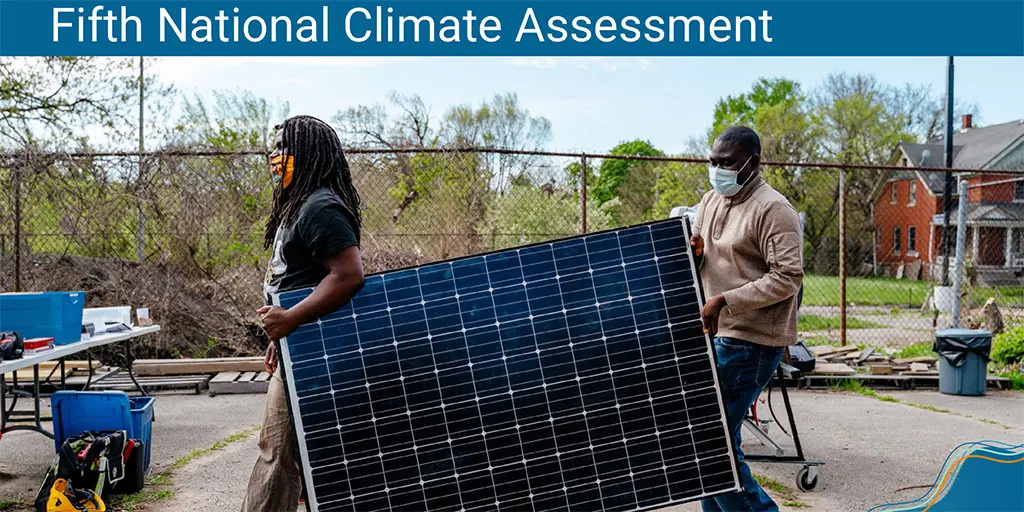
NOAA has taken a bold step into the realm of climate reality by proposing amendments to the Fifth National Climate Assessment that officially relegates the notorious RCP8.5 scenario to the annals of implausible futures. This scenario, once the gold standard for terrifying climate predictions, will now be labeled as ‘implausible scenario outputs,’ a euphemism that could very well be the climate science equivalent of ‘Not my circus, not my monkeys.’
The amendment suggests that federal agencies should abandon projections based on RCP8.5, which predicted dire consequences such as skyrocketing temperatures, rising sea levels, and an apocalyptic increase in heat-related deaths. Apparently, it’s no longer acceptable to use extreme scenarios that require a near-complete breakdown of human civilization as a baseline for planning. Instead, agencies have been advised to check their work and base their decisions on more realistic, evidence-backed models.
Still Beats Watergate:
Sponsor success. Continue reading:
In a bureaucratic twist that could only emerge from the depths of policy-making, the amendment emphasizes that results derived from RCP8.5 should not be presented as business-as-usual scenarios. It’s as if the bureaucrats are saying, ‘Let’s not scare the horses unnecessarily, shall we?’ This means that all those flashy projections of doom and gloom that seemed like a surefire way to rally public concern will now have to be reassessed and possibly retracted. Imagine the panic in the climate communication department!
This is not just a simple case of renaming a scenario, but a complete existential reckoning for government officials who used RCP8.5 to justify funding, policies, and public fear campaigns. NOAA’s new directive insists that any claims based on this scenario be treated like expired coupons—worthless and in need of validation through plausible alternatives. It’s a bureaucratic cleanup that could lead to a serious reshuffling of how climate threats are communicated.
In the spirit of accountability, officials are now required to disclose the assumptions behind their projections in a more transparent manner. Think of it as the bureaucratic equivalent of labeling food products. No more serving up climate doom without a full list of ingredients! The amendment explicitly instructs agencies to differentiate between what their models predict under plausible versus implausible scenarios. This is akin to saying, ‘No, you can’t cook with imaginary ingredients,’ while reminding everyone that just because the recipe calls for unicorn tears doesn’t mean we should take it seriously.
As the dust settles on this monumental shift, it raises eyebrows about the future of climate modeling and policy. Will agencies now be forced to embrace a more realistic approach? Will they stop using models that resemble the plot of a dystopian sci-fi movie? While the proposed amendments are a step forward, it remains to be seen whether they will lead to a fundamental change in how climate risk is assessed and communicated. After all, it’s one thing to declare a scenario implausible, and another entirely to stop using it as the basis for multi-billion dollar decisions.