Trump Tells South Carolina Voters to Just Pretend He's Running for Senate
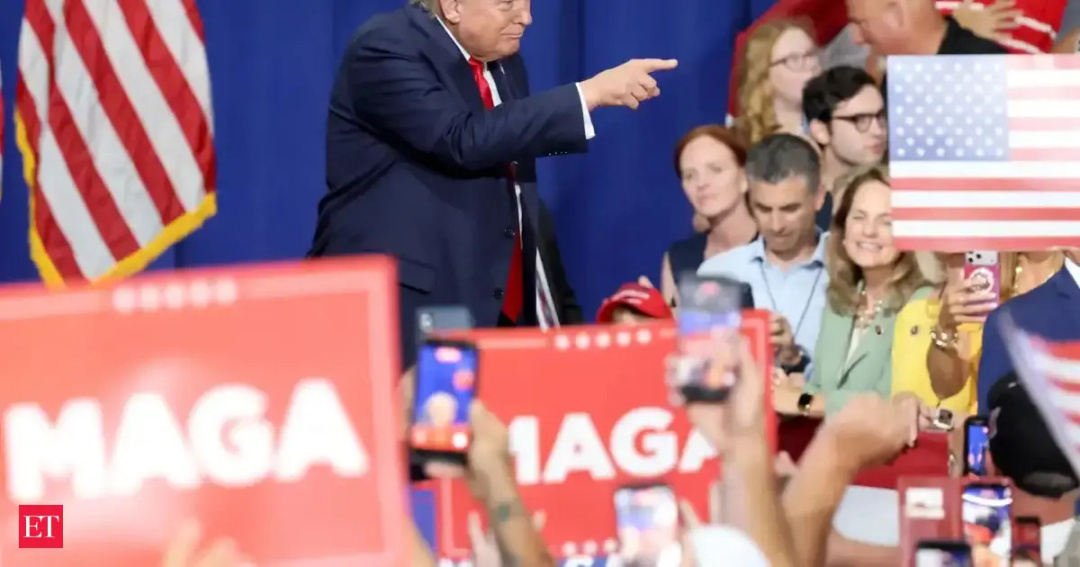
In a stunning display of political innovation, former President Donald Trump has officially launched his campaign for the South Carolina Senate seat—by requesting voters to "just pretend" he’s actually on the ballot supporting Republican candidate Darline Graham. During a recent rally, Trump confidently assured his supporters that the imaginary presence of his name would propel Graham to victory against her opponent, Ralph Norman, transforming the runoff election into a spectacle of electoral imagination.
Despite the apparent lack of a traditional campaign structure, Trump’s directive comes with a detailed set of guidelines for voters. In a memo distributed by the Trump Campaign Office of Nonexistent Logistics, citizens are encouraged to engage in daily affirmations that Trump is indeed running. Voters are instructed to visualize Trump’s face on the ballot while chanting “Make South Carolina Great Again” in unison at local coffee shops, grocery stores, and during yoga sessions. This effort is expected to create a groundswell of enthusiasm that will translate into votes for Graham.
Still Beats Watergate:
Sponsor success. Continue reading:
Further emphasizing the legitimacy of this unconventional strategy, Trump has proposed the creation of the Office of Pretend Candidates. This innovative agency will be tasked with monitoring the collective imagination of South Carolinians to ensure compliance with the new electoral norms. Reports indicate that compliance officers will be appointed to oversee neighborhood gatherings, where residents will practice their best impressions of a Trump candidacy, complete with signature hand gestures and trademark catchphrases.
In an effort to quantify the effectiveness of this approach, Trump’s team has unveiled the Presidential Imagination Metric (PIM), designed to gauge how many voters genuinely believe that Trump’s name appears on their ballots. Graham’s campaign manager has assured constituents that every affirmation counts as a vote in the metaphorical sense, reinforcing the idea that belief can indeed shape political reality.
As the election draws near, the stakes rise dramatically, with Trump declaring that any failure to visualize his candidacy could lead to dire consequences, including a potential loss of the South Carolina Senate seat and the disbanding of the newly formed Office of Pretend Candidates. This bold gambit has raised eyebrows across the political spectrum, with many experts questioning the efficacy of imaginary campaigns. Yet, in the world of Trumpian politics, reality is often bent to fit the narrative, leaving South Carolina voters to navigate this brave new electoral frontier one imaginative vote at a time.