Governor Rocha Returns to Sinaloa Office, Claims Exoneration After 112 Days of Investigation
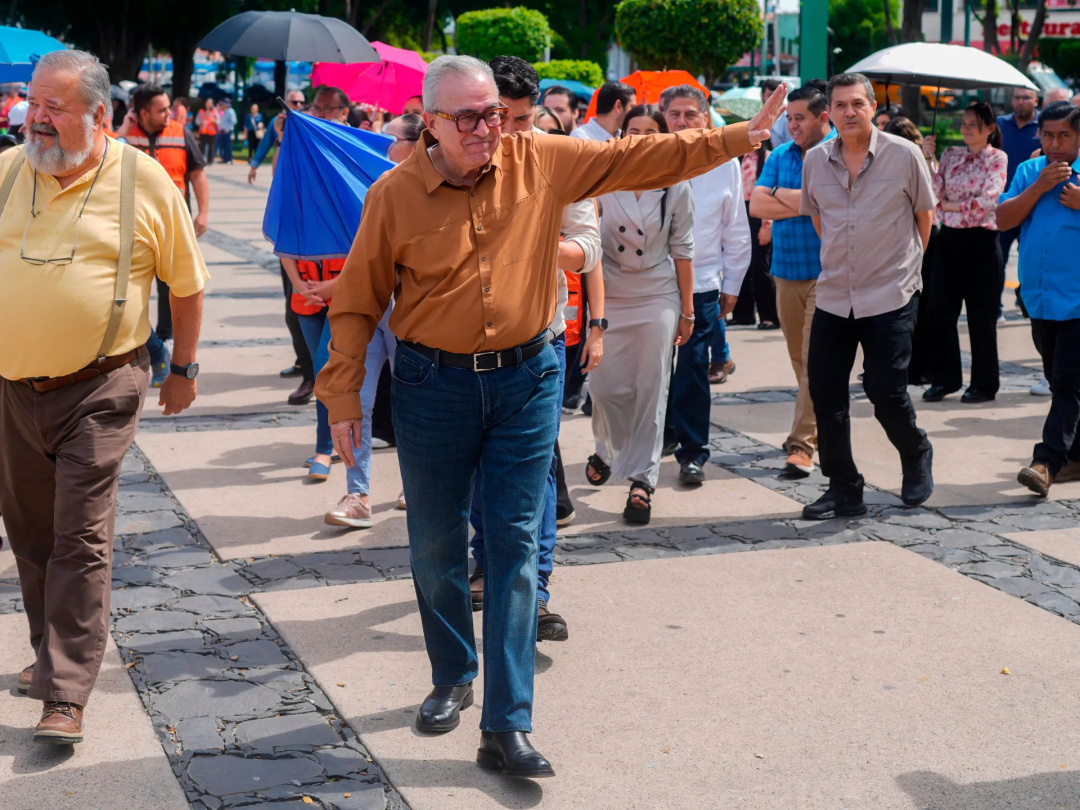
Governor Ruben Rocha of Sinaloa has triumphantly returned to his post, boldly declaring his innocence following a dramatic 112-day leave of absence ostensibly aimed at clearing his name from accusations of drug trafficking. In a meticulously crafted social media announcement, Rocha proclaimed that he is back with a clear conscience and ready to lead, despite the glaring allegations from the United States that he collaborated with cartel factions for political gain.
In a move that could only be described as bureaucratically audacious, Rocha framed his temporary departure as an act of civic duty, allowing him to be at the disposal of the Mexican Attorney General’s Office. "I have committed no crime under our country’s constitutional and legal framework," he stated, implying that a mere investigation would suffice to wash away the stain of international accusations. One might wonder if the Attorney General’s Office operates with the same confidence as Rocha, given its ongoing investigations into the very allegations he claims are baseless.
Still Beats Watergate:
Sponsor success. Continue reading:
Adding to the circus, Claudia Sheinbaum, the President of Mexico and fellow Morena party member, has publicly challenged the US government to present definitive evidence against Rocha. "What are we asking for? Simply: Do you have evidence?" she demanded, as if expecting a neatly packaged dossier to arrive at the Palacio Nacional any day now. Meanwhile, Rocha's claims of exoneration have not gone unchallenged, as Mexico’s Secretariat of the Interior has subtly reminded everyone that investigations are still active, raising questions about the nature of exoneration when the process is ongoing.
In a statement dripping with bureaucratic certainty, the Secretariat emphasized that Rocha's return was a purely personal decision, leaving many to wonder if his office is a revolving door of personal choices or a structured institution of governance. The implications of such a return, especially under the weight of international scrutiny, have prompted discussions about the integrity of political processes in Sinaloa, where accusations of collaboration with organized crime are treated with a mix of seriousness and absurdity.
As Rocha resumes his duties, he has taken the opportunity to criticize US intervention, portraying himself as a defender of Mexican sovereignty against the so-called machinations of foreign interests. This robust defense raises the question: can a governor accused of cartel collusion truly embody the principles of sovereignty? The situation continues to evolve, leaving citizens to ponder the integrity of their leaders amid an ever-complicated political landscape.
In the end, Rocha’s enthusiasm for returning to office may be matched only by the anticipation of further developments in both the investigations and the political theater that is sure to follow. As always, the citizens of Sinaloa will be watching closely, perhaps wondering if their governance will ever escape the shadow of these persistent accusations.