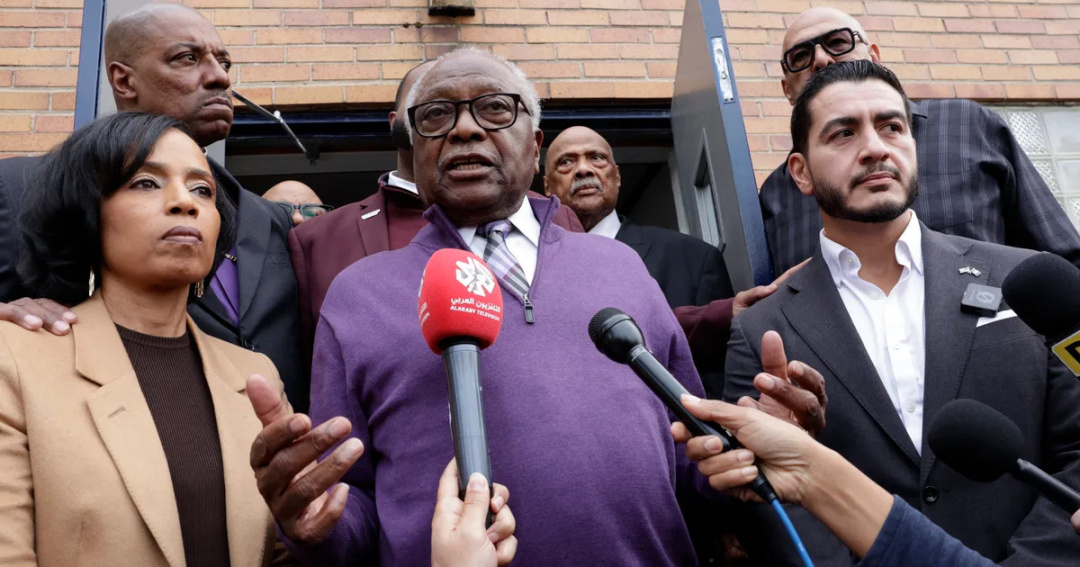
Atlanta Mayor Demands DNC Acknowledge Black Voters After Convention Selection Snub
Atlanta's Democratic Mayor Andre Dickens has issued a formal complaint to the Democratic National Committee, demanding that the party's leadership acknowledge their apparent oversight of Black voters in the South following the exclusion of Atlanta from the shortlist to host the 2028 presidential convention. In a letter that reads more like a manifesto than a mere complaint, Dickens accused DNC Chairman Ken Martin and his cohorts of engaging in a deliberate act of political negligence, stating that their choices reflect a profound misunderstanding of the voting landscape.
Dickens firmly reminded the DNC that the South is not merely a relic of electoral history, but rather a vibrant tapestry of potential, especially among its Black voters. His letter, dripping with political urgency, highlighted that Atlanta has not hosted a convention in nearly four decades, a situation he deemed unacceptable. "This is not just a missed opportunity; it is a betrayal of a loyal voting bloc that expects more than just empty promises," Dickens asserted, pointing out that other regions have been repeatedly favored for these high-profile events.
Still Beats Watergate:
Sponsor success. Continue reading:
In a move that could only be described as bureaucratic gymnastics, DNC officials defended their selections of Boston, Denver, and Philadelphia, all while conveniently ignoring the vibrant political pulse found in Atlanta. They claimed that operational and logistical capabilities were paramount in their decision-making process, even as Dickens countered that it is precisely the DNC's fear of leaving their comfort zones that has led to this oversight. "They are retreating to safe spaces while the real action is in our communities," Dickens declared, emphasizing the need for the party to embrace the grassroots energies of Southern cities.
The DNC, in a show of feigned concern, highlighted its commitment to diversity by placing South Carolina at the forefront of its nominating calendar, even as it snubbed the heart of the South—Atlanta. Dickens challenged this narrative, arguing that it is not enough to pay lip service to diversity; the party must actively engage with the communities that give it life. He pointed out that Black voters deserve not just a seat at the table but a prominent place on the agenda.
As the DNC continues its review of its convention sites, one can't help but wonder if Dickens’ scathing critique will catalyze a shift in strategy or if it will be dismissed as the rants of a disgruntled mayor. After all, the DNC has a history of prioritizing its comfort over the voices of its most loyal constituents. With the clock ticking down to the convention, it will be telling if the DNC chooses to rise to the occasion or remain entrenched in its established patterns of exclusion. As Dickens aptly put it, this is a pivotal moment for the party, and running scared is not a strategy for success. The question remains: will the DNC finally engage with the very voters who have historically powered its campaigns, or will it continue on its path of political abandonment?