Trump Orders Dramatic Cut to Joint Military Drills, South Korea Left Confused and Alarmed
President Trump has officially declared a substantial reduction in joint military exercises with South Korea, a decision announced not through traditional diplomatic channels but rather via a post on his Truth Social platform, conveniently timed just hours before the drills were set to begin. This abrupt announcement has left South Korean officials scrambling, especially as it coincided with a public holiday celebrating the nation’s liberation from Japanese rule.
The Pentagon hastily confirmed it was 'actively working on executing' the presidential directive, which has now cut the exercises planned from eleven days to a mere five, with many field training drills being downsized in scope. This has ignited a wave of anxiety and frustration in Seoul, as officials and citizens alike are left questioning the reliability of US security guarantees that have been the backbone of South Korean defense since the Korean War.
Still Beats Watergate:
Sponsor success. Continue reading:
In a bid to calm the waters, South Korean President Lee Jae Myung assured his Cabinet that the US-South Korea alliance remains crucial. However, he simultaneously emphasized the necessity for South Korea to bolster its 'self-reliant defense capabilities.' Striking a conciliatory tone, he indicated that he 'fully empathizes' with Trump’s view that Seoul must take on greater responsibility for its own security while hinting at potential contributions to US efforts in the Strait of Hormuz, a hotspot in the ongoing Iran conflict.
As the fallout from Trump's announcement unfolds, South Korea’s Minister of Foreign Affairs, Cho Hyun, disclosed to Parliament that the government had received no prior notice of the military drill reduction. Lawmakers are reportedly gearing up for a formal response, but aides have cautioned that the situation is too sensitive to address openly at this time.
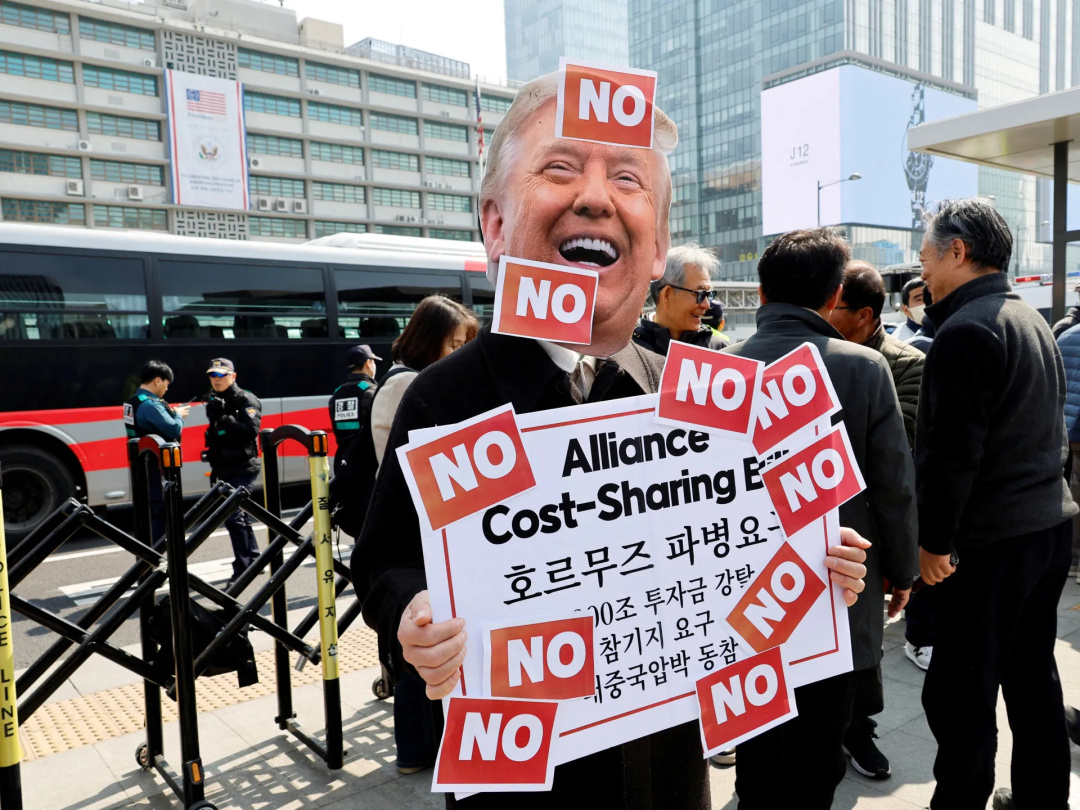
Public sentiment is decidedly mixed on social media, with many expressing frustration and skepticism towards Trump’s erratic decision-making. Comments range from disillusionment with US priorities over their allies to outright disbelief at being informed of such critical security changes via social media rather than formal government communication.
Editorials and public commentary have also begun to call into question the viability of the US-South Korea alliance, with some arguing that the US appears to treat North Korea with more respect than its ally. The Hankook Ilbo newspaper has urged citizens to confront the 'stark reality' of a weakening alliance, pointing out the absurdity of the current situation.
As the narrative unfolds, it has re-ignited discussions regarding South Korea's own defense strategies, including the controversial topic of pursuing nuclear capabilities. Critics argue that Trump’s unilateral decisions threaten the very foundation of trust that underpins US-South Korea security arrangements, pushing Seoul toward a more autonomous military posture. With potential ramifications still unclear, one thing is certain: the political landscape in Seoul is shifting, and the implications of Trump’s latest directive could prove to be far-reaching and profound.