JD Vance Urges US to Embrace Bitcoin, Suggests China is Just Jealous
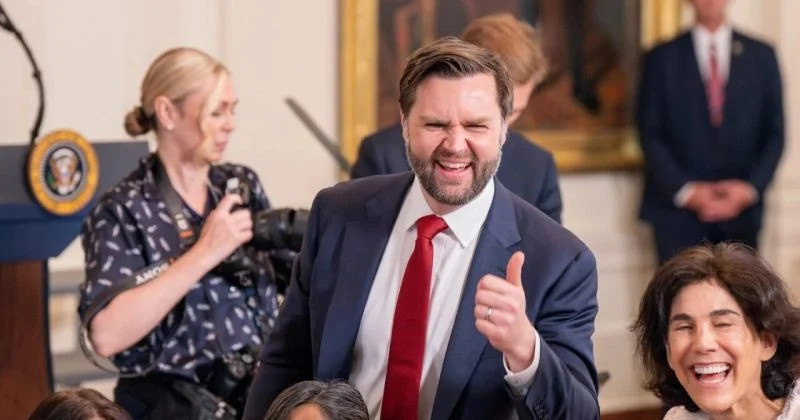
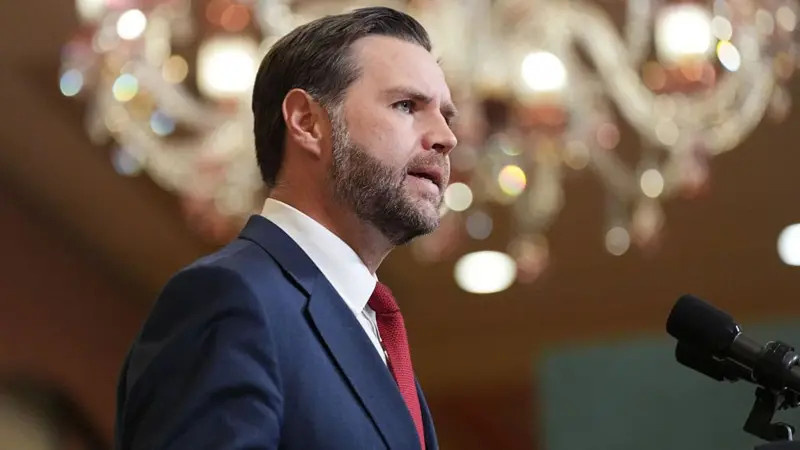
At the Bitcoin 2025 conference in Las Vegas, Vice President JD Vance took the stage to make a bold declaration: the United States should embrace Bitcoin, especially since China is apparently not on board. His reasoning was as clear as his financial disclosures, which reveal he’s got a hefty personal stake in the cryptocurrency, valued between $250,001 and $500,000. Talk about a conflict of interest—who knew that standing to gain personally could lend you credibility in the political arena?
Vance's speech was a masterclass in geopolitical chess, where he framed Bitcoin not just as a volatile asset but as a crucial weapon in the US arsenal against the communist threat. "If the communist Republic of China is leaning away from Bitcoin, then maybe the United States ought to be leaning into Bitcoin," he confidently asserted, as if the fate of the free world hinged on how much digital gold the US could hoard.
Still Beats Watergate:
Sponsor success. Continue reading:
Building on the foundation of a policy laid out by the Trump administration, Vance touted the recent creation of a Strategic Bitcoin Reserve. This new initiative aims to stop the US from auctioning off seized Bitcoin and instead treat it as a long-term national asset. After all, who wouldn’t want to turn a law enforcement tool into a financial strategy? It’s like turning your confiscated street drugs into a government-sanctioned pharmacy.
As Vance laid out his vision, he highlighted Bitcoin's key qualities: scarcity and security. Scarcity, of course, is also a quality that would apply to the number of coherent policy statements coming from the White House. Vance’s stance on Bitcoin is part of a larger narrative where the US government, the largest holder of Bitcoin, pivots from a policy of selling seized cryptocurrency to a strategy focused on accumulation. It’s almost as if they’ve decided that the best way to handle a volatile asset is to keep as much of it as possible.
However, whether this pivot is seen as a savvy geopolitical maneuver or a questionable financial risk largely depends on one’s perspective. With approximately 50 million Americans now holding Bitcoin, accounting for about 15% of the population, Vance’s appearance was not merely a policy statement; it was a political gesture aimed at solidifying his status within the crypto community. After all, nothing says "I care about your financial future" like having a vested interest in the market.
In conclusion, Vance's Bitcoin advocacy may resonate with many, but it also raises eyebrows regarding motivations. Is he a visionary leader steering the US into a new digital age, or just a savvy politician cashing in on the crypto craze? Perhaps the answer lies somewhere in the Bitcoin blockchain—a place where clarity is as scarce as the asset itself.