Wright's Grant Cuts: A Political Haircut for Blue States
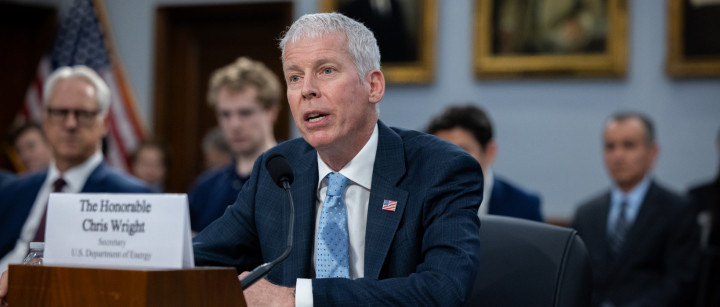
In a stunning display of bureaucratic acrobatics, Energy Secretary Chris Wright has vehemently denied that politics played any role in the termination of over 280 energy grants last October. However, a recent court filing has thrown a wrench into his claims, revealing that the cancellations were predominantly aimed at recipients located in states that voted for Democrats. This revelation raises the question: Is there a hidden agenda behind the Department of Energy’s decision-making process, or is it merely an elaborate coincidence, like winning the lottery on the same day you bought a ticket for a different game?
Wright’s narrative, that the terminations were purely based on merit and not political affiliation, is starting to crumble under scrutiny. The Energy Department’s own lawyers admitted in court that the political identity of the grant recipients’ states was the sole reason for the cancellations. So, while the department insists that it evaluated grants based on stringent criteria, the reality is that geography may have won out over genuine project viability. In a world where the color of your political affiliation can dictate funding, it’s hard not to wonder if the department’s evaluation process involved a dartboard and a blindfold.
Still Beats Watergate:
Sponsor success. Continue reading:
In a CNN interview, when pressed about why grants in blue states were cut while similar projects in red states remained untouched, Wright’s response was as vague as a politician dodging a question about their favorite ice cream flavor. He indicated that more terminations would come, but left viewers wondering if he was referring to a future lottery drawing. Meanwhile, he continued to assert that the decisions were based on ‘facts,’ which seems to be a disappearing act worthy of a magician’s finale.
His testimony before Congress was a masterclass in deflection, where he managed to create a distinction between the evaluation phase of projects and the subsequent announcement of terminations. Wright maintained that politics played no part in the evaluations but conveniently skirted around the fact that the final outcome was decidedly political. In a classic bureaucratic twist, it appears that the Department of Energy's decisions are less about energy efficiency and more about political efficiency.
Democratic representatives were not buying the narrative, referring Wright to the Department of Justice for potentially lying under oath. This referral is unlikely to lead anywhere, given the current political climate, but it does highlight the absurdity of the situation. How did we get to a point where cutting funding for clean energy projects feels like a game of political chess, with blue states as the pawns?
As criticisms mount, and with some grantees taking legal action against the government, the situation continues to evolve. The Department of Energy seems determined to maintain that none of their decisions were politically motivated, yet the evidence suggests otherwise. It’s like claiming you didn’t eat the last cookie while crumbs cover your face. At this juncture, one has to question whether the Department of Energy is actually in the business of saving energy, or simply saving face in a political game that’s gone off the rails.