Trump Issues Executive Order to Make Vaccines Great Again—Or Not
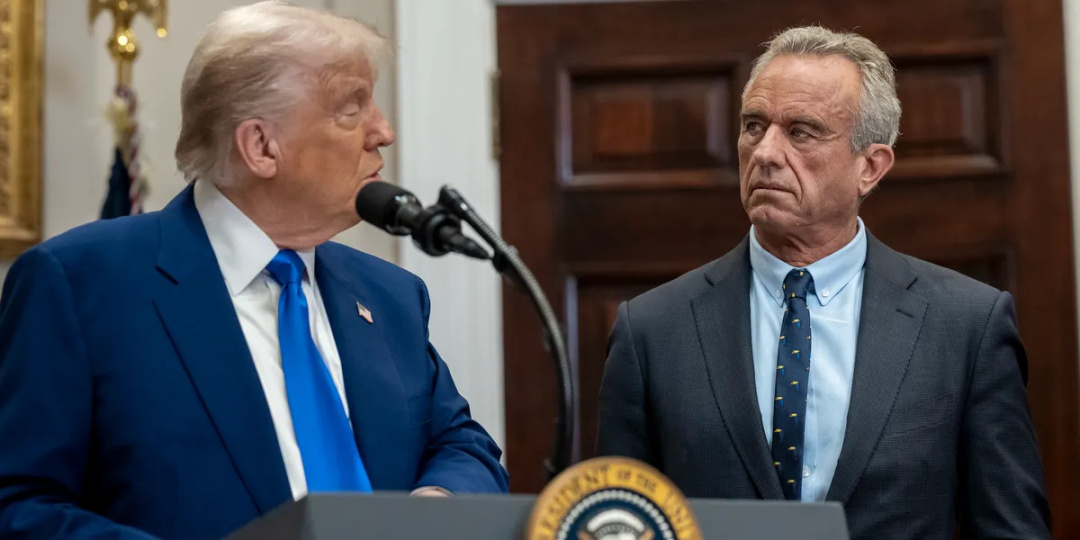
In a bold move that has left public health advocates shaking their heads, President Trump has signed an executive order aimed at overhauling the federal childhood vaccine recommendations. This executive action breathes new life into the long-debunked theory that vaccines might somehow contribute to autism—a theory that, let’s face it, should have been left in the dustbin of history alongside the idea that the Earth is flat.
The official statement from the Office of Vaccine Reversal (OVR) claims that this is merely a proactive step toward giving parents choices—choices that, according to actual scientists and rational humans, could lead to a resurgence of preventable diseases. Critics argue that this decision is not just misguided; it could potentially endanger the lives of countless children. They fear that the administration’s latest foray into vaccine policy will not only confuse parents but also embolden anti-vaccine sentiments, which have been gaining traction like a bad cold in a crowded elevator.
In a rare moment of clarity, public health experts have expressed their dismay, stating that reviving such discredited theories could lead to a public health crisis. "It's like if the administration decided to reinstate the use of bloodletting as a treatment for the flu," one exasperated physician was overheard saying while shaking their head in disbelief. "We know better, yet here we are, watching history repeat itself, like a bad sequel nobody asked for."
The OVR’s memo, titled "How to Appear Responsible While Actually Being Irresponsible," outlines the new guidelines for parents who may now be overwhelmed by the conflicting messages. The memo encourages parents to consult their neighbor’s Facebook feed for advice and to consider the merits of herbal remedies over scientifically-backed vaccinations. It’s a classic case of bureaucratic logic where the government insists that misinformation is just as valid as scientific consensus.
As expected, the press briefing on this executive order was a spectacle in its own right. Reporters were bombarded with non-answers and the usual array of dancing around the real questions. When pressed for clarification on the implications of this decision, press secretary Kayleigh McEnany responded, "We are simply giving the people what they want—a choice, albeit one that could lead to calamity."
The administration’s approach has been criticized as both reckless and ironic, given the historical context of vaccines as one of the greatest public health achievements of our time. So, as we watch this unfold, one can only hope that the American public will choose science over sensationalism, or at the very least, remember that choosing not to vaccinate is a bit like choosing to drive without a seatbelt—sure, you can do it, but you might just end up regretting it in the worst way possible.