Trump's New Strategy: Let's Just Watch Iran Squeeze Itself Into Oblivion
In a stunning display of strategic restraint, President Trump has announced that his administration will adopt a more hands-off approach regarding Iran, opting to let the country implode under the weight of its own economic mismanagement and U.S. sanctions. In a recent phone conversation with Axios, Trump declared that the U.S. is 'only semi-negotiating' with Iran, which he claims is now in a state of severe economic distress, struggling to pay its troops amid rampant inflation and a dwindling treasury.
This new strategy, or as Trump called it, 'low-keying it,' seems to suggest that the best way to deal with Iran is to sit back and watch as they navigate their own financial crisis. After all, why risk further military engagement when Iran is already doing such a fantastic job of self-sabotage? The President has even pointed to the U.S. naval blockade on the Strait of Hormuz as an added bonus, compounding Iran's financial woes.
Still Beats Watergate:
Sponsor success. Continue reading:
However, as Trump touts his economic pressure campaign, questions arise about the complexities behind Iran's economic collapse. Is it really just the sanctions and military pressure, or is it also the result of decades of corruption and poor decision-making by the Iranian regime itself? Critics argue that while U.S. sanctions have indeed exacerbated the situation, the Iranian government has a long history of prioritizing military spending over the welfare of its citizens.
In true Trump fashion, he took to Truth Social to reinforce his narrative, sharing a graphic that screamed 'Iran has NO MONEY' while highlighting the Iranian rial’s dramatic decline. This bold communication strategy raises eyebrows as it seems to suggest that the President is both reveling in Iran's plight and using it as a tool for political leverage.
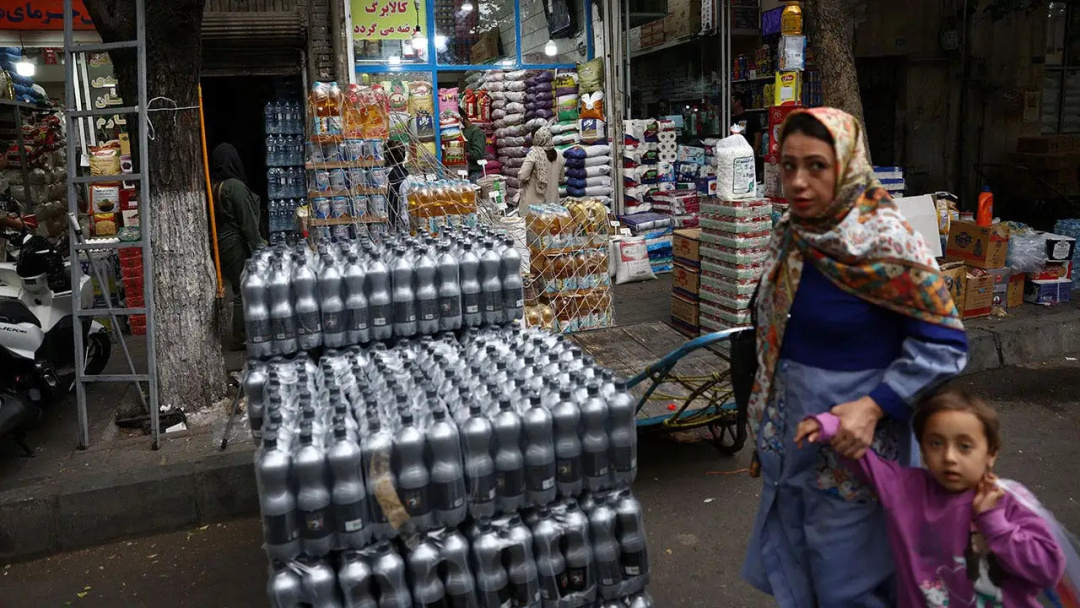
Reports from Iran paint a grim picture of daily life, with citizens forced to shoplift basic groceries due to skyrocketing prices and a crumbling economy. The administration's 'Economic Fury' campaign aims to target Iran’s revenue streams, but it’s the ordinary Iranians who are feeling the brunt of these tactics.
Trump’s approach raises a fundamental question: how much longer can he afford to sit back and watch as the Iranian regime faces its own self-inflicted crises? As the U.S. continues to tighten the economic noose, the Iranian leadership may find themselves in a precarious position, grappling with both internal dissent and external pressure. If only the same could be said for the White House's own handling of domestic issues.
Ultimately, the irony is thick in the air: as Trump pushes for a diplomatic solution while simultaneously sabotaging Iran’s economy, one can’t help but wonder if he’s really just enjoying the show.