Federal Reserve Chair Kevin Warsh Divests $100 Million: A Memoir of Ethical Dilemmas
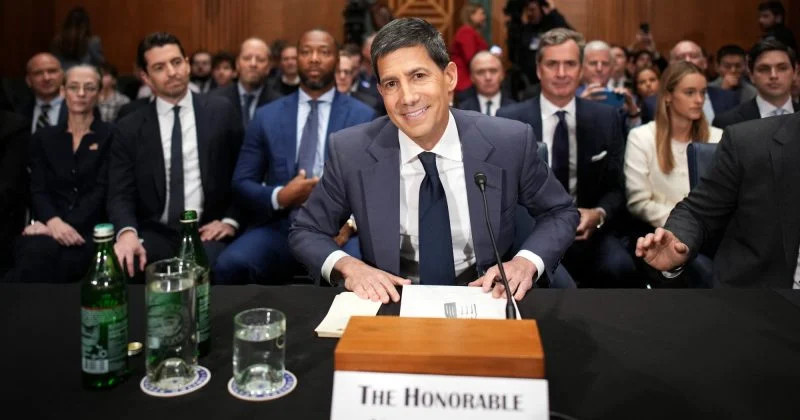
In a stunning display of ethical gymnastics, Federal Reserve Chair Kevin Warsh has divested over $100 million in financial holdings, proving once again that the only thing more complex than economics is the ability of politicians to sell off their financial baggage right before stepping into the spotlight. Warsh, who promised to shed ‘virtually all’ of his financial interests during his confirmation hearing, has managed to uphold this pledge with the flair of a magician pulling a rabbit out of an already stuffed hat.
The U.S. Office of Government Ethics has certified this impressive feat, complete with a date stamp that might as well read, ‘Trust us, we did the math.’ However, two smaller positions remain, teasingly lingering like the last guests at a party no one wanted to end. These two holdings, valued between $250,000 and $500,000, are so inconsequential they could be mistaken for pocket change in the grand scheme of Warsh’s financial empire. Yet, they raise an eyebrow or two, especially for Senator Elizabeth Warren, who is currently on a quest for transparency, which is as rare in Washington as a unicorn sighting.
Still Beats Watergate:
Sponsor success. Continue reading:
Warren’s inquiries into the identities of Warsh’s buyers and the terms of the sale have all the intrigue of a political thriller. After all, a Fed Chair selling off such a hefty portfolio just before assuming office could be seen as a cozy arrangement for the buyers, or perhaps a clever way to keep the money in the family—if you catch my drift. With ties to heavy hitters in private capital, Warsh's financial history makes the lack of transparency seem less like a bureaucratic oversight and more like a plot twist in a gripping novel.
Amidst the clamor for clarity, it seems the remaining assets remain in a sort of financial purgatory—neither here nor there, unable to fully comply with the ‘virtually all’ promise. As Warsh prepares to steer the Federal Reserve, these lingering questions could turn into a storm cloud hanging over his newly polished office.
Adding a cherry on top of this financial sundae is the tax benefit that comes with the divestiture certificate. Thanks to U.S. law, officials who comply with conflict-of-interest rules can defer capital gains taxes on sales, making this not just a matter of ethics but also of financial savvy. When you’re liquidating over $100 million, those deferred taxes can add up quickly and leave one wondering if Warsh is truly committed to a life of minimalist financial holdings, or just playing the long game.
Nominated by President Trump and confirmed in 2026, Warsh’s financial disclosures reveal a wealth that’s been estimated between $131 million and $209 million. With numbers like these, one can only hope he remembers the little people—the ones who only aspire to a fraction of his wealth, not to mention the ethical dilemmas that come along with it. As his tenure unfolds, one thing is clear: in the world of high finance and politics, the line between morality and profitability is as thin as a government ethics certificate.