In a Shocking Twist, University President Announces Retirement to Pursue Career in Bureaucracy
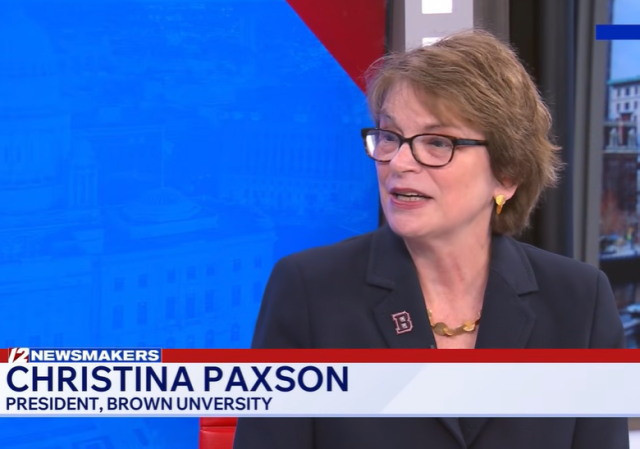
In a move that has left the higher education community both bewildered and oddly amused, Brown University President Christina Paxson declared her intention to retire at the close of the 2027 school year. In her farewell address, Paxson revealed that her next endeavor would be a foray into the exciting world of federal bureaucracy, a field she described as 'the real educational frontier.' This unexpected pivot from academia to what many consider the black hole of efficiency and logic has raised eyebrows and sparked speculation about her motivations.
Sources close to Paxson have suggested that her decision is rooted in a desire to bring her expertise in academia to the labyrinthine corridors of government agencies, where she hopes to implement 'innovative' policies such as mandatory committee meetings and endless paperwork. 'Higher education has become far too structured,' Paxson reportedly stated. 'I believe that true progress lies in the ability to draft a memo that no one reads and to conduct meetings that could have easily been emails.'
Still Beats Watergate:
Sponsor success. Continue reading:
Paxson's announcement has already inspired a series of mock congratulatory tweets from various university presidents, all vying for the title of 'Most Enthusiastic Bureaucratic Transition.' One notable response came from the president of a rival institution who quipped, 'I always knew Christina had a knack for turning red tape into origami. Can't wait to see what she folds next!'
As she prepares for her exit, speculation abounds regarding Paxson's potential contributions to the bureaucratic machinery. Will she advocate for the introduction of more jargon-laden policy papers? Or perhaps she will push for a national curriculum on how to effectively dodge responsibility? Whatever her plans, one thing remains certain: the world of academia will miss her unique blend of enthusiasm and slight bewilderment, especially her efforts to bridge the gap between students and the ancient artifacts known as 'government forms.'
Paxson’s decision also raises questions about the future of higher education leadership at a time when institutions are grappling with the complexities of funding, student engagement, and the relentless march of technology. Will her successor embrace the challenge of upgrading university systems or will they, too, be seduced by the siren song of bureaucratic inefficiency?
In a final message to the Brown community, Paxson expressed her gratitude for the time spent in a role that had her navigating everything from academic policy to the occasional existential crisis. She concluded with a hopeful reminder that the skills learned in academia, especially those involving patience and the ability to smile through chaos, would serve her well in her new bureaucratic adventures. As she steps down, one can only wonder if this will become a new trend among university leaders seeking to escape the pressures of academic governance and dive headfirst into the warm embrace of red tape and regulatory oversight.