New York Unveils Master Plan to Save Farmers from the Solar Apocalypse
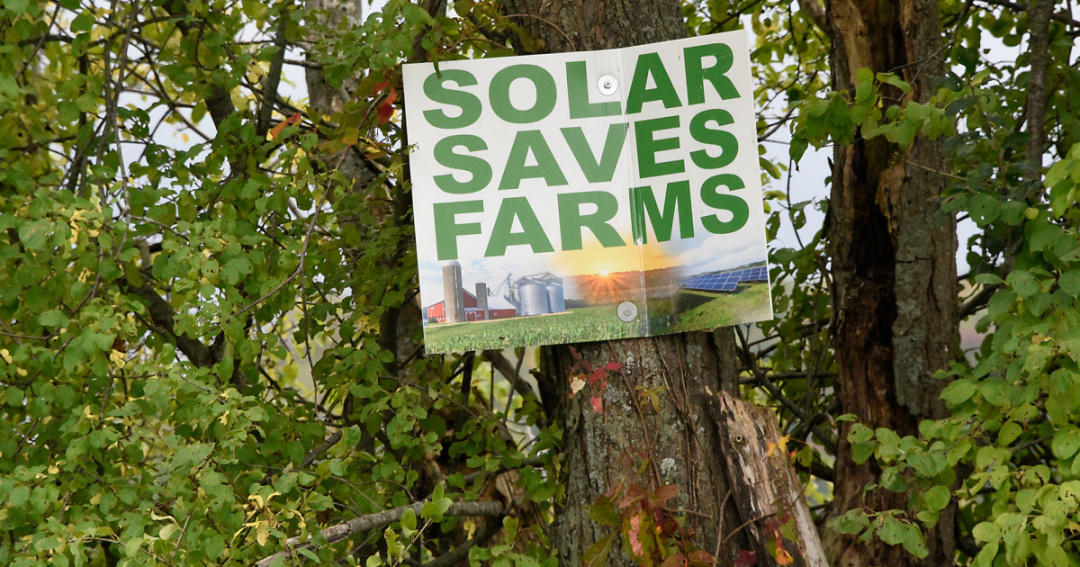
In an unprecedented response to what can only be described as the solar hysteria gripping rural America, New York has rolled out its grand strategy to combat the nonsensical narrative that solar panels are the new locusts, devouring farmland like a biblical plague. Officials have declared that solar power is not just a threat but a lifeboat for farmers, who can lease their land to solar developers and still return to the sacred art of growing tomatoes and hay. After all, who wouldn’t want to earn a little cash while simultaneously solving the climate crisis? The state's energy department recently issued an 11-page missive that reads more like a love letter to solar energy than a formal policy document. It insists that farmers who hop on the solar train will not only keep their land but also potentially expand their farming operations. This radical notion has been backed by a Cornell study that suggests farmers are using their solar lease payments to grow their businesses rather than abandon them. Yet, as the sun rises over these solar farms, an army of vocal opponents, led by social media sensation Alexandra Fasulo and country music figure John Rich, has emerged from the shadows, claiming that solar arrays are a nefarious plot to transform the idyllic countryside into a wasteland of solar panels and despair. Rich, who has recently taken up the mantle of the White House’s landowner advocate, has been seen passionately waving his arms in protest, invoking the ghost of farmland lost to the solar scourge. In a stunning twist, the New York State Energy Research and Development Authority has released a guidebook showing that sheep and cattle are not just surviving but thriving beneath solar panels. Apparently, grazing under solar arrays is the new trend in sustainable farming, proving that livestock can indeed enjoy a front-row seat to the solar revolution. The guidebook even suggests that tomatoes, saffron, and other crops can flourish under the watchful gaze of solar panels, leading us to ponder if perhaps we’ve been doing farming wrong all along. Meanwhile, the Solar Energy Industries Association has released statistics that would make any rational person question the validity of the solar apocalypse narrative. Currently, solar farms occupy a measly 0.13 percent of New York’s prime farmland, a space that is dwarfed by the vast expanses taken up by golf courses and suburban sprawl. Yet, somehow, the fear-mongering continues, fueled by a blend of social media theatrics and good old-fashioned misinformation. As New York stands firm in its solar resolve, the question looms: can the state successfully convince the public that solar panels are not the enemy but rather allies in the fight against climate change? Only time will tell. For now, the battle lines are drawn, with farmers and solar advocates on one side and the anti-solar influencers on the other, all while the sun shines brightly above, indifferent to the chaos below.
Still Beats Watergate:
Sponsor success. Continue reading: