Washington Post's Wealth Tax Rant: Democracy's Dark Comedy
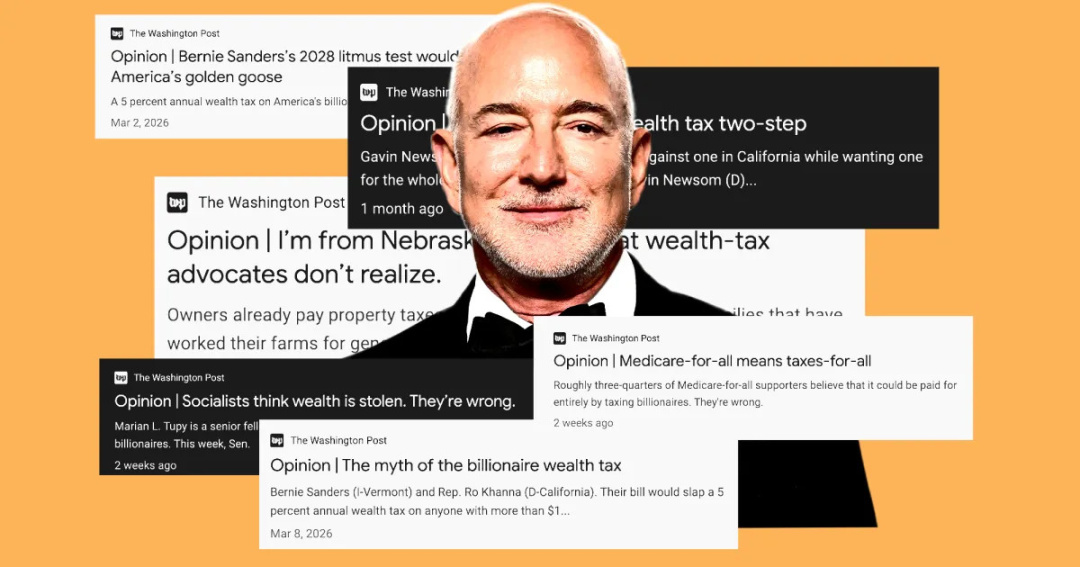
In a shocking display of irony that could only be scripted by a master of dark comedy, the Washington Post has taken up the banner against wealth taxes, all while being owned by Jeff Bezos, one of the richest men on the planet. This is like the fox guarding the henhouse, except the henhouse is a tax code that benefits the fox and his billionaire buddies. The Post, with its editorial slogan "Democracy Dies in Darkness," appears to be more interested in keeping the lights off for the middle class while shining a spotlight on the wealth of the elite.
Since March, the Post has unleashed an onslaught of opinion pieces, more than ten in total, arguing against taxing wealth and unrealized gains—the mythical money that supposedly evaporates at the mere thought of taxation. If you’re wondering why a newspaper would prioritize the financial interests of billionaires over the common good, you’re not alone. It seems the Post has a serious case of 'don’t tax my yacht' syndrome, and they’re not afraid to shout it from their lavish penthouse offices.
Still Beats Watergate:
Sponsor success. Continue reading:
The latest gem from the Post involves a former senator arguing that wealth taxes would force family farmers to sell their land, a claim so far removed from reality that it’s almost impressive. The assertion has been debunked repeatedly, yet here it is, trotted out like an old racehorse that just won’t quit. The only thing this 'family farmer' narrative farms is fear, and somehow it’s sprouting in the pages of a newspaper that pretends to be the guardian of democracy.
But let’s not forget the real comedy gold: the dark money group backing this op-ed masquerades under the name “Saving America’s Family Enterprises.” Ironically, the only families they seem to want to save are those with trust funds larger than most small nations. Their mission statement is a masterclass in doublethink, claiming to advocate for the middle class while their actions scream ‘protect the wealth of the top 1%.’
It’s a clever play, really. The Post’s editorial team must have had a field day crafting these arguments, considering they can reach directly into the pockets of their wealthy owner for inspiration. Who knew that protecting the interests of billionaires could be so lucrative? They might as well change their name to the Washington Post-Op, where the only thing getting cut is the tax bill for the rich.
The irony continues to pile up like a bad sitcom plot. The Post publishes pieces that suggest taxing unrealized gains would lead to a mass exodus of billionaires from states like California. Yet, empirical evidence shows that wealthy individuals are more likely to leave when their tax rates are low—not when they might have to pay their fair share. Perhaps they think the sun shines brighter on their yachts in international waters.
As they decry wealth taxes, one can almost hear the distant echo of laughter from the IRS, which has been starved of resources to even dream of collecting the taxes owed by the mega-rich. The agency is about as effective at collecting taxes from billionaires as a wet paper towel is at holding water. Meanwhile, the Post stands firmly behind its rich benefactor, ready to unleash a barrage of op-eds to ensure that the wealth gap widens, all while claiming that they’re just protecting democracy from the evils of taxation.
So, let’s raise a glass to the Washington Post—may its editorial board continue to spin tales of woe for the elite while the rest of us watch democracy flicker under the weight of oligarchic power. Because if democracy truly dies in darkness, it’s clear who’s flipping the switch.