Ceuta Crisis: Politicians Call for More Walls as Migrants Drown in the Sea of Bureaucracy
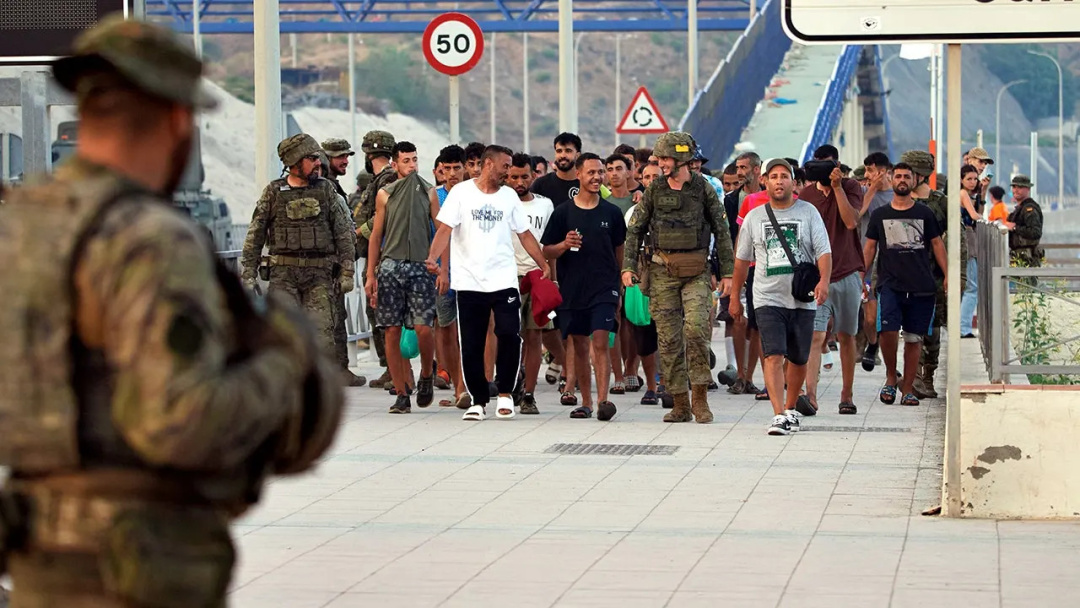
In a stunning display of political acrobatics, the Spanish government has leaped into action following the tragic deaths of at least 72 migrants during a chaotic rush to storm the Spanish enclave of Ceuta. While the seas churn with the bodies of the unfortunate, politicians are busy crafting the perfect soundbite for their next rally. Far-right leaders have declared that the best way to handle a humanitarian crisis is to build a wall—only this time, it’s a metaphorical wall made of indignant tweets and press releases.
Santiago Abascal, the leader of Spain’s Vox party, recently visited Ceuta to deliver a fiery speech that can only be described as a masterclass in political misdirection. With all the finesse of a bull in a china shop, he proclaimed the migrant influx an “invasion,” as if simply shouting louder could erase the desperate circumstances prompting such perilous journeys. One might wonder if Abascal has considered that a humanitarian crisis is not solved by hurling insults at those drowning in the currents of despair.
Still Beats Watergate:
Sponsor success. Continue reading:
Meanwhile, the local residents of Ceuta have found themselves in a peculiar position. Many express sorrow for the lives lost at sea, while others seem to embrace a conflicting narrative that blames the migrants themselves for their fate. Mohamad Abdelkader Driss, a local waiter, struck a surprisingly rational chord amid the chaos, insisting that the real culprits are the authorities who “opened the border.” It’s a classic case of misdirected anger—how dare those young men seek a better life when we can simply blame them for being in the wrong place at the wrong time?
As the Spanish military deploys to enforce order, the U.S. State Department has dramatically raised its travel advisory for Ceuta to Level 3: Reconsider Travel. Because nothing says “we care” quite like a travel advisory that suggests avoiding a place where people are literally fighting for their lives. It’s a perfect example of institutional response: when faced with a crisis, simply add another layer of bureaucracy and call it a day.
The political theater escalates further as European Parliament member Alvise Pérez finds himself trapped between angry counterprotesters, requiring police escort to safety. Clearly, the only thing more perilous than crossing the Mediterranean is attempting to navigate the political waters of Europe. In a continent that prides itself on open borders, it seems the only thing that remains open is the gap between political rhetoric and human empathy.
As the death toll rises, so does the fervor of political rhetoric that promises more security, more walls, and less compassion. The situation in Ceuta is a stark reminder that while the seas may be turbulent, the currents of political pandering are even more treacherous. With every passing day, it becomes increasingly clear that for some, the only thing more valuable than a human life is a robust political narrative—preferably one that fits neatly into a soundbite, evoking outrage without the burden of solution.
In the end, as the bodies are counted and the speeches are drafted, one must wonder: will the real tragedy of Ceuta be the lives lost or the politicians who exploit their deaths for political gain? Only time will tell, but one thing is for certain—drowning in a sea of bureaucracy is the only certainty we can rely on.