Iran's Leadership Showcases Unity in Chaos, Confusion Over Victory
In an astonishing demonstration of synchronized chaos, Iran's leadership has decided to play a new game: the War of Confusion. While they may be unified in their commitment to not let America have the last laugh, the endgame remains as clear as a foggy Tehran morning. On one side, we have the ultra-hardliners, the so-called Paydari movement. These folks are not just ideologues; they are the self-appointed guardians of the Islamic Republic, intent on enforcing a brand of stability that would make even a house of cards look solid. Their mantra? "Negotiation is for sissies!" They are ready to fight until the last dollar of the Iranian economy crumbles.
Meanwhile, on the other side, we find the more pragmatic faction led by President Masoud Pezeshkian and the ever-diplomatic parliament speaker, Mohammad Bagher Qalibaf. These gentlemen believe that a little military pressure can go a long way toward securing a sweet deal with the U.S. Their internal messaging has been less about total annihilation and more about finding a way to make it through the economic apocalypse that the war has brought upon them.
Still Beats Watergate:
Sponsor success. Continue reading:
"Negotiation is just a fancy word for getting what you want without having to blow things up," an advisor to Qalibaf was quoted as saying, clearly forgetting that they were already doing plenty of blowing up. However, it's hard to negotiate when the only thing you can agree on is that you don't agree on anything.
As the leadership jostles for power in a post-war Iran, the new supreme leader, Ayatollah Mojtaba Khamenei, remains a mysterious figure—rumored to be hiding and possibly binge-watching old cartoons while his father’s legacy crumbles around him. The public, of course, is left wondering whether this new leader will bring a fresh perspective or simply continue the tradition of confusion and chaos.
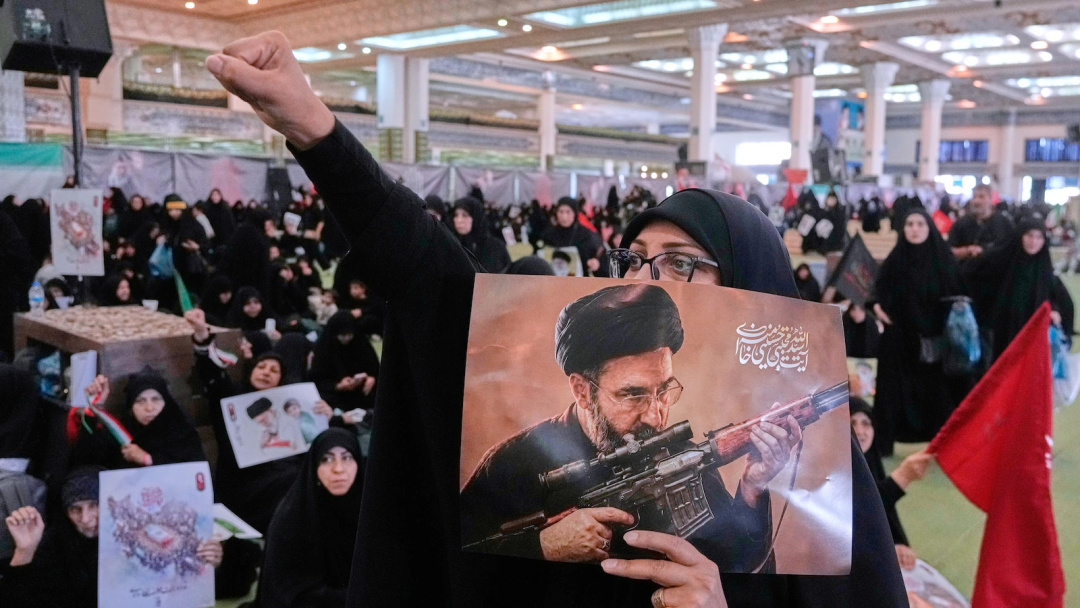
In the meantime, the ultra-hardliners have made headlines by rallying crowds who chant for revenge against the U.S. and Israel. With their control of state media, they are pushing a narrative that portrays Iran as a nation on the brink of total victory—while simultaneously crafting a reality that would make George Orwell nod in approval. Their televised propaganda sessions are akin to a bad soap opera, where every episode ends with a cliffhanger that leaves viewers scratching their heads.
The pragmatic faction, however, continues to fight back against this narrative. They argue that the public is tired of being treated like pawns in a game of chess where the pieces are constantly moving, but the outcome never changes. In response, the hardliners have taken to suppressing any hint of dissent, closing cafes that dared to let people enjoy a moment of normalcy during the ceasefire. Their message? Enjoy your coffee, but don’t forget who’s in charge.
As this internal drama unfolds, one thing is clear: the only unity in Iran's leadership is in their shared inability to agree on what winning looks like. The question remains—can they find a way to turn their chaotic unity into a coherent strategy, or will they continue to spiral into a vortex of contradictions? Only time will tell, but one thing is certain: the Iranian political theater is anything but dull.