Supreme Court Declares Itself the Newest Uncle Sam: Just Not the One You Were Expecting
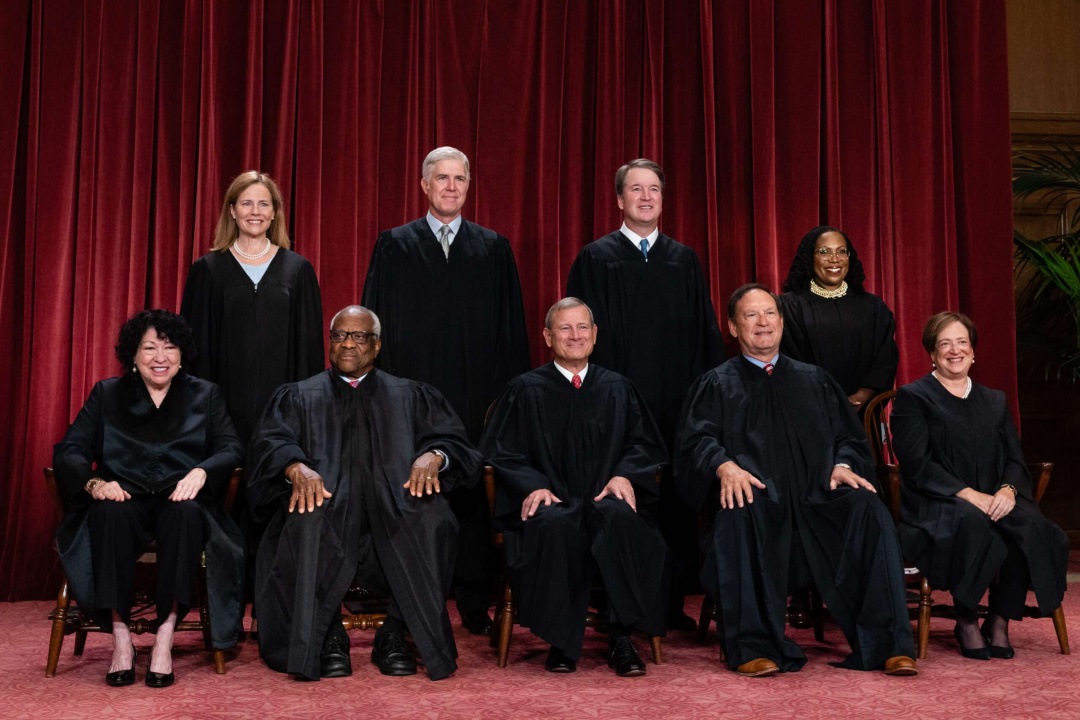
In a shocking display of judicial acrobatics, the Supreme Court has recently decided to don the cape of constitutional heroism, rescuing the nation from the clutches of executive overreach. This has led to a flurry of legal scholars dusting off their old law books and trying to figure out how a court packed with appointees from the Trump administration ended up blocking four of his major initiatives. Was it a clerical error? A cosmic joke? Or just a case of the justices finding their constitutional conscience while the cameras weren’t rolling?
In a term that would make even the most stoic observer question their sanity, the Court defended the very essence of American democracy against the president's urge to reshape it with the same finesse one might use to assemble IKEA furniture without the instructions. Decisions that prevented the end of birthright citizenship and the imposition of worldwide tariffs were hailed as triumphs for legal reason, while simultaneously raising eyebrows at the sight of justices checking their watch, wondering if they had accidentally stumbled into a courtroom or a circus tent.
Still Beats Watergate:
Sponsor success. Continue reading:
Justice Samuel Alito, perhaps channeling the spirits of justices past, labeled the birthright citizenship case as “one of the most important decisions in the history of the Court.” This begs the question: has he been taking notes from the dramatic flair of reality TV? Alito’s comments might as well have been delivered in a smoky backroom, with a glass of whiskey in hand, as he spun tales of legal battles fought valiantly against the tyrannical rule of tariffs and troop deployments.
Meanwhile, the justices have made it clear that while they may occasionally agree with some Republican arguments, they’re certainly not about to let that interfere with their newly minted role as the judiciary's version of a superhero squad. As they continue to strike down Trumpian whims with the grace of ballet dancers, many are left pondering whether they’re seeing a new trend in the Supreme Court: a reluctant group of justices transforming into the nation’s most reluctant checks and balances.
But fear not! The Court's newfound affinity for ruling against the executive branch is not without its critics. Some commentators argue that these decisions were so obvious that they hardly warrant applause. To them, I say: welcome to the world of legal analysis, where the line between a gimme and a genuine struggle can often be as thin as a judge's patience on a Monday morning.
In a world where the administration constantly blurs the lines between reality and absurdity, the Supreme Court appears to be taking its role as the adult in the room more seriously. Even if that means occasionally enforcing legal norms with the same vigor one might use to chastise a child for stealing cookies from the jar.
Perhaps the most perplexing aspect of this judicial renaissance is the simultaneous critique of the Court for its disregard of the principle of stare decisis. As if to say, “Sure, we’ll uphold a few precedents, but only if they don't get in the way of us having a good time.” It feels like the justices are deciding which rules to follow based on their mood that day, akin to a college student deciding whether to attend class based on the weather report.
In the end, the Supreme Court’s newfound approach to maintaining the rule of law amidst the chaos of executive whimsy raises more questions than it answers. Are we witnessing a renaissance of judicial independence or merely a brief intermission in an ongoing political drama? As the Court continues its delicate dance between being the guardian of democracy and the reluctant participant in political theatrics, one thing is clear: the show must go on, and we are all just here for the spectacle.
As we wait for the next act, let’s hope the justices remember to take their roles seriously, because in a world of political absurdities, we need them to be more than just players in a farce. We need them to be the referees in this game of constitutional chicken that we seem to be playing.