US Embassies Declare 'Flee Now, Apologies Later' Travel Policy Amid Iranian Tensions

In a move that has left many questioning the administration's grasp of diplomatic decorum, US embassies across the Middle East have issued a travel alert that could only be described as a masterclass in panic management. Citizens are now advised to consider leaving the region or at the very least, keep their bags packed and ready to go at a moment’s notice. This comes on the heels of President Trump’s latest threats to Iran, which, judging by his track record, could be interpreted as a national pastime rather than a serious geopolitical strategy.
The advisory, delivered with all the subtlety of a sledgehammer, describes the situation as “fluid”—a term that in bureaucratic speak means, “We have no idea what will happen next, but it’s probably not good.” Iran's unpredictability has been likened to a game of Russian roulette, only with slightly less fun and a lot more tension. Citizens are urged to exercise “heightened vigilance,” which, in layman’s terms, translates to keeping one eye on the news and the other on the nearest exit.
Still Beats Watergate:
Sponsor success. Continue reading:
Travelers are also advised to prepare for possible flight cancellations and temporary airspace closures. In a stroke of administrative genius, the embassies have managed to craft a warning that sounds more like a low-budget horror film script than a serious diplomatic advisory. "If you’re in Jordan, avoid US military bases, and in Israel, try to find the nearest bomb shelter—because who doesn’t love a quick game of hide-and-seek in a conflict zone?"
Adding to this delightful mix of travel advice, the embassies have warned that US diplomatic facilities worldwide could be targeted by Iran or its affiliates. It’s almost as if the government is advising citizens to take a vacation with the caveat, “Oh, and watch out for angry mobs.” This sensitivity training, brought to you by the same folks who thought it wise to threaten another country while simultaneously warning their citizens to run away, raises questions about the overall messaging strategy of the administration.
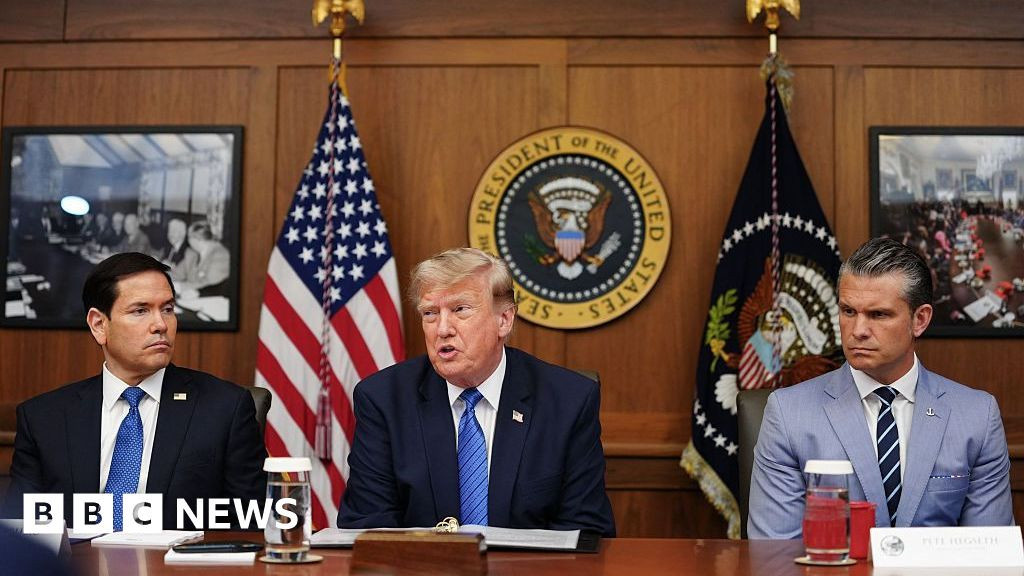
Trump’s recent Cabinet meeting at Camp David saw him threatening Iran with further military action, a tactic that has historically proven to be as effective as using a rubber band to stop a freight train. White House Press Secretary Karoline Leavitt was quick to point out that the administration would not tolerate “terrorist behavior,” which is rich coming from a government that has turned diplomatic relations into a game of catch and release.
Iran, predictably, responded with their own brand of fiery rhetoric, accusing the US of escalating tensions as if the US had been playing nice all along. Their military command warned that any country supporting the US would be engulfed in flames—a statement that, while dramatic, leaves one wondering if they’ve been reading too much fantasy fiction.
As regional tensions continue to mount and shipping lanes become increasingly perilous, one thing is clear: American citizens are being treated like the main characters in a geopolitical thriller, with the White House as the unwitting author. The latest travel advisory might as well come with a disclaimer: “The administration’s understanding of international relations is a work of fiction. Any resemblance to actual political strategy is purely coincidental.” With the stakes ever rising, Americans are left to ponder their next move: depart swiftly or stay and hope for the best—an age-old dilemma, now with a modern twist.