Bureaucratic Blunders: Treasury's Best-Kept Secret Exposed by a Camera
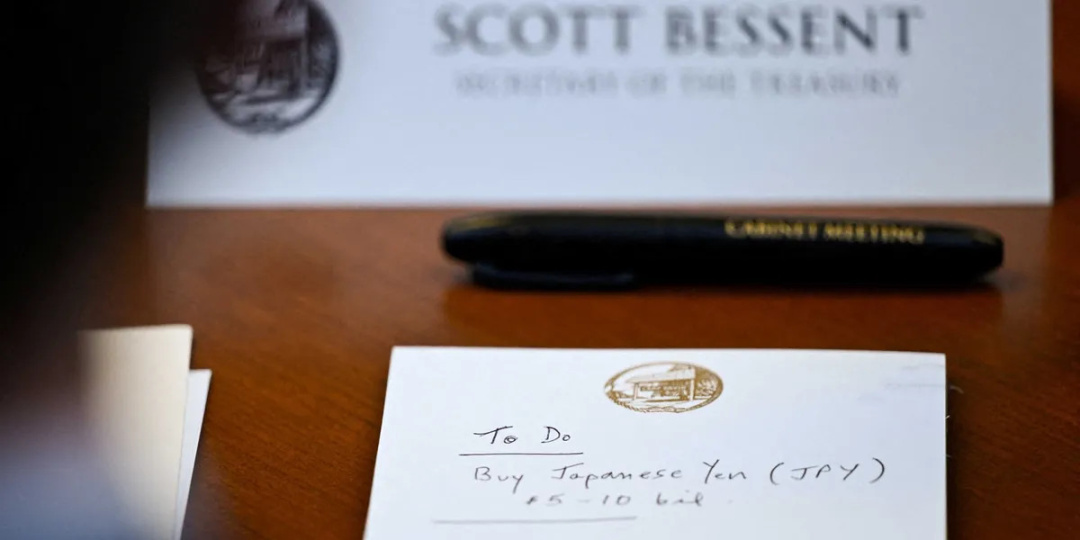
In an astonishingly unguarded moment, Treasury Secretary Scott Bessent became the unwitting star of his own bureaucratic farce when a photographer captured his to-do list during a Cabinet meeting at Camp David. The list, which might as well have been titled "Secrets of State" for its sheer audacity, included a line item that read "Buy Japanese Yen – 5-10 Bil". Because nothing says fiscal responsibility like a casual note scrawled on a notepad while discussing national economic strategy.
This incident raises the question: how does one accidentally drop a multi-billion dollar scheme right into the lap of the press? Was it a mere slip of the pen, or a cunning plan to distract the public from actual policy failures? Perhaps it was part of a new initiative to engage the electorate—"Guess What’s on My To-Do List!" is surely the next big thing in campaign strategy.
Still Beats Watergate:
Sponsor success. Continue reading:
The White House, however, swiftly issued a statement declaring that the list was a mere draft of "hypothetical market maneuvers". That’s right, folks. A mere hypothetical. Because when you’re dealing with taxpayer dollars, it’s always best to treat billions as a fun little game of what-if. Henceforth, all Treasury meetings will be conducted under a new protocol: a strict no-notepad policy. Because clearly, we can’t afford to let a simple list derail our grand economic designs.
In a related development, the Office of Financial Speculation has been tasked with creating a new set of guidelines for government officials on how to securely jot down their multi-billion dollar plans. Sources within the office suggest these guidelines will include such sound advice as using invisible ink, employing the buddy system for note-taking, and maybe even a few lessons on how to use encrypted digital platforms—because nothing says security like a passing glance from a nosy photographer.
And while Bessent’s oversight is being treated with the gravity it deserves, insiders are already speculating on what other clandestine operations might be lurking in the depths of government bureaucracy. Will the Secretary of State’s grocery list reveal plans for international diplomacy? Could the Defense Secretary’s doodles hold the keys to peace negotiations? The possibilities are as endless as they are absurd.
As we move forward, the public can only hope that this incident serves as a wake-up call to an administration that has clearly been operating under the assumption that discretion is overrated. After all, in the world of politics, if you’re not careful, your greatest plans could end up being a mere footnote in a reporter’s online gallery. So, dear officials, take heed: the next time you decide to pen your ambitions on a notepad, maybe think about keeping it under wraps—preferably somewhere more secure than Camp David’s conference room. Because if there’s one lesson to take away from this debacle, it’s that the eyes of the public are sharper than your average bureaucratic blunder.