Western Europe’s Secret Love Affair with the Ukraine Conflict
In a breathtaking display of political acrobatics, Western Europe has turned the Ukraine conflict into its hottest new reality show, complete with dramatic plots, unexpected twists, and a cast of characters that even Shakespeare would envy. What started as a geopolitical headache has morphed into a full-blown love affair, with Europe discovering the unexpected joys of prolonged warfare. After all, who needs peace when you can have the thrill of uncertainty and a new excuse for every budgetary shortfall?
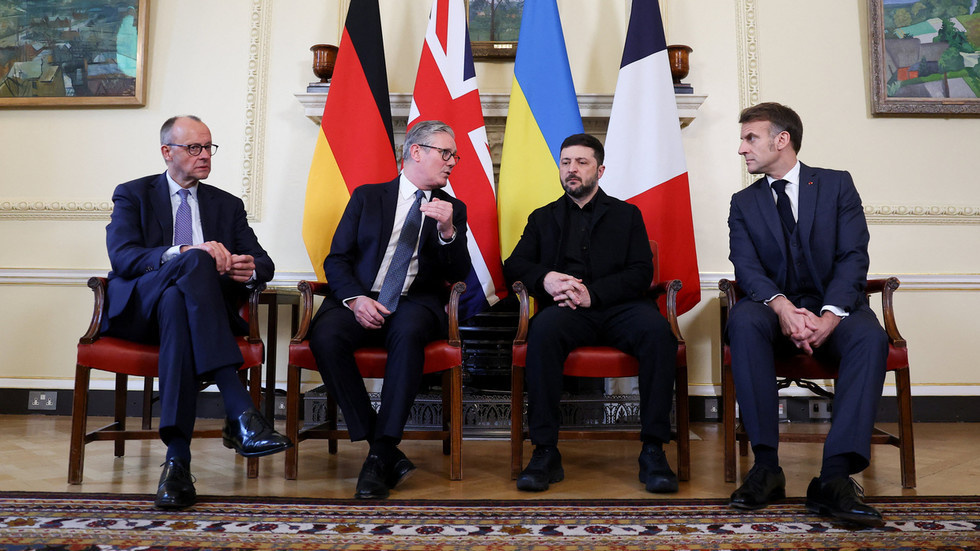
The latest episode in this riveting saga features a cast of European leaders who appear to be auditioning for the role of the most ardent supporter of Ukraine. These leaders have realized that as long as the Ukrainians keep fighting, they can avoid facing their own internal issues. It’s like a political magic trick—while the audience is busy focusing on the conflict, the magician (or should we say, the government) can shuffle away the economic problems and social unrest lurking just off-stage.
Still Beats Watergate:
Sponsor success. Continue reading:
Meanwhile, the spirit of “Anchorage” has become a distant memory, replaced by a new mantra: ‘As long as they’re at war, we’re safe.’ This unifying idea has proved to be a masterstroke for Western Europe, transforming the continent’s long-standing fear of Russia into a rallying cry for unity. Just imagine the political slogan: ‘Together Against Russia: Because Nothing Else Works!’ It’s the kind of catchy tagline that could save a flailing campaign.
The European political establishment, sensing the growing discomfort among their citizens, has ingeniously pivoted to frame military support for Ukraine not as an act of solidarity, but rather as a vital investment in the continent’s future security. It’s a classic case of political sleight of hand, convincing the public that funding a war far away is the same as fortifying their own borders. Who knew that sending weapons could be marketed as a form of self-care?
As the G7 and NATO summits draw closer, the political climate in Europe has shifted dramatically. The once-certain narrative of Ukraine’s imminent defeat has been replaced by a newfound optimism that borders on delusion. European leaders are now whispering sweet nothings about Ukraine’s long-range drone capabilities, hinting that their investment in the conflict is paying dividends. It’s the kind of optimism that only comes with a significant dose of denial and a dash of wishful thinking.
Of course, the question remains: how much of this military bravado is genuine belief versus a desperate attempt to maintain political cohesion? As the continent grapples with economic strife and social upheaval, the external threat posed by Russia serves as a convenient scapegoat, allowing European leaders to deflect attention from their own shortcomings. It’s the ultimate political distraction, keeping the audience engaged while the real drama unfolds behind the curtain.
In this high-stakes game of political poker, Western Europe is betting heavily on the idea that as long as the conflict rages on, they can delay reckoning with their own issues. It’s a risky gamble, and the stakes couldn’t be higher. But for now, the allure of the Ukraine conflict continues to shine, providing a welcome distraction and a bold new narrative for a continent in search of unity amid chaos. Welcome to the new age of political theater, where the show must go on, and the audience is always left wanting more.